
Advisers should overcome objections from compliance teams over recommending two joint life policies by focusing on the value to the end customer rather than the cost.
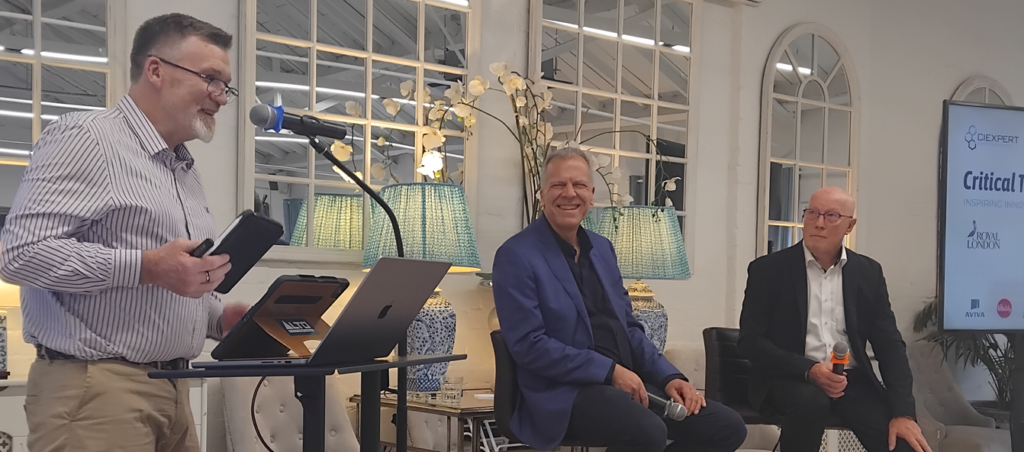
This is according to Clive Mayne, owner and director at CIExpert (pictured centre), who spoke to Health & Protection following CIExpert’s launch event for its Critical Thinking 2026 report in London yesterday, which saw panellists call on the industry to do more to ensure more advisers recommend single life policies.
The report highlighted that while CIExpert’s Single Is Best campaign, launched in November 2024, was making inroads with most consumers saying single policies offer better overall protection and value when advisers clearly outline the benefits, a notable minority did report feeling constrained by compliance considerations.
Compliance objections
Elaborating on why these objections exist, Mayne told Health & Protection two aspects are at play.
“Many advisers might say, Well, I don’t advise on two plans versus a joint because if I do, then compliance requires me to give a greater justification and explanation of why I’m not selling the cheapest,” Mayne explained.
“Because of that I have to write a lot more. I submit it. It might take time. It might be delayed and makes the whole process more difficult. That translates into ‘they won’t let me do it’.”
Focus on value
But Mayne added that if you ask compliance teams about their objections, they will tend to say they just need a justification.
“So when you balance the two things. Both are right. The compliance team are saying, ‘Yes, you can do it, but you’ve got to justify it,’” Mayne continued.
“What we try to say is, flip it on its head. If the best value is two single policies and the joint policy might be cheaper, you need to justify why you’re selling something that’s less value rather than the other way around.”
Removing barriers
In an earlier panel debate, while welcoming the difference the campaign has made, Hilary Banks, chief commercial officer at Guardian, maintained more needs to be done when it comes to adviser perception of the issue.
“We’re still coming up against challenges in the industry from compliance departments and advisers having to overly justify why two single policies are better for their customer,” Banks told delegates.
“We need to stop this. And we need to start making it easier for our industry to do the right things for the customer and take out some barriers that shouldn’t be there.
“We need to start coming together and doing the right thing for our customers.”
The campaign’s launch was to try and help prevent economic abuse, but the report also showed awareness of related research into economic abuse linked to joint financial arrangements remained extremely low (3%).
Adviser training
Picking up on this point Clodagh Morris, national sales director at Legal & General, said more needs to be done to spread the word among advisers and that needs to start with adviser training.
“Why can’t we have this discussed within adviser onboarding training? We have to make sure that the word is out there and people fully understand the risks that are involved in these joint arrangements.
“The Single Is Best campaign highlighted that if we talk about something and share that insight, meaningful things can happen.
“We should embed this in training. We need to ensure advisers are aware of the risks. They have to have the confidence to have those conversations with their clients.”
Working with SEA
Morris acknowledged that this task would be difficult, but more needs to be done across the industry to increase the visibility of the charity, Surviving Economic Abuse (SEA)
“We have seen them in many networks, but if we got behind them, we talked about it in networks, peer-to-peer groups,” Morris said.
“It’s all about making sure that these networks get advisers the support and help they need to have to support those conversations and what to do if they do notice something.
“But it’s about making sure advisers have the right products that maybe prevent things from happening in the future.”