
Conversations with customers about the effects of cancer are no longer optional for advisers and the industry may need to offer longer-term policies to help protect these risks.
Protection Distributors Group board member Roy McLoughlin also warned advisers that failing to address the vital subject was “letting people sleepwalk into avoidable vulnerability”.
He also highlighted the vital role employers have to play in supporting employees around the whole cancer journey and that intermediaries had must keep them aligned on this.
Speaking at the launch of the Scottish Widows and Macmillan Cancer Support Living with and beyond cancer in 2045 report, McLoughlin said the projections of a substantial increase in the number of people with cancer was a wake-up call for the industry.
“I’m really struck by the profound responsibility that our industry carries to support customers before, during and after a cancer diagnosis,” he said.
“There are three main areas that stick out for me – more people will get cancer, more people will live with cancer, and more will be diagnosed during their working lives.
“That makes financial resilience, not just clinical care, one of the biggest challenges ahead. Early conversations protect people from avoidable vulnerability, and advisors are the bridge between insight and action.”
‘Sleepwalk into avoidable vulnerability’
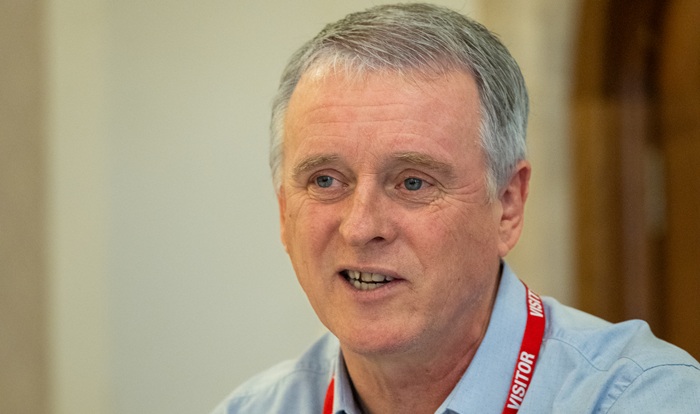
McLoughlin (pictured) emphasised that the report insights gave another method for advisers to have much more responsible conversations about foreseeable harm.
Furthermore he warned intermediaries that failing to address the subject was a failure to address potential future vulnerabilities.
“If we’re not talking properly with clients about the prevalence of cancer and a real world impact in both financial and emotional wellbeing then we are letting people sleepwalk into avoidable vulnerability,” he warned.
“There’s also something for advisers called Consumer Duty where that simply isn’t acceptable anymore.
“So I would argue that cancer conversations are no longer optional, they are pretty much essential and it’s really important we take those conversations out to everybody, because if people still believe that cancer is only something that happens to someone else, surely we have a responsibility to try and adjust that thinking in a very responsible way.”
Longer-term policies needed
Furthermore the PDG board member highlighted that the industry may need to adapt its coverage options to effectively protect people in the future.
“When I first joined this industry, most policies ended when people were 55 or 60, it was the perceived end of their mortgage and that their kids had flown the nest, everything seemed to end at 55 or 60,” he explained.
“Today we are retiring later, we are probably not retiring on one day anymore, and we are living longer, so advisers and to some extent insurers need to think about elongating that policy to a much later time.
“I know that has ramifications that have opened up another can of worms, but it just occurs to me that with the fast-moving society and the aging population that’s been referred to, we need to adjust our sights slightly as well.”
Cancer does not hit everybody equally
Finally, McLoughlin noted that employers need to help their employees and that they would need help from advisers and insurers to navigate that successfully.
“We need to help employers deal with this because the numbers are so vast, the people that are going back to work, and to have the empathy, the understanding and be able to support lots of different ways,” he said.
“Unfortunately in the UK, the statistics aren’t good: only 8% of employers have group income protection and fewer than 5% have group critical illness cover, so there are some challenges.
“But you’ve got to remember that for lots of people their employer is where they will look to for some sort of support, so it’s incumbent on all of us in this collaboratively to help employers as well.”
He concluded by warning that cancer does not hit everybody equally, either financially or emotionally.
“It’s really important we take that into account when we’re talking about it from the adviser’s, the employer’s and the insurer’s point of view. If we can all work together, we collaboratively can change how people will live with cancer in the years ahead,” he added.