
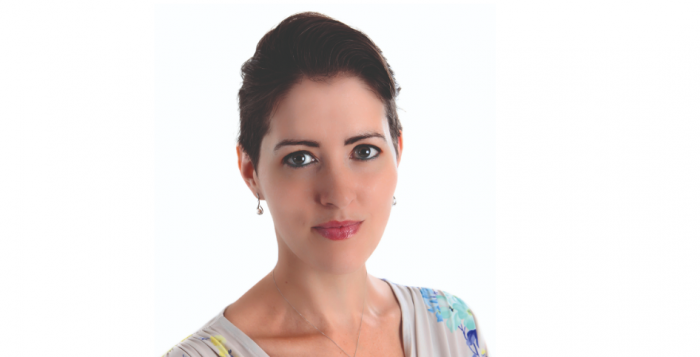
To mark Dementia Action Week, Health & Protection speaks to Kathryn Knowles, co-managing director at Cura Financial Services (pictured), about the shock of finding out her dad had Parkinson’s-related dementia after her mum had tried to cope on her own. She also highlighted while widespread cover past age 70 may be not realistic, the protection sector can up its game when it comes to carer support.
Discovery and understanding
“Dad has Parkinson’s and he has developed dementia with that which is different to normal dementia,” Knowles tells Health & Protection.
But her dad’s diagnosis for specifically Parkinson’s-related dementia came as a relief, she adds.
“The diagnosis was a relief because at the time when he was diagnosed my parents had moved in with us in January 2024,” she continues.
“And they lived with us for six or seven months while we were completely gutting and renovating their house to prepare for Dad’s Parkinson’s, so their house had become completely unliveable.
“He was in with us and it was really, really tricky because things were happening that just weren’t normal.”
While dementia tends to be a journey of many milestones and Knowles had picked up on issues with her dad’s memory, her mum had successfully hidden her dad’s condition until her parents moved in.
“When they came and stayed with us I would be asking her: ‘Why is there a mess in the bathroom?'” Knowles says.
“It would be case of her insisting everything was fine and I would say, ‘Mum, that’s not normal’.
“So I had to say that it’s not normal that he can’t remember that he’s been to the toilet or what’s happened or things like that.
“It was happening more and more. He was just sat there. He’s not engaged.”
Shock and upset
Knowles reveals that at first the milestones associated with dementia did not hit her.
“When Dad was in with us, it was a big shock because it went from oh Dad’s a bit forgetful and not looking after himself’ to moving in with us and discovering this isn’t actually okay,” Knowles says.
“And this was happening a lot more than what was being said, so we didn’t have the gradual decline with it.
“It went from being a little bit removed, because your parents are their own people and do their own thing, to suddenly because they were right here, it was right smack bang in the face.
“It was very upsetting to see.”
The fact her mum had been coping on her own for so long was also upsetting, Knowles adds.
“I was so upset for my Mum when I found out how long she’d been hiding it, the things she was having to do to help look after him,” Knowles says.
“She had just not had any support. She had not reached out to anyone at all. It was sad.
“You become the parent and they don’t like that obviously. They still want to be independent, but you then realise that okay, this is what’s happening.”
Dad just wasn’t himself
The figure she met with was not the man she remembered of days past.
Her father was previously one of the main compliance officers within North Yorkshire Police with a significant role in the prosecution process.
“He was a police officer, knew all the laws inside out and would decide what could go to court and what couldn’t if a police officer had done their job well enough to get someone charged,” Knowles explains.
“And he’s gone from that to where he just sits and stares at a wall.
“He’s never been a big talker, but was not talking or responding to jokes and was just not himself at all.”
Having to step in
Upon realising her mum had been dealing with the situation on her own for so long, Knowles decided to step in.
“And I had to step in because one of the challenges is, and this was the case with Mum, was she was hiding it,” she continued.
“She was trying to pretend it wasn’t happening.
“And so I stepped in with the medical professionals to say: ‘This isn’t okay. This is what Mum has been dealing with. This is what’s been happening. He’s actually getting angry at times. He can’t make decisions, but that’s more to do with the Parkinson’s.”
Knowles went to the medical team with a list and said: ‘None of this seems okay to me.'”
Knowles’ father also had to have a stoma fitted due to associated complications with his Parkinson’s.
However he had been having accidents with his stoma and failing to take his medication leading to even greater stress and difficulty for Knowles’ mother.
Diagnosis comes from observation
Intensifying the situation for the family was that Parkinson’s-related dementia diagnosis tends to come from observation.
“It doesn’t come from scans,” Knowles says.
“It was really hard because the medical professionals don’t want to jump to say that it’s started, but then they have to make a decision based upon what they’re seeing and what the family is reporting.
“So that they caught it was a relief. It was a case of at least there is a reason why he’s doing these things.”
But upon diagnosis Knowles began to reflect on her dad’s life expectancy which she learned about at the LUCID conference.
“And they had someone there who was talking about Parkinson’s,” Knowles explains.
“And so because of the work that I do, now that he’s been diagnosed with the dementia aspect, I know statistically how long he has to live. That is quite intense.”
Carer support
In terms of what the sector can do to alleviate conditions for dementia sufferers and their families, Knowles reflected that cover can only go so far.
“Dad is 70, so he would have been 70 when the dementia was diagnosed, so even though he had symptoms before that, he wouldn’t be covered,” she continues.
“Having some form of dementia cover is brilliant, but it’s tricky.
“With the amount of people who are going to develop dementia, if an insurer just had cover going longer and longer, then the amount of claims they would get would be astronomical and they just wouldn’t have the funds to cover it all.”
But she adds there is a potentially more the sector can do in terms of carer support.
“You do have organisations like RedArc who would be there to support someone’s partner and to help them through it,” Knowles continues.
“I’m sure they would be absolutely phenomenal, but I can’t think of much else.
“For a lot of people, they don’t take out cover that generally goes into their 70s.
“The way that the advice is carried out is generally you either take it out for the whole of your life because you’ve got some kind of Inheritance Tax issue or you take it out for the mortgage or for dependants, so a lot of cover finishes before the age of dementia kicking in.
“But then it is still there for people who have the early onset dementia which is even more upsetting because it’s so unexpected in terms of the age.”