

Mental health and menopause support are the most popular areas for organisations to prioritising for new staff wellbeing investment over the next 12 to 18 months, while premium inflation is hitting private medical insurance (PMI) arrangements.
Aon’s UK Benefits and Trends Survey 2025 found mental health and fertility-related benefits were the most commonly cited as being planned for, while use of excesses are being ramped up for PMI.
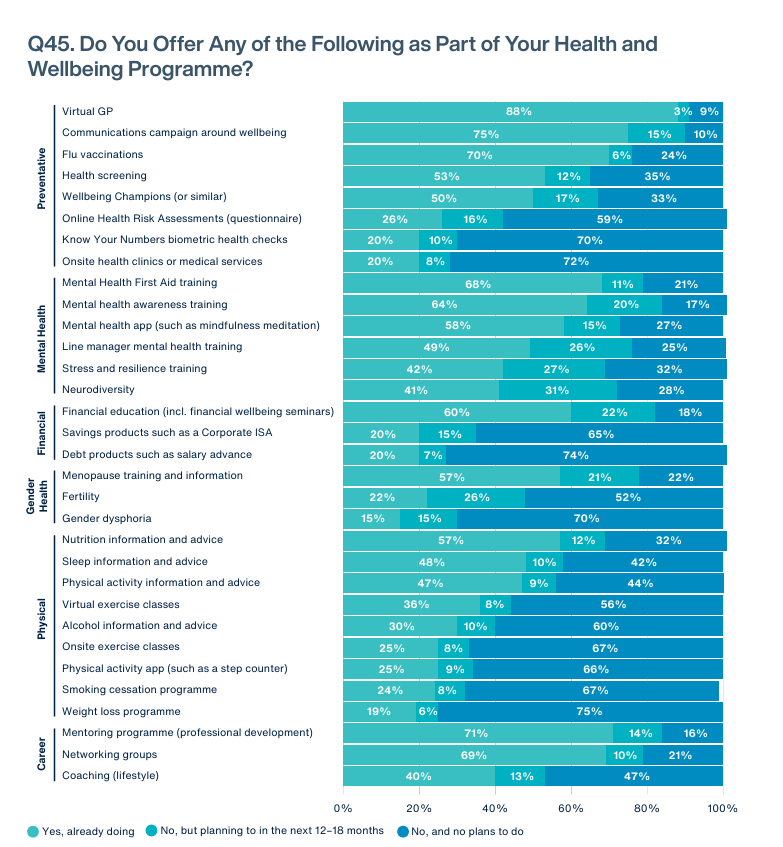
The research showed neurodiversity (31%), stress and resilience training (27%) and line manager mental health training (26%) ranked as the top three areas firms were seeking to target over the next year to 18 months.
Furthermore, 15% said their plans included a mental health app and 11 were considering wider mental health first aid training.
Notably gender and fertility-based health benefits were also under high consideration with 26% planning to introduce fertility care, 21% menopause training and 15% support for gender dysphoria. (See table below)
Meanwhile, the findings also indicated that demand for private medical cover continued to increase in the UK, with respondents reporting that it was placing significant pressure on the quality of the claims experience and pricing.
For example, a quarter of employers (23%) had introduced or increased the excess on their medical policy in the last five years.
The survey of 240 UK professionals working in human resources, reward, compensation, and benefits roles showed employers remained committed to ensuring their health benefits remained fit for purpose.
The survey also found 41% of respondents had a formalised health and wellbeing strategy in place, with a further 31% planning to implement one.
More than a quarter (28%) of organisations had enhanced the benefits available within their medical schemes, while a further 15% planned to do so within the next 12–18 months.

‘Challenging backdrop’
Stephanie Taylor, principal consultant in health and benefits in the UK for Aon, said: “Employers are operating against a challenging UK healthcare backdrop, with worsening health across the population, an increasing prevalence of complex medical conditions and mounting pressure on the National Health Service.
“This is coupled with an ageing workforce in which individuals are living and working longer – and we know that with age there is a higher likelihood of illness and need for healthcare.
“As a result, many employers are placing greater importance on supporting their employees’ health and wellbeing, recognising that it is critical to both workforce resilience and performance.
“Our survey revealed that nearly all organisations strongly agree that the employer has responsibility for influencing employee health and wellbeing. With rising healthcare demand, increasing costs and growing employee expectations, organisations are recognising that a clear, measurable health strategy is no longer optional,” she added.