
Technological innovation is diagnosing cancer earlier, improving outcomes for patients and cutting costs, Health & Protection’s Global Mobility & Health Summit heard.
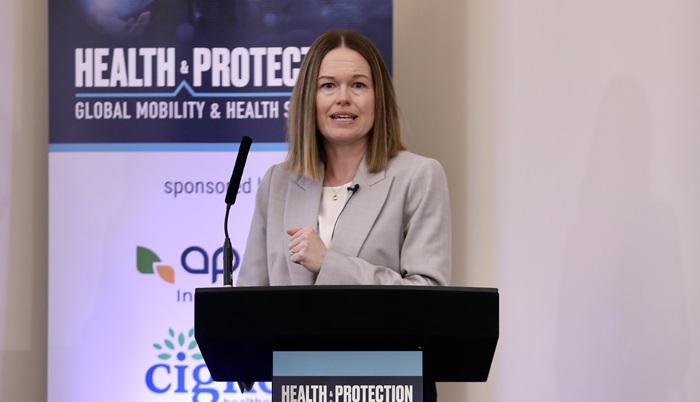
Dr Kathryn Oakland, medical director clinical service lines at HCA Healthcare UK (pictured), said addressing cancer was important because it is really common.
“More than half of people will be diagnosed with cancer at some point in their life,” she added.
“Importantly, one in three people will receive a cancer diagnosis before the age of 65.”
Dr Oakland pointed out that working-age cancer is on the rise. In 1996, the number of young people diagnosed with the disease started going up and has carried on rising.
“There is something happening in younger people,” she said.
“We are seeing far more of them with cancer. It is not predominantly a disease of older people.
“Our approach to the way we manage and treat cancer needs to evolve,” she added. “There is innovation driving towards that.”
Oakland said that medical science does not understand why this is happening. Diet, microplastics, genetics and smoking are typically blamed as causing cancer.
“There are a huge range of treatments coming to market which can dramatically change outcomes,” she said.
Robotics is one of them. “There has been an explosion in robotic-delivered cancer surgery in the past decade.”
“Compared to keyhole surgery, robotics has fewer complications and patients are more likely to survive for longer,” Oakland said.
Lung cancer, for example, is difficult to diagnose because it develops outside of the lungs, making it hard to get.
“We now have robotic technology which can find those shadows, we can get to the edge of the lung and take a sample.
“It means people will receive a diagnosis at an earlier stage and receive curative treatment.”
It not only improves outcomes, but it is more cost effective. She added that robotic diagnosis costs about £6,000, while robotic-led surgery around £15,000.
In comparison, it costs about £120,000 to keep people alive if they are diagnosed later. “The upfront cost is greatly outweighed by the long-term cost if you don’t catch cancer early.”