
Claims are expected to keep growing in frequency and value but technology and innovations are helping address these hurdles, writes Abigail Montrose.
Finding new ways to control claims costs has resulted in new product services while providers are also looking at ways to make the claims process simpler.
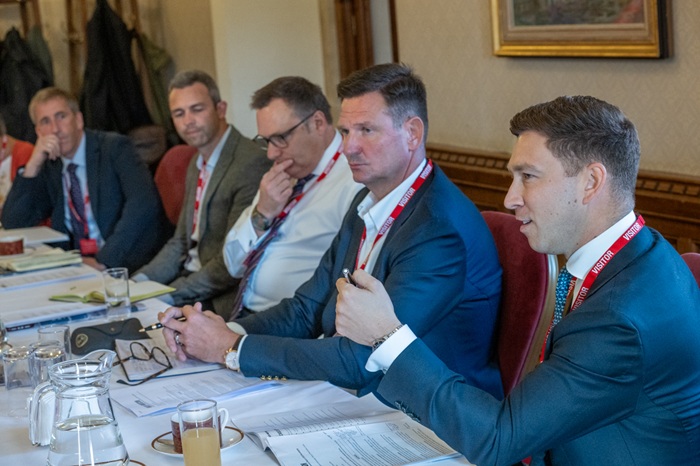
The panel at Health & Protection’s House of Lords roundtable highlighted that virtual services such as telehealth and counselling are having a positive impact while other technology solutions are proving successful in smoothing the process without increasing costs.
Download the roundtable supplement by following this link.
Integrating virtual services
Integrating virtual services into the customer treatment pathway is a key challenge but one the panel thought would be a critical one for insurers to pursue as it would improve the whole claims process.
But technology can also help to smooth and speed-up the claims process.
“We’ve recently introduced claiming in real time by WhatsApp,” IMG global head of IPMI Kevin Melton said.
“There’s still plenty of room for providers to improve that claims journey even more. I mean, who would have thought you could put in a claim by WhatsApp a couple of years ago?” he said.
Engage Health Group head of international benefits Penny Pemberton was an advocate of pre-payment cards which are increasingly being used.
“I never thought that would come up where they prepay; an insurer will allow you to go into a facility and make a claim automatically from a prepaid credit card,” she said.
“But that seems to be working, the right measures are in place and it’s a very easy process for a member.”
And when quizzed whether this was driving more claims, Pemberton was content that it had not done so with the SME clients her firm had been working with.
Melton noted IMG itself had just launched a test case of a payment card and was looking to assess what effect that had on claims levels.
Product innovation
New gadgets and services that can be used at home have been introduced by insurers as they are encouraging people to use these to help manage their health remotely.
ExpatInsure CEO Chris Carter noted one device in a crowded market has particularly caught his attention which can help with musculoskeletal issues.
“The device costs about $500 but this means no more visits to the physiotherapist as it’s all done at home,” he said.
“There are other virtual devices too. However, it does come back to utilisation because there are certainly some customers who don’t want any of that. They don’t want a virtual service.
“They want to go and have tests and treatment in a real setting. So I think there’s a challenge,” he added.
Indeed the nature of an international product is that different people will want different types of care and services and this demand can vary globally.
Cigna Healthcare International Health head of global individual broker sales, UK and Europe Steven Martin argued it is about providing a clear pathway.
“We use quite a lot of medical services, we have customers in different parts of the world, who may be going to see a doctor they’re not familiar with, who doesn’t even speak the same language,” he said.
“They’ve been given a diagnosis and they may be thinking, is that right? Should I rely on that or could I get another opinion?
“So, it’s up to us to make sure we’re putting the right care pathways in place, cost effectively, to make sure when it comes down to the planning stage, everyone’s very clear about what is being claimed for that particular person at what particular cost.”
Mercer Marsh Benefits multinational global mobility solutions leader UK Dave Hilton agreed.
He pointed out there are many new innovations and that they will appeal to different clients so it is important to tailor policies to the client’s needs.
“Corporate clients are looking to make sure their packages are relevant to their people,” he explained.
“If you look at a micro example, say infertility, some of our clients say they don’t want an infertility benefit.
“They want a fertility benefit because the infertility benefit only caters for part of the demographic in their population. So it’s tweaking what they’ve got, making it relevant,” he added.
Parity and diversity
Lockton senior vice president and global mobility lead – people solutions Joe Barnes added this was giving advisers greater opportunity to engage their clients.
“This is driving more opportunity for us, because more and more clients are looking for parity across benefits and an easy step is to use an IPMI product,” he said.
“It also comes back to the importance of flexibility too.
“Sometimes, especially if you look at a pan-European style client, they’re not going to necessarily want to provide that really rich benefit everywhere.
“So parity also needs to be relatable to local market norms as well. It’s that flexibility which is driving opportunity for us in the IPMI market.”
However Partners& client director James Henson revealed some of the impetus behind organisations offering diversity initiatives and benefits had been lost.
“The politics is driving less demand for these benefits – before there was a march towards it and now it’s become a little bit more socially acceptable to not do it and in fact go the opposite way,” he said.
“So companies will do as much as they have to do, but they’ve got to pay for it in the bottom line, unless they’re totally committed to it.
“We must all deal with companies that will do it for face value, they think they should be doing something, so they try and do something – it looks good. Then the moment they don’t have to do it they’ll just forget it.
“But then we’ve got companies that really will do this, this is part of their ethos and those ones that it’s part of their ethos, they’re not going to stop doing that regardless,” he concluded.
Download the roundtable supplement by following this link.