
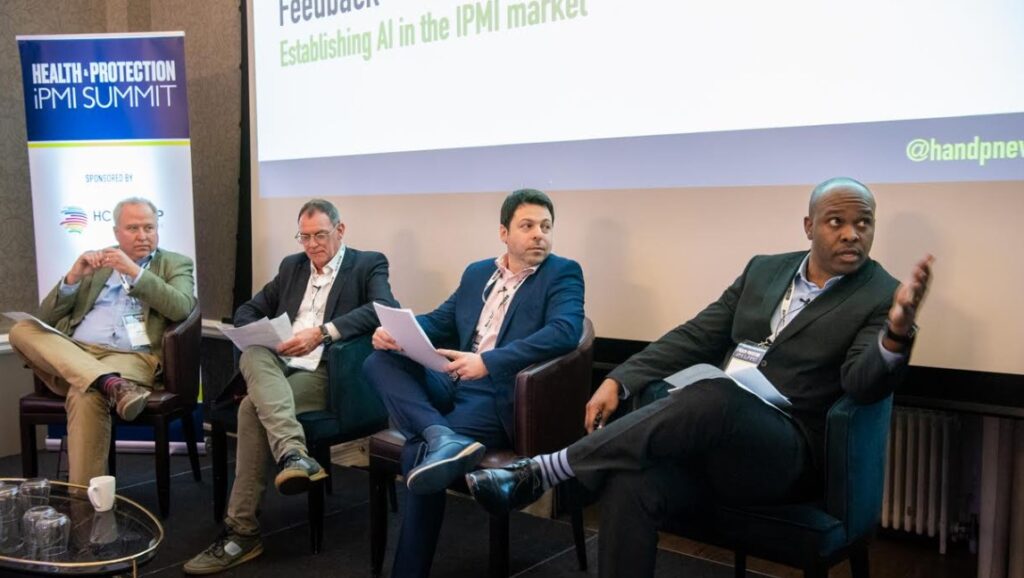
Artificial intelligence (AI) can never truly replace the emotion, trust or human connection that international private medical insurance (IPMI) professionals bring to their customers.
This is was one of the key conclusions from the final workshop of Health & Protection’s IPMI Summit which took place at Easthampstead Park Hotel in Wokingham this week.
Presenting findings from their workshop discussion, one group leader maintained that AI can never replace the emotion IPMI professionals can bring to the job and their clients.
“AI can’t answer the phone and be emotive to people,” they said.
“Although we had one example where ChatGPT actually corrected itself and apologised profusely, saying, ‘Oh I’m sorry, my mistake’.
“But I don’t know how this would affect face-to-face needs for compliance, especially on the claims side of things.”
They added there were a lot of areas where AI and technology could not and had not replaced human beings.
“I believe all technologies over the last 40 years, there has always been a fear factor,” they continued.
“When the first computer came out, people thought we’re not going to have to think again. That when calculators came out meant maths is dead.
“But you don’t change, you just enhance. It’s about adopting these things and making them work for you.”
Selling trust
Another workshop leader declared that one of the key elements brokers sell is trust.
“What came out of our conversation is we don’t necessarily trust AI,” they said.
“You always check before quoting AI and using the results of an AI chatbot.
“Especially with a product like IPMI which is expensive, and it’s something sensitive for a lot of people.
“I think that we sell trust and people don’t seem to get that from AI, I don’t think it’s going to be lost.”
Human approach
And another workshop leader pointed out that AI should be there for support and as an aid to jobs carried out across the sector.
“Healthcare has always been having that human approach, so it’s not like buying contents or home insurance, you need that human interaction,” they added.
“Because you’re dealing with people’s health, so you’re dealing with pre-existing conditions and health.
“And those are very personal, so therefore AI is great aid and a great tool, but it’s never going to replace the human touch.”