
Artificial intelligence (AI) is a major buzzword at the moment, as businesses large and small, including those in the international private medical insurance (IPMI) sector, consider their future and how they should either embrace or avoid the new technological wave.
But many companies are diving into AI without much planning or consideration – and the end result is many those pilot projects fail or are failing – ending up in a “pilot graveyard”, according to Michael Ramsay, director and founder of TalkAI Global.
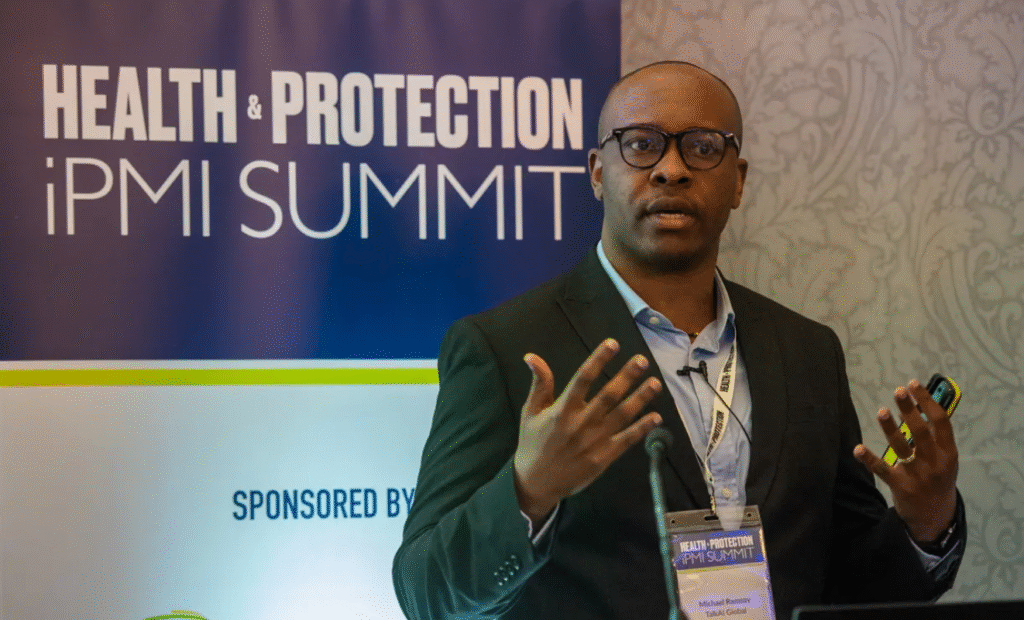
Speaking at Health & Protection’s IPMI Summit, Ramsay said: “Many companies are just not ready – we see a lot of AI experiments that never go anywhere. I call this the pilot graveyard.”
He noted that according to Gardner and McKinsey “up to 85% of AI projects fail and are failing.”
“A core issue is not having a clear structure.”
As a result he argued businesses should use a structure which sits on three pillars – align, build and commit – to avoid that graveyard.
“The best performing organisations are really different right now. They start by aligning AI to real business value – not just experiments.
“They then build the right systems, the right tech, the right talent and the guardians.
“And finally they commit – rolling things out ethically, managing the change and learning as they approach continuous improvement.”
Three phases
For the align phase, Ramsay said the businesses should articulate the vision, assess their readiness, analyse priorities and audit the data foundation.
For the build stage, businesses should not just buy AI, but design for it. That means addressing the skills gap – finding talent and capability. It also means ensuring that the issue of ethics is built in from the very beginning.
And for the final stage of commit, businesses need to pay attention to three Cs- controller rollout, cultivate culture and continuously improve.
There are two basic approaches to AI by many businesses – one is to do nothing and see what other people are doing, and the other is to dive in. But how does a business find the middle ground, he asked.
Ramsay said: “It has to be business first – if you lead with what your business is trying to achieve, then, even if things change, you are already a step ahead.
“Build modularity, so you can adjust as the technology advances to the point where we can start to use it.
“So know what you want to achieve as a business. Once you have that clarity in terms of what we want to achieve – revenue, operational efficiency, customer experience, then everything becomes much clearer.”