
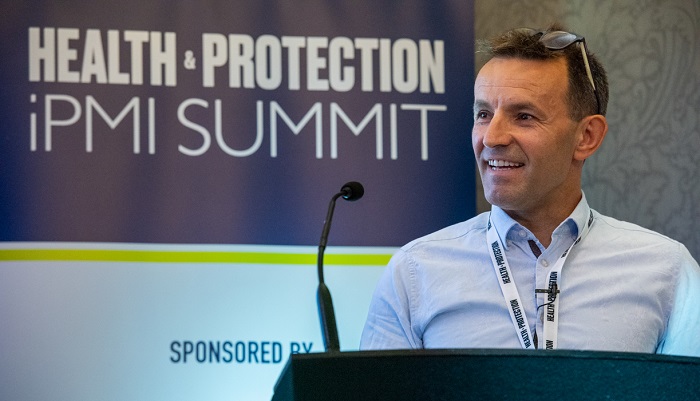
IPMI should be seen as a right – not a privilege, according to Alban Bytyqi, EMEA reward consultant at Ricoh Europe.
Bytyqi was discussing the importance of providing IPMI as a standard benefit, rather than a privilege based on seniority, for expat staff while speaking on the issue of equality and equity of IPMI benefits, from an employer’s perspective at the Health & Protection IPMI Summit at the Easthampstead Park Hotel in Wokingham today.
In his role, Bytyqi partners with senior leaders to design compensation strategies that align business priorities with employee experience.
“I’ve worked in places where sending people out is sometimes done quite casually, and I’ve worked in places where sending people out on assignments has been so thought through,” he told delegates.
“The latter one has always been the better one.”
“In the latter one, IPMI was not a privilege – it was a right based on the expectation of what people would need.”
That contrasted to companies that did not treat IPMI equally, but treated it on a grade-by-grade level, with the most senior grade benefitting the most.
He noted that when IPMI and employee needs are properly addressed, performance is excellent.
Financial impact of failed assignments
And the financial and operational impact of failed assignments is also significant.
Companies often underestimate the importance of planning, compliance, and total cost (including family needs, healthcare, legal, and cultural support), which adds to the risk.
Bytyqi noted that: “A failed international assignment can cost three to five times the employee’s annual salary.”
Another issue is maintaining expat talent.
He said: “38 to 50% of returning leave within one to two years – and that’s also a huge cost to the business.”
“And that causes huge operational issues “
That can cause massive unbudgeted expenses and operational disruptions. And to make matters worse, only 9% of companies offer formal repatriation support.
“Don’t let your investment become a revolving door” Bytyqi continued. “Plan for a valued return.”
But another key issue is burnout, with 49% of expats experiencing it. He said that 80% of expats weigh mental health support in employment decisions.
“Telling expats to be resilient without support is like handing them a map of a minefield and wishing them good luck.”
Duty of care
Another issue is remembering that expats have families and often want to take their spouses with them.
“Family also plays a big part. Often colleagues will not go out by themselves – they will go out with family.”
He said that 87% of expats say it is vital for them to have their family with them.
“Thinking about the duty of care that we have – only 34% of the programmes actually excel at duty of care, with 6% openly admitting they fall short.”