
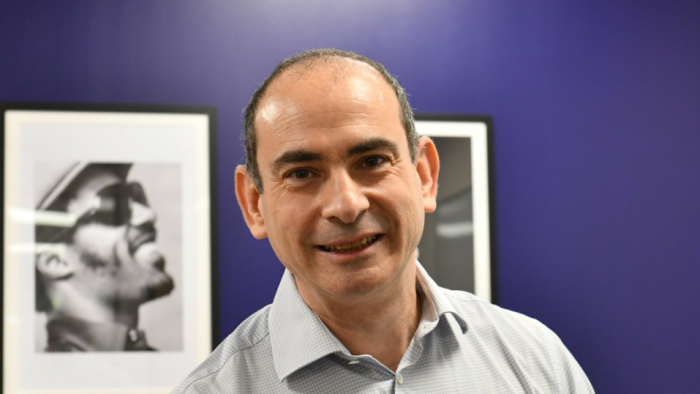
David Eline, founder of Riviera Expat and Health Compass (pictured), speaks to Health & Protection about leaving the world of banking for a career in the international health sector, why medical inflation is the biggest challenge affecting the industry, learning from clients and his love for Lego.
How long have you been in the international health advice industry and why did you start working in it?
My journey with international private medical insurance (IPMI) began in 1997 when I moved to London to work in the banking sector.
As an expat, I quickly realised the importance of being properly insured and have personally been covered under IPMI ever since.
In 2013, after leaving banking, I decided to transition into the international health and benefits advisory industry.
My goal was to help others navigate the same challenges I had faced as an expatriate, particularly when it comes to understanding and comparing insurance options.
I’ve been able to leverage my analytical and benchmarking skills from banking to provide valuable, tailored guidance to individuals and organisations.
How long have you been in the industry and which markets does your company do business in?
I entered the international health insurance industry in 2013, driven by the conviction that the way IPMI is advised and distributed could be significantly improved.
At the time, clients were mostly relying on two main channels: online comparison websites, which tend to focus primarily on pricing rather than the quality of benefits, and traditional brokers, who offer valuable advice but are often not fully equipped to meet the expectations of a younger, more digitally-minded clientele in terms of speed and compliance. While both models bring value, I saw an opportunity to enhance the overall experience.
In 2022, I launched Health Compass as a digital solution tailored for intermediaries.
The goal was to equip them with the tools to provide smarter, faster, and more transparent advice to their clients.
We use our EU and UK brokerage licenses to support intermediaries by facilitating compliant transaction execution in various jurisdictions and thanks to our network of local partners or by operating offshore when regulations permit, our reach is truly global.
While we’re currently focused on individual coverage, we also support small groups and SMEs.
What is the biggest factor affecting the international health and benefits space?
Medical inflation is undeniably the biggest challenge in the international health and benefits space today. It continues to drive insurance premiums to unprecedented levels, putting pressure on both insurers and clients.
To remain sustainable and accessible, insurers need to rethink traditional pricing structures, creativity and adaptability are key.
Beyond pricing, insurers must also invest more proactively in preventive care solutions, helping reduce long-term claims and improving overall outcomes. At the same time, it’s crucial for the healthcare provider ecosystem to recognise its role in this equation.
Providers need to realign their pricing practices and move toward more reasonable, value-based care models. Without a collective effort across the insurance and healthcare industries, the system risks becoming unaffordable for many.
Where do you see the future of IPMI, especially in the major regions that you work in?
The future of IPMI is clearly moving toward greater regionalisation. We’re already seeing insurers shifting away from broad “worldwide excluding USA” coverage toward more geographically targeted zones.
This trend is creating a dynamic landscape where traditional global IPMI providers are becoming more regionally focused, while local or regional PMI players are expanding their scope internationally, what we could call the emergence of “PMI+” actors.
This evolution will lead to more modular, customisable plans that reflect the specific healthcare ecosystems and regulatory environments of each region. Flexibility will be key, with à la carte coverage options becoming the norm rather than the exception.
However, this shift requires a significant actuarial effort from insurers to ensure accurate pricing, sustainability, and fairness across such diversified offerings.
Who has been your most important mentor throughout your career?
Rather than citing a well-known industry figure, I’d like to highlight someone who had a profound impact on me at the very start of my IPMI journey, a client.
He was a highly demanding individual, with an exceptional background as one of the early employees at PayPal and a sharp consultant in the start-up world.
His perspective opened my eyes to how much the IPMI industry could evolve, particularly in terms of user experience, responsiveness, and client-centricity. He challenged me to question everything, from product design to communication, and to always prioritise the end-user’s needs. That experience shaped the way I’ve built Health Compass.
What started as a client relationship has since grown into a lasting professional connection. Today, he’s a friend, a board adviser, and a global leader at one of the world’s top consulting firms, where he oversees payment solutions. His influence continues to inspire the way I approach innovation and service.
What advice would you give people thinking about working in the international health and benefits sector?
Put the customer at the centre of everything you do.
No matter how strong your tech stack is or how innovative your solution might be, it means nothing if you don’t truly understand the needs, concerns, and context of your clients.
Attention to detail is essential, especially in insurance where the small print can have major consequences. Never try to gloss over terms or conditions just to close a deal. What might seem like a shortcut could easily turn into a time bomb for the client and for your credibility.
Above all, be honest. In this industry, your reputation is your most valuable asset. It takes years to build and only weeks to destroy.
What has been your greatest success at work?
I don’t measure success by the volume of commissions generated or the number of licenses sold. For me, success lies in the ability to drive meaningful innovation in the industry.
My proudest achievement is seeing the Health Compass scoring methodology adopted by leading players. It validates our approach and shows that even in a traditionally cautious industry, real innovation can take root.
Of course, resistance to change still exists. But I’m committed to offering today the solutions that the market will adopt tomorrow, when it’s ready. Because the market is evolving, and I believe in being one step ahead to help others move forward with confidence.
What are your top three priorities for the next year?
First, I want to learn to take more time for myself and for the people who matter most to me. Like many entrepreneurs, the past few years have been an emotional rollercoaster, full of challenges, growth, and intensity. But managing energy is just as important as managing time, and I know that taking care of myself is essential to keep moving forward with clarity and purpose.
Second, I’ll continue to meet with IFAs and brokers around the world. Even though we offer a technology-driven solution, nothing replaces the power of genuine human connection.
Third, I’ll keep pushing for innovation. Many of the solutions we’re building would take enormous time and financial investment for a single player to develop. My mission is to democratise access to these tools and help the industry leap forward, efficiently and sustainably.
What is one personal skill that most people do not know about?
I’m incredibly fast at building Lego sets. We all need an outlet, and for me, Lego is a form of mindfulness. It helps me focus, disconnect from work, and reset my mind.
There’s something calming about following precise steps and watching something come to life brick-by-brick. It’s my way of recharging, and it’s surprisingly effective.
What mantra do you live by?
Life isn’t linear. It’s a mix of highs and lows, wins and setbacks. You fall, you rise. What counts is learning, adapting, and moving forward every time.
If you could work in any location in the world, where would it be?
I currently live in France, splitting my time between Paris and the French Riviera. Over the years, I’ve also had the chance to live in the US, the UK, and Malta, each place offering unique experiences that have shaped my worldview.
One destination I’d now love to experience more deeply is Thailand. I discovered Asia during the Health Compass road show this April and completely fell in love with Bangkok.
There’s something magnetic about the city: its sheer size, the constant presence of culture, the deep respect people have for one another, and the vibrant energy fuelling innovation. I’d love to experience what day-to-day life feels like there, not just as a visitor but truly immersed.
What song would you regard as your theme tune?
Harder, Better, Faster, Stronger by Daft Punk.
It captures the mindset I try to apply every day: iterate, improve, adapt. It’s minimalist, yet powerful, just like great design or great technology. It’s about pushing forward, not louder, but smarter.
And as a bonus… they’re French.