
The adoption of artificial intelligence (AI) and other technologies cannot mean losing the role of people and the importance of the personal touch, the World of America Convention has heard.
Not only is it unlikely for AI to fully take on the human role, but insurers and other service providers in the market recognised they had a responsibility to remain available for personal interactions.
Furthermore, the trust and relationships which the market is built on were to valuable to be replaced by automation, the World of America Convention heard.
Trawick International LATAM president David Capote highlighted that the use of AI is changing the way insurers work in the market, particularly around claims.
“AI doesn’t sleep, so there is no reason why we insurance companies shouldn’t be processing claims 24 hours a day,” he said.
However, he noted there were the potential negative side effects such as examples of fraud where insurers have to be careful and protect against it.
“We already see medical reports where it is impossible to know if it was done by a doctor from a real visit or if it was something created by someone looking to take advantage of the companies,” he added.
But the key factor is retaining the human element for the market.
“Finding that balance between normal traditional processes and taking advantage of the benefits artificial intelligence offers without losing the human part, the natural intelligence,” he said
“Because if you get into this niche of international health, I don’t think you can lose that personal touch either. But yes, it is definitely changing all aspects of the business.”
Do not hide behind AI
The responsibility of insurers and other service providers to keep that personal touch is a critical one and becomes essential in this market, the audience heard.
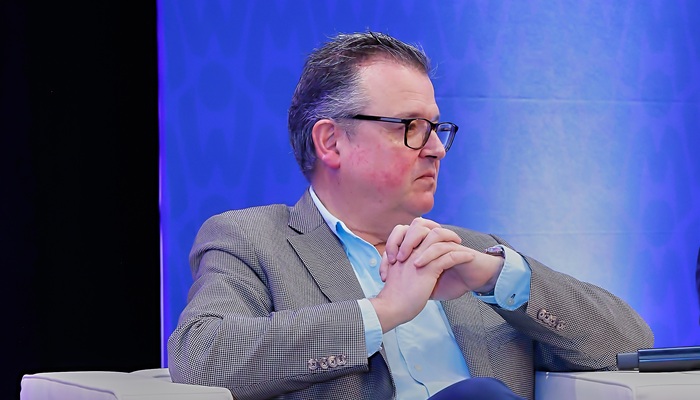
Best Doctors chief executive officer Sheldon Kenton (pictured) emphasised that new technologies could not be used as a scapegoat or curtain for insurers.
“Our obligation as the provider side of the industry is to ensure that we’re not hiding behind AI either,” he said.
“So AI must make the customer journey easier and more rewarding for them, but we need to be available at the other end of the phone.
“As this is health this is deeply personal, and while AI can remove a lot of the noise from the system and a lot of the friction, my view is that every data point represents a patient, a family, and a promise – and the promise is the critical part here.
“People are buying these products because they are receiving a promise from us that they expect us to deliver on, so as an industry we must absolutely not use AI as a means of funnelling the consumer through channels that are convenient for us.
“It has to be about meeting the customer exactly where they are.”
Redbridge business development vice president Richard Irures said the insurer believed one of the things technology is not going to change is the role of people in this business.
“There’s much less of that in our market because the Latin American consumer still needs to know there is a company present; they need a building, they need someone to complain to,” he said.
“Artificial intelligence still doesn’t allow people to complain – it is impossible for an agent or a client to go off angry to complain to a machine.”
‘Relationships matter’
But it is not only insurers who recognise the importance of maintaining personal interactions.
Acclaim co-founder and president Matt Teumer noted that whether someone if from an insurer, third-party administrator, provider or adviser “it all comes down to trust and relationship”.
“Relationships matter. This is a market based on trust, based on relationships,” he said.
“Look at country by country. In the US we Google everything and we’re moving to Chat GPT to ask questions.
“But maybe other countries in LATAM it’s using WhatsApp, it’s asking friends and family – that’s an interesting point because it matters like relationships matter.”
Trust and accountability
Flywire B2B strategic account director Manny Lopez emphatically echoed those thoughts.
“From our point of view, AI’s impact will be more about cost reduction,” he said.
“It’s about reducing administrative friction and decision support rather than replacing people.
“It’s because it involves that human element, that is part of that premium.
“And it doesn’t remove the human element because you still need that agent and that trust and that relationship matters.
“That trust that you can’t move away from, particularly in Latin America, is very important: trust and accountability,” he added.