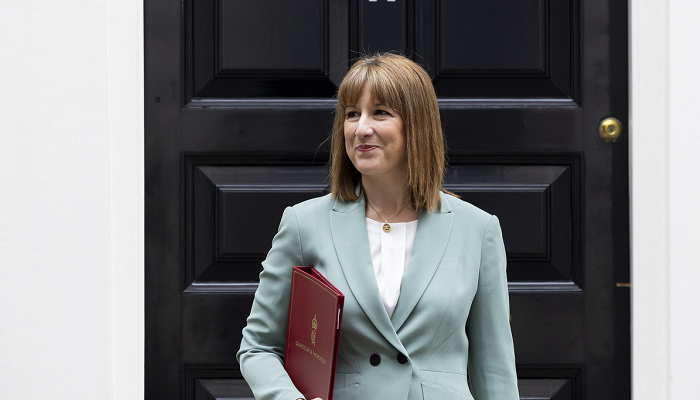
Chancellor Rachel Reeves (pictured) avoided announcing any fresh tax increases at the Spending Review but has increased annual public spending by around £68.5bn from 2025-26 to 2028-29 – an annual year-on-year real terms increase of 1.5%.
This growth over the four-year period starting in the current year is largely taken up by the Department for Health and Social Care (DHSC) and Ministry of Defence (MoD) where budgets are up by £31.1bn (2.7%) and £11.3bn (3.8%) respectively.
In contrast the Department for Work and Pensions (DWP) is seeing its annual budget rise from an expected £11bn in 2025-26 to £11.5bn in 2028-29 – a real terms cut of 0.2%.
HM Treasury said DWP’s budget was increasing by more than £1.1bn in real terms from 2023-24 to 2028-29, with a focus on tackling economic inactivity as set out in the Get Britain Working white paper, and reducing fraud and error in the welfare system.
It added that DWP had committed to delivering at least 5% savings and efficiencies over from 2025-26, such as reducing its back-office estate and exploring opportunities for co-location with other public services through its estates strategy.
A further £312m per year of technical efficiencies by 2028‑29 has also been identified.
Overall, just £26.1bn or 38% of the remaining increase is shared around the rest of government spending, as much of Reeves’ spending commitment increases have already been accounted for in the previous and present financial years.
As a result, some departments, such as the Foreign, Commonwealth and Development Office, are seeing significant funding cuts in the coming four years.
‘Potential funding gap’
Sarah Coles, head of personal finance at Hargreaves Lansdown, said the government was pinning its spending plans on growth, which would boost the tax take and mean there was enough money to go around.
“If that growth doesn’t materialise, and a potential funding gap emerges in the coming months, we’re going to get another round of speculation over which taxes might be in the frame,” she said.
“The government may well have to explore its options, but it also needs clarity as quickly as possible.
“The risk is that the debate encourages knee-jerk reactions, as people panic about potential changes, which leave them worse off in the long run.”