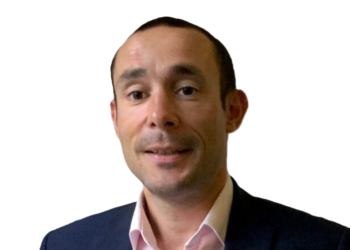
The chief medical officer (CMO) of Macmillan Cancer Support has criticised protection insurers for an “extraordinary” lack of consistency in the way they verify cancer claims.
Professor Richard Simcock told Health & Protection that some forms sent to doctors had an “enormous amount of redundancy” which made them difficult and unwelcome for medical practitioners to complete.
He also highlighted that several insurers wanted oncologists to act outside their practice remits and in-effect become occupational health practitioners in judging whether patients were fit to work.
Furthermore, there are significant variations in fees paid to doctors for completing this essential paperwork, often deviating substantially from agreed fee levels
As a result, he urged the industry to come together on a more collaborative process to make it more palatable for doctors and to give better outcomes for patients.
‘Extraordinary’ lack of consistency
Speaking at the launch of the Scottish Widows and Macmillan Cancer Support Living with and beyond cancer in 2045 report, Professor Simcock outlined the critical issues doctors face from insurers in supporting their patients’ claims.
He welcomed Scottish Widows’ approach but told Health & Protection more widely “the lack of consistency is extraordinary”.
“I get asked to fill in a number of reports, whether that’s for critical illness, income protection or terminal illness and those forms vary enormously in terms of complexity and detail,” he said.
“The best example I’ve seen is where the insurer noted simply what the claimant has told it and asked is it true? Then I have to sign off and return.
“At the other end of the spectrum are six- or seven-page forms where every single bit is so detailed you might think the insurer was planning to take over the clinical care of the patient and there is an enormous amount of redundancy in those forms.”
Professor Simcock highlighted that from a clinical perspective forms often seem to have been designed without any true insight into what the questions are and why they are necessary.
“The reality of that is, if you are a busy clinician, a very long form is going to take low priority in your working day, but for the person with cancer who’s waiting for their claim to be processed, it’s an enormously important thing,” he added.
Extraneous data slowing claims down
Professor Simcock emphasised that he appreciated and understood there was a core data set an insurer should expect to see to fulfil a claim, but he resented extraneous, unnecessary detail, “which often seems to be collected without any true thought about what its purpose might be”, because ultimately it will slow the claim down.
One particular issue was expecting oncologists to exceed their role as cancer specialists and give return to work advice.
“A lot of insurers will ask the oncologist to fulfil the role of an occupational health physician, which they aren’t,” he continued.
“I will be asked, do I think this person is able to return to work? Well, I am not an occupational health physician, I do not understand the full remit and responsibility of their job description, nor should I, that’s not my role.
“What those insurers are trying to do, frankly, is get occupational health physician input on the cheap.
“That is a disservice to their clients in my view and so those forms are particularly difficult.”
Terminal illness difficulties
The Financial Conduct Authority (FCA) has been particularly focused on protection market claims processes over the last two years, including within its Pure Protection Market Review.
In October 2023 it send a letter to insurer CEOs highlighting significant concerns with how terminal illness claims are handled.
Health & Protection surveyed insurers six months later where they said they were taking the regulator’s concerns on board.
However, this does not appear to have changed much as the subject was also raised by Professor Simcock who noted that prognostication is hugely difficult, whether that is about a person’s survival timeline or their ability to return to work.
He highlighted the case of a patient he thought would have died 15 years ago and yet is still alive today.
“I would have been happy to sign a terminal illness form of death likely within 12 months for her 20 years ago and manifestly been wrong, so some consistency about how we define that would be welcome,” he said.
“There are ways to do that, for example, using data from published clinical trials for patients in those settings, but that is almost never asked for.
“I’ve done some academic work of our own about doctor’s ability to assess how long a person lives before their cancer progresses and we were able to show in our own cohort that even specialists were manifestly poor at estimating progression free survival and would usually overestimate in favour of their patients, so the objective lens is also missing.”
He also suggested that perhaps a confidence level around the distribution of likely outcomes might be a pragmatic and systematic way of deciding terminal illness claims, with models available to do that.
This could also promote open and honest conversations with patients about their likely outcomes.
Insurers try to avoid paying fees
Finally, Professor Simcock raised the issue of remuneration and noted that as these forms are not NHS work medical practitioners are entitled to charge a fee, but insurers frequently tried to avoid paying or pay less than agreed.
“The multiple different ways the insurers seek to avoid paying those fees is extraordinary,” he continued.
“Some insurers will offer a flat fee of sometimes £35, where the agreed fee is three times that amount or separate invoicing arrangements and those complications are another disincentive for some doctors to fill the form in.”
Ultimately, he asked the industry to create some degree of harmonisation, highlighting the significant differences between all insurers and that “when you get to income protection, it’s even worse”.