Depleting consumer confidence has led to increased interest in taking out protection cover.
This is according to National Friendly’s Bruised Britain #3: Modern Day Fears study which polled 2,000 consumers in February and March 2026 and found that 41% of fearful adults were more interested in protection products in March, up from 28% in February.
The research also found that almost half of UK adults (45%) now feel less safe than they did 10 years ago.
The proportion feeling less safe compared to a decade ago jumped from 38% to 45% between February and March – a seven-point uptick that underlines how rapidly shifting global events are shaping everyday anxieties.
Fear rising
At the end of March, 53% of adults said they felt less safe now than 20 years ago, rising to 57% compared with 30 years ago.
Women are significantly more affected than men: 52% of women reported feeling less safe compared to 10 years ago in March, up from 42% in February, versus 38% and 33% of men, respectively. Older generations are also more likely to feel the shift, with 54% of gen X (born between 1965 and 1981) respondents and 45% of boomers (born between 1946 and 1964) stating last month they feel less safe than a decade ago – compared to just 37% of Gen Z (born between 1997 and 2012).
Global events
Among British adults that feel less safe now than at any other time in their life, concerns about terrorism across the globe rose from 45% in February to 59% at the end of March – making it the top driver of unease last month. Worries about geopolitics (such as the Middle East) increased from 41% to 52% over the same period.
Other consistent fears includes crime and violence in the news (57% in March), cybercrime and fraud (47%), and social unrest in the UK (47%).
Everyday concerns
The study also tracked changes in how safe people feel carrying out day-to-day activities. Among those that feel less safe now than they have previously in their life, crowded places are now a source of anxiety for 54% of fearful adults (up from 45% in February), while travel outside of the UK saw the sharpest month-on-month rise, from 19% to 31%. Travelling alone remained a particular concern for women – 61% said they feel less safe doing so in March, compared to 32% of men. Attending big, organised events is also driving fears for 35% of fearful British adults, up from 26% in February.
Increased interest in protection
The research also pointed to a notable increase in consumer interest in protection insurance. In March, 41% of fearful adults said they are more interested in protection products overall, up from 28% in February.
Interest in specific products also climbed sharply, with life insurance attracting more interest from 28% of fearful adults in March (up from 20% in February, with 55% of under-35s more interested).
But interest in critical illness cover also rose from 19% to 28% while income protection increased from 16% to 25% – with 55% of fearful under-35s now showing greater interest in IP, up from 38% in just a month.
Almost one in four (25%) consumers said that feeling less safe made them more interested in accident, sickness and unemployment (ASU) cover in March, rising to 51% of under 35s.
Geopolitical uncertainty
Peter Chadborn, director at Plan Money, said: “A common theme in many client conversations over the last few months has been a general concern with the erratic nature of evolving world events.
“Geopolitical uncertainty is always prevalent in certain parts of the world, which can often be perceived as uncorrelated to matters at home. But it is brought closer to home when there is a direct impact on the daily cost of living which can also create uncertainty in terms of how a client’s future plans might be affected.”
Threat perception
William Trump, lead consultant at Unconventional Wisdom, a behavioural science consultancy that specialises in insurance, said: “People’s level of anxiety and fear is not driven purely by the threats themselves but also about their perception of those threats.
“So, in addition to the raw events happening in the world, people’s attention is being drawn to these events in a more vivid way than ever before. This is in part driven by the availability of information (e.g. through the news cycle and social media) as well as the unpredictability of the behaviour of world leaders.
“Finally, whereas other conflicts may feel remote, these world events have very real, concrete (i.e. salient) consequences for people (i.e. price or availability of fuel).
“From an insurance perspective, we know that scary world events can cause an increase in a desire to protect oneself, which we saw with the Covid pandemic and the subsequent spike in interest for life insurance.
“However, there is also psychological evidence to suggest that fearmongering can sometimes backfire as it can cause customers to disengage (i.e. bury their head in the sand) unless the threat is paired with a clear solution.”
Sobering picture
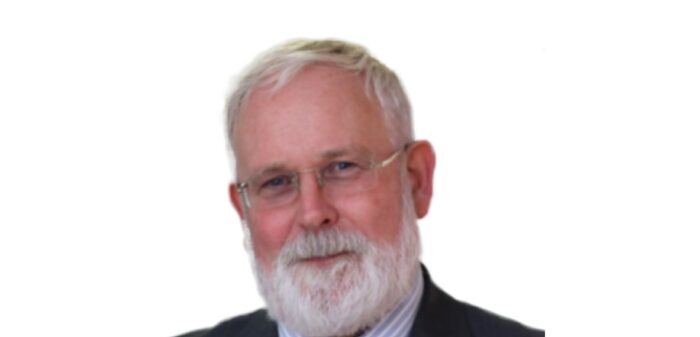
Graham Singleton, chief executive officer of National Friendly (pictured), said: “The new Bruised Britain findings paint a sobering picture of how people are feeling right now. In the space of just one month, we’ve seen a meaningful and measurable increase in fear – unsurprisingly driven by global events that feel closer to home than ever before.
“What’s striking is that this anxiety is translating into a genuine desire to take action and protect what we can control. More people are thinking about how they protect themselves and their families financially, and that’s a conversation the protection industry needs to be ready to have.”