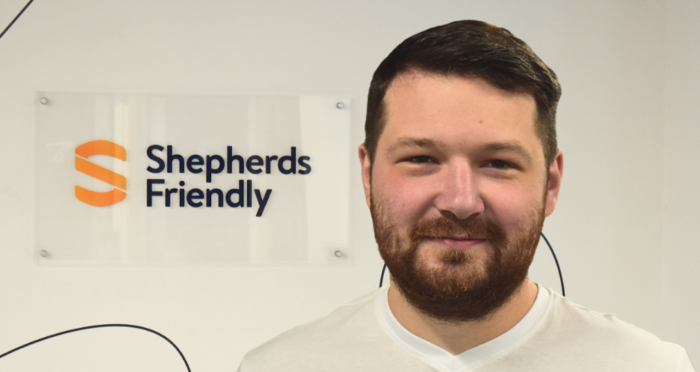
Sam Traynor, product development and pricing actuary at Shepherds Friendly, speaks to Health & Protection about encountering presumptive people early in his working life in another sector, his more positive experience in the protection industry, celebrating Pride Month in the office and the external challenges the sector faces.
What have been your own experiences with regard to attitudes towards LGBT communities in the sector?
Shepherds Friendly is a very inclusive workplace. I’ve not been discriminated against once. Since working here, I don’t feel like I’ve missed out on any opportunities due to who I am, I think people like to embrace it. We’ve done Pride Month celebrations in the office before and people have been really involved with it, gotten dressed up for it and been willing to learn about the struggles that exist today.
We have a diversity and inclusion group which is for sexuality as well as other things like religion, culture and neurodiversity that I’m part of. It’s our job to organise these events, whether it’s about inclusivity or other things. We’re doing Pride Month again this year but we try not to do the same thing every year.
Before working in financial services, I worked in a warehouse for some time and some of the language people used was quite colourful and people could be very presumptive about how you present yourself. They find out you’re gay and they say, ‘you don’t look or sound gay’. How you present yourself and who you are can be different. It’s not that people were disgusted or horrified to learn I was gay, it was just one of those unconscious bias scenarios.
How have attitudes evolved in the sector?
I’ve only been in the sector since 2018 and I’ve only worked at Shepherds Friendly, which has always been very open-minded. So much so I’ve never wanted to leave.
However, during that time I’ve been very involved in external discussions with networking groups, reinsurers, independent actuaries and people from multiple different organisations and the consensus is that no matter who you are you’re there to do a job and you’re qualified to do a job.
The role I’m in is very specialised and you need to have that certain qualification – it doesn’t matter if you’re he/she/they, you’ve shown you have the skills to do it. I don’t feel like I’ve ever been judged by any of the external people I’ve dealt with.
What is the sector doing well and where does it need to up its game?
I’ve mentioned the diversity and inclusion group – that was a great step forward. In recent years, there’s been a real effort to push diversity to the forefront, and I know many other organisations are doing the same.
We’re doing quite well at highlighting different areas of diversity, not just in the LGBTQ space but generally trying to make things more inclusive.
I have a couple of friends from the LGBTQ community who are also in the financial services sector and their experiences have been pretty positive too.
Some ways the sector might have to improve are related to external developments. For example, navigating issues such as the Equality and Human Rights Commission’s guidance on single sex toilets and what is essentially a government ban on gender-neutral toilets in new non-domestic buildings.
We only have male and female toilets at Shepherds Friendly and I would say there are no issues whatsoever with how these are used. But companies that are inclusive like ours might be forced to change things in future in ways that not all employees will be happy with.
Do you feel encouraged and enabled to bring your whole self to work?
Yes. And I do. I used to host a lot of the social events. I’ve never felt like I’ve had to hide myself away.
At the start, maybe I was slightly less open, but I think that’s just because it was a new place with new people and I didn’t know how they would react.
Over time, I’ve just done away with all that and said to myself, ‘I’m going to be myself and if people like it, they like it, if they don’t, they don’t’. They only have to see me eight hours a day.