The Association of British Insurers (ABI) has set out a series of recommended actions and called on the industry to review joint-protection products to shield members from economic abuse.
As Health & Protection has previously reported, there has been concern in the industry for some time that there is a risk of someone controlling a partner’s access to their money, assets and financial services.
One example would be insurance claim payments from a joint policy being redirected to the perpetrator.
To avoid the risk of such events, the ABI has called on the industry to review whether standard requirements for joint consent, disclosure, correspondence or co-operation could increase the risk of harm or give a perpetrator control.
Where there is a safety concern, firms are asked to prioritise safeguarding over routine servicing pathways and that the matter is handled by trained colleagues.
Other initiatives laid out in A guide to supporting customers experiencing economic abuse include providing routes out of digital joint policies and setting controls to ensure that payouts cannot be diverted to one particular individual in the joint policy.
Another move would be to ensure that an abusive partner cannot obstruct necessary changes, retain access to personal data or exert control over policy proceeds after separation.
This is part of the ABI’s efforts to improve outcomes for vulnerable customers and boost financial inclusion. Achieving this could help customers who have suffered from economic abuse to “breathe again“.
Indeed, one in six women in the UK has experienced economic abuse by a current or former partner, according to Surviving Economic Abuse, the charity which worked with the ABI on the report.
Critical illness and medical cover also featured in the report.
For these products, the ABI called on providers to ensure that a customer is not agreeing to cover that would increase their dependence on the other person.
Sending correspondence about appointments, authorisations or treatment pathways directly to each member of a joint policy is another move that could protect a vulnerable or abused member of a joint policy.
Employer guide
The ABI has also set out how firms can improve their support for their employees experiencing domestic abuse.
Developed in partnership with the Employers’ Initiative on Domestic Abuse, A guide to supporting employees experiencing domestic abuse provides examples of how employers can create supportive workplace environments.
Equipping managers to respond appropriately and help colleagues access specialist support also feature.
The guide provides practical examples of good practice, such as training and referral pathways, to help firms build cultures where colleagues experiencing abuse feel supported and able to access help.
It comes as Office for National Statistics data shows that 12.5 million adults have experienced domestic abuse since the age of 16.
Home Office data from 2019 estimated that domestic abuse costs businesses in England £17bn a year.
Feeling safe
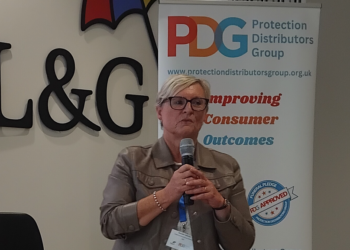
ABI director general Hannah Gurga (pictured) said feeling safe and in control of your own life was something everyone should be able to expect.
Lucy Rigby, economic secretary to the treasury, added that economic abuse can devastate lives.
“Abusers weaponise anything they can, including insurance, to maintain control over victims – trapping victims in policies they want to leave or cancelling the policies they depend on.
“That’s why it’s so important that as part of the Government’s financial inclusion strategy the ABI has developed this new guidance to ensure victim-survivors get the protection they deserve.”