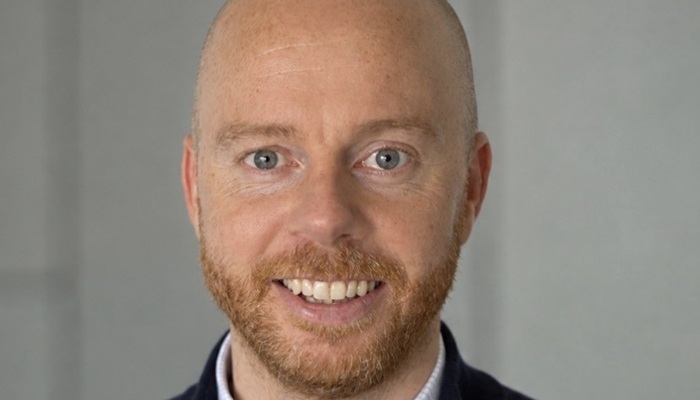
Business development manager and protection specialist Adam Robertson discusses the findings of Scottish Widows’ latest business protection risk report, explaining how advisers can connect with their clients and help SMEs identify, understand and manage their risks.
The report paints a picture of SME vulnerability. What should advisers take from it beyond the headline statistics?
Adam Robertson: What stood out to me is many business owners are not deliberately taking risks, they are just running their businesses and have no one to help them join the dots.
When advisers look beyond the numbers, they see most SMEs rely on a small number of people, they may have borrowing linked to key individuals, succession plans that have not been thought through or shareholder agreements that are not backed by any funding.
These risks are often developed gradually as a business grows, so owners don’t always recognise how exposed they become. We found that 45% of business owners had never sought business protection advice, so the opportunity to open up this business protection conversation with their clients is huge.
What I like about the report is that it moves the conversation away from products and towards practical business outcomes.
Most business owners think about growth, recruitment, cashflow, succession and looking after their families. Protection usually sits underneath those conversations.
For advisers, that is a great opportunity. Rather than ask if they have business protection, ask what would happen to the business if they or a key individual could not work tomorrow.
Some advisers see business protection as slower or more complex. Is that fair?
AR: There is some truth in that, but it’s often overstated.
Business protection can involve more moving parts than a typical personal protection case: you are often discussing business structures, borrowing, legal agreements, ownership and succession alongside the protection need.
However, that complexity should not be a reason to avoid the opportunity.
The advisers who are successful in this market do not start with products; they start with business risks. If a client tells you that most of the revenue depends on one person, they have just identified a key person conversation.
If they have recently taken on borrowing, that is potentially a business loan protection conversation.
In many ways, business protection becomes simpler when you stop thinking about insurance and start thinking about what keeps the business operating.
What do you think is most valuable in the report to support advisers?
AR: Do not overwhelm clients with statistics, the value of the report is that it gives advisers credibility and context when discussing business risk.
Make the conversation personal.
For example, if you are talking to a business that relies heavily on an owner or key employee, I might use the research around business continuity to explain why so many SMEs struggle if that individual were suddenly absent.
If I am speaking to a business with significant borrowing, explore how that borrowing would be repaid if circumstances changed.
Ask how long the business would continue without them. That is the point where the research stops being a statistic and starts becoming relevant.
The report also helps advisers move away from product language.
Clients do not typically talk about key person cover, relevant life or shareholder protection.
They talk about keeping the business running, protecting their family or making sure their staff are looked after. That is the language that resonates.
When used properly, the report helps advisers educate rather than sell.
It creates a much more meaningful conversation about business resilience and long-term planning.
How can advisers use the adviser report and SME resource to support their business protection conversations?
AR: These resources work hand-in-hand.
The adviser’s report identifies where risks typically exist, while the SME guide helps business owners understand those risks.
Start with the clients you already advise, then use the report to identify where those risks may be hiding in your business owner conversations.
Most importantly, advisers should not feel they need to start with a recommendation. The goal is to help business owners see risks that they may not have considered before.
Once the client understands the problem, the protection conversation becomes much more natural.
Where do accountant and solicitor relationships come into the process?
AR: This is one of the biggest opportunities in this market. Too often, professional relationships are viewed purely through the lens of referrals.
The best professional relationships help advisers identify risks earlier and provide better outcomes for clients.
Accountants and solicitors are often closer to business risks than anyone else. An accountant may see profit concentration, cashflow pressures, directors’ loans or personal guarantees long before protection is discussed.
A solicitor may be drafting shareholder agreements, handling succession plans or facilitating ownership changes. Both are seeing risks, but from different angles.
The adviser often plays a unique role because they can connect those conversations and help turn identified risks into a practical and funded plan.
What is particularly interesting is the research showed that 70% of SMEs use an accountant and 30% use a solicitor, compared to just 19% who use a financial adviser.
That tells us business protection opportunities already exist within those professional relationships.
We have just developed a blueprint for advisers to use to engage with fellow professionals, pulling together the knowledge from our marketing team, our events team, and our business development team.
This includes a step-by-step guide of how to run a successful introductory event, approach letters to send and material for advisers looking for that opportunity.
Advisers can find out more about running business events by contacting protectsales@lloydsbanking.com
Read the report at: adviser.scottishwidows.co.uk/business-protection-report