
AIA has sent a rallying call for fellow health insurers to be better negotiators with hospitals and other healthcare practitioners to keep medical inflation under control and ensure the sector remains sustainable.
It highlighted that strong actions need to be taken in health insurance provision and it is already seeing the benefits of taking a firmer approach by trimming hundreds of millions of dollars in potential fraud, waste and abuse from its cost base.
Overall, the insurer believes Asian health and protection insurance markets have credible conditions for strong growth for many years and is aiming to continue its trajectory from 2025.
As part of this it believes building relationships and engagement will help it and customers to get greater value from their cover while increasingly seeking personalisation of premiums.
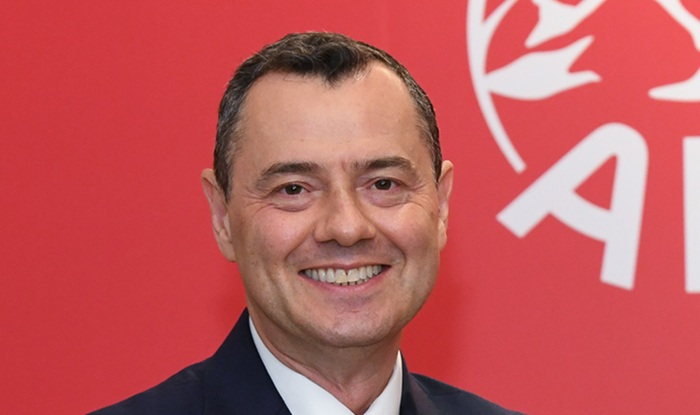
Speaking to Health & Protection following publication of its 2025 results, AIA group chief marketing officer Stuart Spencer (pictured) explains why the insurer was particularly bullish for the region’s potential.
Citing single digit levels of penetration of individual life and health insurance, a rising middle class, greater affluence and broader political stability, he argues this brings “ingredients that are fundamentally right for the sustained growth of life and health”.
“So you see this emergence of affluence and people then have more discretionary income,” he says.
“We know they want to protect their health, their wellbeing, their futures, their assets, and they plough money into life, health and long-term savings.
“You also have a very strong demographic transformation of really young populations in places like Cambodia, Vietnam, Myanmar, Indonesia and then the aging populations in places like China, Korea, Thailand, Singapore and Hong Kong.
“For a life and health insurer, we can in a way bookend both populations – we have accumulation and decumulation solutions for those who are getting older, and life and health for people who are younger and starting their families.”
‘Healthcare providers are feasting on insurers’
While this positive outlook is encouraging for the insurer and the wider industry there are also underlying issues which need to be tackled.
Chief among them is premium inflation which is a scourge of health insurance sectors around the globe on local and international products alike.
“We see medical inflation anywhere from 15% to 20% in some markets, so we’re trying to find more sustainable solutions with things like co-pays, deductibles and pre-authorisation,” Spencer explains.
One of the ways to do that is to take greater control of the medical care process and be more direct with hospitals and practitioners, and this is something Spencer believes AIA and other insurers need to be better at doing.
“Who do we have to blame for rising medical inflation?” he asks.
“Healthcare providers, who post-pandemic are feasting on insurers. There’s no question about it, we need to be better negotiators.
“We’re driving a lot of volume, we’re filling beds, we’re filling clinics, yet we hadn’t been savvy enough to leverage that volume to negotiate better transactional prices.”
The insurer is also becoming more joined-up with its integrated healthcare strategy including updating and launching new products to help ensure a sustainable market for the longer term.
Part of this involves directly contracting with or owning major healthcare practitioners and partners. For example, in Singapore the insurer has launched a chronic disease management programme with Amplify Health and signed a sustainable healthcare collaboration with Mount Alvernia Hospital.
$300m cut in potential fraud waste and abuse
In product terms, the introduction of cost-sharing arrangements with customers, network provision and other directional care processes are having a significant effect already.
In Malaysia the insurer is seeing 20% lower premiums compared to out-of-network products and its network utilisation increased 18% year-on-year in Dec 2025.
Furthermore, across Hong Kong, Thailand, Singapore and Malaysia, more than 750,000 cases were transitioned from inpatient to day-case settings, contributing to approximately $300m of claims savings in 2025, which represents a remarkable 5% of gross claims paid.
“I believe a lot of that $300m is fraud, waste and abuse,” Spencer highlights.
“I can’t give you an exact quantification of the $300m, but the extent to which our lost cost declines, we can and we should be translating that back into more competitive pricing to the customer.
“Doctors, providers and customers can be fairly ingenious in ways they employ to try and defraud insurance companies and we’ve caught a couple of hundred million dollars of this across the region, which is serious, serious stuff.”
Indemnity-based product focus
Part of these developments includes a much more personalised approach to cover for individuals, potentially rewarding those who remain healthy and act to maintain that.
There was also a recognition that repricing was needed and a change in the way cover was structured and making sure people understand the rationale behind any rate changes.
“We need to be able to be very segmented, personalised and targeted, it’s really those customers who are underperforming that we need to recalibrate what the risk needs to be,” Spencer continues.
“We were under-priced for a long time, we didn’t impose any kind of rate increases for years in many of our markets, Malaysia in particular.
“We want to provide other solutions for customers that aren’t onerous or draconian, that give people coverage in a more modular way so they can decide how much they want to buy and try and provide higher levels of personalisation on how much indemnity they want for certain procedures?
“And moving away from pure reimbursement products into an indemnity space because the more indemnity we sell, the less subject we are to medical inflation as we say for this procedure, we pay out X.
“Yes, over time we’ll need to reindex what those indemnity levels are relative to medical inflation, but when you’ve got providers who are really jacking up prices for basic provision, and when you have people who culturally want to go to a hospital and spend the night in a hospital for something that in the UK you would never imagine going to a hospital for – that too creates a massive cost burden.”
Ultimately, Spencer argues this is something the whole insurance industry must embrace and buy-in to maintain a sustainable market.
“The thing is, it’s not us acting alone. How we as an industry, combat medical inflation is really one of the great challenges of our time.”
Caretaking customer claims
Alongside this approach, Spencer highlights the insurer is trying to move away from a purely transactional to a relationship situation with customers, for example for critical illness claimants extending services such as case managers to help with treatment options.
“We know how long and intimidating and complicated it is navigating medical opinions, making sure you get the right treatment,” he continues.
“Do you need surgery or not? Who’s looking at your radiology? It’s terrifying, if you’ve got one of these diagnoses, so we want to be there to hand-hold and caretake in ways that in the past the industry never felt that it was obliged to do.”
Included within this desire for engagement and building a relationship is the Vitality programme, which AIA has the ownership of in Asia, with 2.6 million customers enrolled and around 62% of all new business integrated into Vitality.
The insurer tracks a multitude of health factors and reports significant shifts from unhealthy to healthy in all cohorts in all markets and therefore making its book of business healthier.
Indeed, Spencer says this programme is exceeding expectations in mortality, morbidity and longevity, and even more so when compared with non-Vitality cohorts.
Hyper-personalisation
Combining that with lower claims frequencies, greater persistency and more uptake makes for an “even more compelling” commercial view.
“Our approach is decidedly focused on prevention, where we are influencing, we’re engaging, we are driving behavioural change,” Spencer explains.
“We’re trying to be as positively, constructively intrusive in the lives of our customers as we possibly can, because we know that risk is not static.”
With all that data, customer engagement and deeper understanding of risk dynamics, AIA is aiming to take a hyper-personalised approach to its pricing.
“We understand that it’s dynamic, and as it’s dynamic, the implications on pricing are that if someone’s taking better care of themselves than someone else they are a better risk,” Spencer concludes.
“Why should you pay the same premium for the same product as this guy? So we are trying to hyper-personalise the pricing based on a more educated understanding of your risk profile, particularly if you’re a Vitality customer.”