Aviva’s new virtual agent will not be taking on more complex claims related to bereavement or critical illness, the insurer’s CEO has revealed.
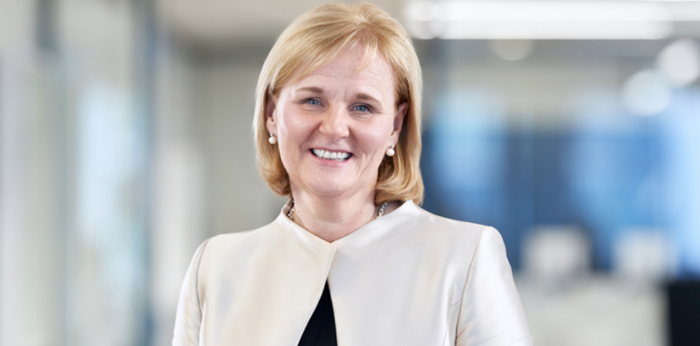
Dame Amanda Blanc, group CEO of Aviva (pictured), also said embracing artificial intelligence (AI) was significantly reducing medical insurance underwriting processing and call times.
This was part of a wider benefit of enabling employees to spend more time interpreting information rather than processing it.
“The most important thing that I have learned from our AI journey at Aviva is this is as much about people as it is about technology,” Blanc told the Chartered Insurance Institute’s (CII) Shaping the Future of Insurance conference.
“And the fundamental principle that accountability does not diminish just because a decision was AI assisted.
“The responsibility for customer outcomes remains with humans.”
Blanc maintained that AI changes how professionals work, with future insurance professionals benefitting from spending less time processing information and more time interpreting it.
“Less time completing tasks and more time exercising judgement on places that need time spent on them,” she continued.
“From an employee perspective, that’s way more interesting, way more powerful and a more human job.”
Benefits of the technology
And the benefits of the technology are plain to see, she said, noting it was making a real difference to the business
“In medical underwriting, AI has reduced the volume of medical data requiring human assessment by 87%. It cut processing time by 45% and achieved a 99.8% accuracy,” Blanc continued.
“What that’s done is free up our underwriters to focus their expertise where human judgement matters.
“Using AI for summarisation and call handling is reducing customer hold times by 50% and cutting first touch email response times from 48 hours to one hour.
“And our machine learning tools for fraud have reduced claims indemnity costs by over £100m.”
Human professionals on hand
But while Blanc pointed out that she could not think of a human solution that could bring these benefits, human governance still mattered.
“I don’t know about you, but I can’t think of a single human solution that could do all of that,” she said.
“But, and this matters enormously, AI can only deliver that safely because we have professionals at every critical stage of the process.
“The human governance isn’t nice to have. It’s what makes the whole thing work.”
But knowing when to deploy AI and when to resist its use also really matters, according to Blanc.
She explained: “You’ve always got to know when it’s appropriate to use the AI and when it’s not.
“We’re building a virtual agent at Aviva.
“Would we dream of that virtual agent dealing with a bereavement claim or a critical illness claim?
“When somebody wants to speak to somebody, you need empathy, you need to understand what’s going on – not at all.
“But if someone is ringing up to check up what the excess is on their policy, or to notify a relatively straightforward claim, you would be pretty safe that the process for doing that is there with the checks and balances in place.
“You’ve just got to know what’s appropriate.”
The prospect of whether AI will kill off the role of the adviser was discussed in Health & Protection‘s latest analysis.