Health screening firm Bluecrest is launching two new tools aimed at aiding businesses in their decision making around health and wellbeing benefits.
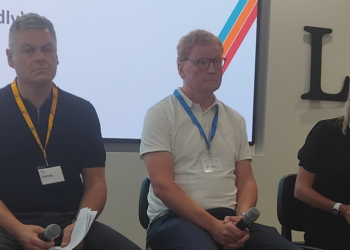
This is according to Dr Martin Thornton, chief medical officer at Bluecrest, who spoke at a lunchtime event in the West End of London yesterday with Health & Protection in attendance.
Thornton revealed that Bluecrest’s Work Health Confident tool will enable users to access a website, enter their profile and gain key insights on their business and where they could be better directing their wellbeing benefit efforts.
But Thornton further revealed that the company is also in the early stages of creating a return on investment (ROI) calculator which will enable firms to enter in how much they spend on private medical insurance to receive an estimate of their ROI on their expenditure.
Not tracking absence data
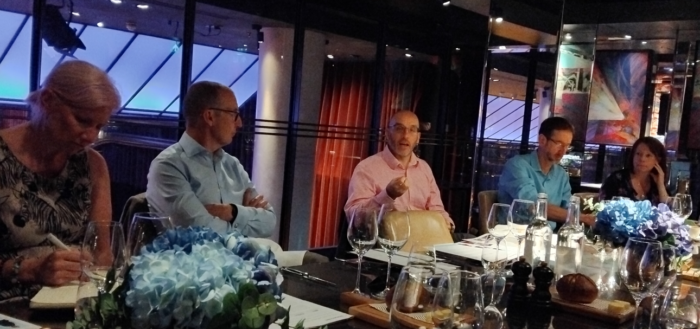
The need for data was underlined during a subsequent debate involving advisers from across the group health and wellbeing sector.
In particular, Sarah Brannan, senior healthcare consultant at Gallagher, maintained that one of the key challenges she is experiencing is that her clients do not track absence data well enough.
“I talk to my clients and say, well look let’s try and map some of this.
“Your absence data lets you look at some of the trends.
“You’ve got lots of really valuable benefits, but let’s look at what else you’ve got and a lot of the time they just haven’t got it.
“Managers aren’t managing it well enough. Line managers aren’t equipped to manage it well enough.
“Their reporting systems aren’t reporting it well enough and then they are not doing anything with the data they have got.
“What can you do about that other than telling them it’s a really important piece of the puzzle that they are missing?” she added.
Debbie Clark, head of wellbeing at Everywhen, maintained that some SMEs do not track at all.
Genuine interest
And Stephen Hackett, head of corporate benefits at Benifex, contended that while there is “genuine interest” from clients to gain greater insight into the health of their workforce to better make the business case for wellbeing benefits spend, often leadership teams have a completely different agenda.
“We were all talking about wellbeing years and years ago. I think we all said that the only way to get wellbeing into a business was to get the CEO or the leadership team involved,” Hackett said.
“And I think, maybe I’m being harsh, but as a market, we failed to get the conversation going.
“Because it’s just seen as an additional cost, something they don’t know how to balance.
“The cost of existing benefits is going up massively because of Covid and claims volumes are going up and the cost of claims are increasing every year.
“And so the one challenge I’d say is how do we get this conversation to the top level and have it filter down so it’s top down not middle up?” he concluded.