
Despite 50% of cancer cases being preventable, employers are struggling to align their workplace cancer strategies with the crucial need for prevention and early detection, Richard Browne hears.
With around 50% of cancer cases considered preventable, employers face mounting pressure to support prevention, early detection, and care. But are current strategies matching this ambition?
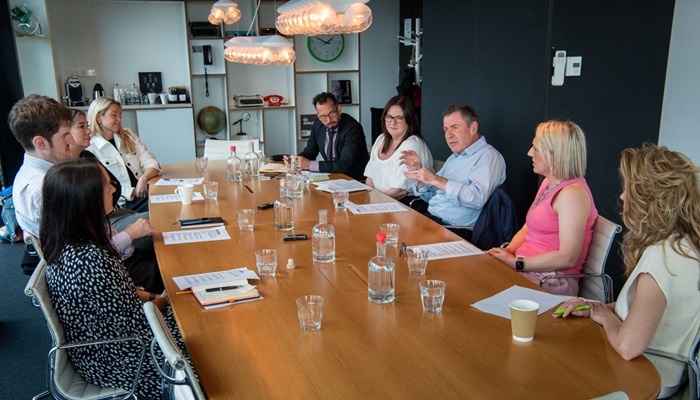
This was one of the issues covered by participants at the Health & Protection Cancer care in the workplace roundtable in association with Perci Health.
Download the roundtable supplement for the discussion by following this link.
For Beth Husted, associate director of health and benefits at WTW, it was a case of businesses doing very little in terms of prevention.
“I don’t think businesses are doing health and wellbeing programmes to prevent cancer,“ she said.
“If they are doing them, they’re doing them because they need to be seen to be doing them. I don’t think they’re as strategic as ‘we have this issue, so we need to do this’.”
And any attempt to increase education might be great – “but you’re not going to see that immediately effect price – and that’s what they’re mainly worried about,“ she added.
Prevention vs early intervention
But Husted also noted there was a big difference between prevention and early intervention, and that the distinction needed to be made clear.
“Prevention is putting all these things in place so that people will not get cancer,” she emphasised.
“But early intervention is knowing what resources are available so that they can get early detection or quicker treatment, so that they aren’t catching it later when it will be more expensive or less likely to be successful.
“That’s very different from prevention.
“They probably come hand in hand, because if you have a good prevention strategy you’ve probably got a good strategy to make employees aware they have a screening or go to an online GP or use other resources – so that you do have early detection.“
Making use of routine tests
For Emily Jones, client consulting director at Broadstone, there were different benefits to consider, including dental and optical checks.
“How important is it to go to the dentist, not for your teeth but to check out your mouth? And an optical check can reveal so much,” she said.
But people aren’t using these benefits enough, so Jones suggested a novel solution.
“Why don’t we do something like everybody gets an hour every six months to do the routine optical test and then claim that through your cash plan – or make it a mandatory requirement or a bit like when companies give you your birthday off?” she said.
Jones thought that businesses could be a bit more proactive in how they go about promoting benefits, but noted that people often do not even take up the free screens provided by the NHS.
“You don’t necessarily have to invest so much to even start this journey on prevention. But again, its about the education piece,” she added.
Husted enthusiastically supported that idea, and built upon it.
“Pay one person one new salary and then their whole entire job is to promote everything, get people engaged, show their measures – and then that will probably save money on everything else,” she said.
Not enough screenings
Participants agreed that while screening is the way forward, it is not being utilised as often as it should be.
Kelly McCabe, co-founder and CEO of Perci Health, said: “We know 35% of NHS screening appointments are missed. It’s really cost effective to enable your workforce to say ‘it’s OK, you can take a day off to go for that mammogram.”
Amanda Cran, group healthcare proposition leader of corporate consulting at Gallagher, agreed and pointed out: “Most businesses are OK with it – but everyone gets so focussed on targets at work that they push it back.”
In fact, despite their proven value, healthcare is often prioritised over preventative health screenings.
A significant challenge lies in low attendance, with employees sometimes reluctant to discover potential health issues. This reluctance is often more pronounced among men than women.
But it might not be fear that is preventing people from taking screenings, as Cran pointed out: “It might not be that ‘I don’t want to know’ – it might be that ‘I don’t want you to know’.”
She noted that a lot of it may come down to a company’s communications and culture.
“I also think the communications piece historically, and this is where comms and culture teams probably come into play. But again, it comes down to budgets and how much people are going to be willing to spend,” she said.
“But it’s comms that tends to focus on the technical and not the emotive. And therefore, employees just switch off to it and they’re not happy about that.”
Value of a pledge
Morgan Fitzsimons, co-founder and chief experience officer of Perci Health, noted the value of having businesses sign up to a pledge.
“Then it becomes a marketing tactic – we’re signing up to the pledge. And showing that people are taking the time off to get tested,” she said.
“Linked to that, we need an annual health day, like there are already sick days and birthday days – a day that you need to take off to do the things you need to do to deal with your health.”
Budget vs reality
Another issue is that employers often do not understand the expense of a comprehensive private medical insurance (PMI) plan.
Karen Smith, corporate team lead at Towergate, brought up the example of a recent client which had a couple of hundred employees and no benefits.
“They had no benefits and they said ‘I want private medical insurance for all my staff and this is my budget’,” she said.
Smith noted: “You’re not going to get that.”
She added: “So they have now got four or five benefits for their employees for that value – in fact for a bit less.
“All of the added values are being pulled out, so that the employee is looking at it and thinking – ‘wow, this is great, I’ve got all of these benefits.
“No, they haven’t got private medical insurance, but they have got all of these benefits and the costs to the employee are minimal based on what they would have had.”
A part of that means, not just managing expectations, but managing future costs and explaining the range of benefits.
Smith continued: “We have tried to manage the future costs as best we can, whereas if we start out with PMI we say you want it for this now – but what’s your budget going to be in the future, because you know its a 10% increase every year.
“We’ve just turned it around. Our role as advisers is to not be afraid to challenge our clients and say ‘OK, you saying you want this – but have you thought about this? Have you thought about how actually none of your employees have life insurance?’
“It is a minimal cost, but perception to them is really high, because they’re looking after their loved ones if anything untoward were to happen.
“So explaining all of the other benefits, we’re able to bring it all to life, rather than having two different people or two different agendas – but really looking after that client, and understanding what that client wants now and what they’re going to be looking at in the future.
“And what is the individual driver for the person that’s putting those benefits in as well as the company culture, because sometimes they can conflict.
“So listen to the clients, but do not be afraid to challenge – these people are important, and we want to make them feel important.”
How to evolve
There was also a discussion over the crisis facing employee healthcare as the cost of advanced cancer treatments continue to increase – which is putting traditional PMI and employee healthcare under greater strain.
John Dean, head of health and protection at Secondsight, put the issue into greater focus.
“Isn’t this an evolution that we are talking about?“ he said.
He noted that a lot of business might be about renewing policies, but that times were changing similar to the pensions industry which had to change because they became unaffordable with people living longer.
“We are now in that cusp for medical benefits,” he continued.
McCabe looked deeper into the issue of SMEs, which can be more challenging than larger corporates.
“Sometimes the proposition needs to be a little bit different for an SME versus a really large corporate – because some SMEs won’t see a cancer case every year, versus a really large employer where they might have a lot of data about cancer claims.”
Cran agreed and said: “I think it just depends on the client and the industry. If you’ve got someone who is relatively new to the market, they’ll be more open to providing people with the right support but don’t want to worry about a massive claim coming in.”
She noted that some SMEs may say they do not see the value of PMI as they have literally only got one person in their company using it.
But she added that “they will definitely value supporting employees, with some of this meaning being more paternalistic.”
Download the roundtable supplement for the discussion by following this link.