[SPONSORED CONTENT]
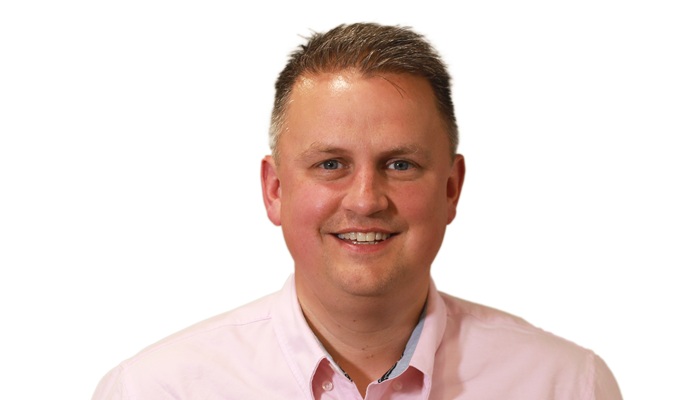
Certainty of underwriting decision is increasingly critical for advisers and their clients to ensure smooth and stress-free processes, says David Russell, Senior Manager Claims and Underwriting Strategy at Scottish Widows.
In this Q&A he explains how the insurer is developing its underwriting to reduce the need for medical evidence and where its investment in technology and artificial intelligence (AI) will expand this year.
Can you share the strategic vision behind Scottish Widows underwriting innovation and how this aligns with broader industry trends?
We have an underwriting strategy that’s built around the three pillars of simplicity, speed to offer and, in particular, certainty.
In the market we see this desire for point-of-sale decisions, which is completely understandable, and we see generally higher conversion rates of policies going from application to in force when they’re able to get an instant decision. However, certainty is quite a big one that has been somewhat forgotten across the industry.
A lot of advisers will welcome it, particularly when their clients have complex medical conditions, or in cases where there’s more than just simple medical conditions being disclosed, and they need that certainty when they’re applying.
There’s a definite shift at Scottish Widows to invest in a more data driven approach to underwriting, looking at where we can use the data we’re collecting to make more decisions up front and give people the decisions they need.
We don’t want to lose the human touch and empathy at the right points in the underwriting process, but it’s about deploying models and AI where we need them and where it can enhance the customer experience.
Going into Q4 we’ll be testing predictive models to see if we can reduce the number of cases where we’re having to request medical reports as that can take a long time to get back to us and delays the whole process for advisers and customers.
We’re also looking at when we do need this evidence, what can we do to streamline that process and get a really consistent and certain outcome for clients and advisers?
And we are looking at using large language models and AI to see if we can get our operational underwriters focused on making decisions instead of sifting through huge medical reports.
How big an issue is GP report waiting times?
We work with external third parties such as iGPR to connect to GP services and we see a real improvement when using those providers to get cases back quicker.
Overall, we’re seeing a general improvement as we get more electronic records coming back to us, especially with the digitisation of medical records and the NHS.
Really what we want, based on the case disclosures, is the specific pieces of information we need and that might be something we can go out to a client and ask for.
For example, if it’s up to date cholesterol readings, if we can obtain those from a customer, we’d love to do that. We want to go down that route of exploring more customer supplied evidence, so if a customer has that available to them and they can provide it to us, that’s fantastic.
How are Scottish Widows underwriting improvements being designed to support advisers in delivering faster, more accurate outcomes for their clients?
Our current point of sale decision rate is in excess of 70% for life and critical illness applications which is very important.
Historically, across the industry, there’s been a reluctance to make point of sale decisions for more significant medical disclosures so we’ve really tried to push that as far as possible within our risk appetite to make as many decisions up front as possible.
Our underwriting tool is there for pre-application advice for advisers. We listened to the feedback from advisers that when customers have a pre-existing medical condition, they want to know the likelihood of what the decision will be.
We want to be able to give that certainty up front and then we want to reduce that wait time as far as possible once that gets into the manual underwriting part which we’re working towards as well.
We’ve put a lot of time and effort into building this tool that can handle lots of different combinations of disclosures.
That means advisers can put in the details without needing any personal information and get an accurate idea of what the underwriting outcome is going to be.
This helps drive the whole next step: are we going to be able to offer at the level they want to and are we competitive in the space we need to be?
That’s the first thing we’re looking at in trying to streamline the process and deliver clearer outcomes for clients.
From a client perspective, how do these innovations translate into better protection experiences, particularly during complex underwriting scenarios?
In terms of giving people these decisions up front, that certainty and instant decision is a much better customer experience – the longer the process is, the more detrimental to the client.
For example, if this is tied to a mortgage and someone is waiting for that to complete and they’re also looking for the corresponding protection, you want that piece of mind to know it is all tied up.
There is also a great wealth of experience in our manual underwriting team of being able to read between the lines, make empathetic decisions, make decisions that are right for clients, and going the extra mile for clients to get them the right outcome.
So it’s balancing those two and making sure we’re able to make as many decisions in as automated a way as possible.
But when it goes into the underwriting process, then people get that specific and empathetic, expert underwriting opinion when they need it the most.
How is Scottish Widows ensuring that technology enhances, rather than replaces, the human touch in underwriting decisions?
It’s really critical to call this out by simply saying we’re making more decisions up front, but that doesn’t mean we are simply pushing more people away.
It’s about being able to make the right decisions for people with a variety of conditions that may, in the past, have gone through many hoops and a long, drawn-out underwriting process.
It’s putting humans in the right part of the process, and just focusing around the assessment of medical evidence.
When we’re obtaining full medical records for example, there’s a large amount of information that comes back to an underwriter.
We want our underwriters to have nice, concise information to make decisions; so they can make the right decision and create consistent decisions for customers.
So instead of summarising and sifting through pages of lab test results from years ago which are completely irrelevant, we want to use the pertinent information to get the right decision.
Therefore, it’s about being able to focus the manual underwriting effort in the right places, and that will also translate into the claims world eventually.
Are you getting feedback from advisers and end clients about how these initial changes have been welcomed?
Yes, and this has been really satisfying.
With the underwriting decision tool, we’ve had really good feedback from advisers saying they get accurate and high certainty decisions up front which they can use in their decision-making process for where to place the business without having to go through phone calls and other stages.
For the point-of-sale decisions, again we’ve had pretty good feedback from a different range of advisers saying they’ve seen an improvement, and we’re not seeing as many cases going into manual underwriting.
Overall, it’s pleasing feedback so far but there’s also a long way to go and we’ll continue to invest in our underwriting processes to get clear outcomes for advisers and their clients.