Employee assistance programmes (EAPs) on their own cannot fix UK plc’s growing mental health crisis among younger workers.
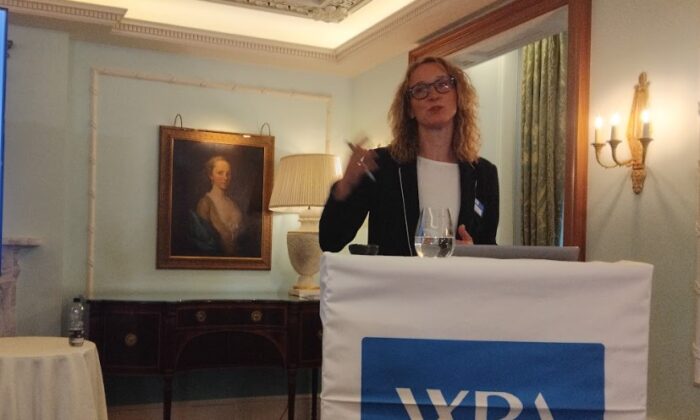
This is according to Dr Julie Denning, CEO of Working to Wellbeing (pictured), who was speaking at Western Provident Association’s (WPA) Health Beyond Benefits event at the Lanesborough Hotel in London’s West End yesterday.
Fastest growing long term sick issues among young
Setting the scene, Christian van Stolk, vice president of Rand Europe, revealed that the UK’s long term sick numbers currently stands at around 2.8 million people across the UK, with 53% of this number inactive due to depression or social anxiety.
And while most of this group are aged between 50 and 64, the fastest growing group among the long term sick is among younger people, he added.
Very complicated issue
When asked by Health & Protection how employers can adapt their employee assistance programmes (EAPs) to tackle these issues head on, Denning said the issue was very complicated.
“What bothers me is one size fits all,” Denning continued. “I think that’s your first problem.
“Is an EAP fit for purpose generally? Is it showing an impact? Have you thought about a step care model approach, of which the EAP concept is great in its ethos, but actually does it play out for people with continued ill mental health?”
Managing expectations
Denning maintained an EAP will not cure someone who is experiencing clinical depression for example.
“It’s very embedded and ongoing for a long time,” she added. “It won’t solve that problem.
“It’s about managing expectations of what an EAP can actually achieve and how it operates as part of a bigger piece of working.
“It’s not a problem with EAPs per se, it’s how it’s operationalised amongst the other wellbeing benefits.”
EAP inaccessibility
Meanwhile for van Stolk, the starting point for any employer is asking whether younger workers have access to the EAP in the first place.
“That’s already the big issue,” he continued.
“Probably for the first six months they might not even have access to some of the benefits and that period can be quite critical.
“If they don’t access it, they can’t use it.
“Often there might be very low awareness amongst this group in terms of the benefits they have.”
Complete misalignment
Illustrating the issue further, van Stolk pointed to the example of a large corporate he visited.
“They said, ‘we have this step programme. The more senior you become in the organisation, the more benefits you get.’
“And I said, ‘you know what – it’s completely misaligned with the risks your organisation faces.’
“All the risks sit within low income/young workers. And at this organisation they never thought about it. So there was this complete misalignment between what the risks that you face – health related productivity and what the offer is.
“I thought this was really striking – let alone what the offer is.”