
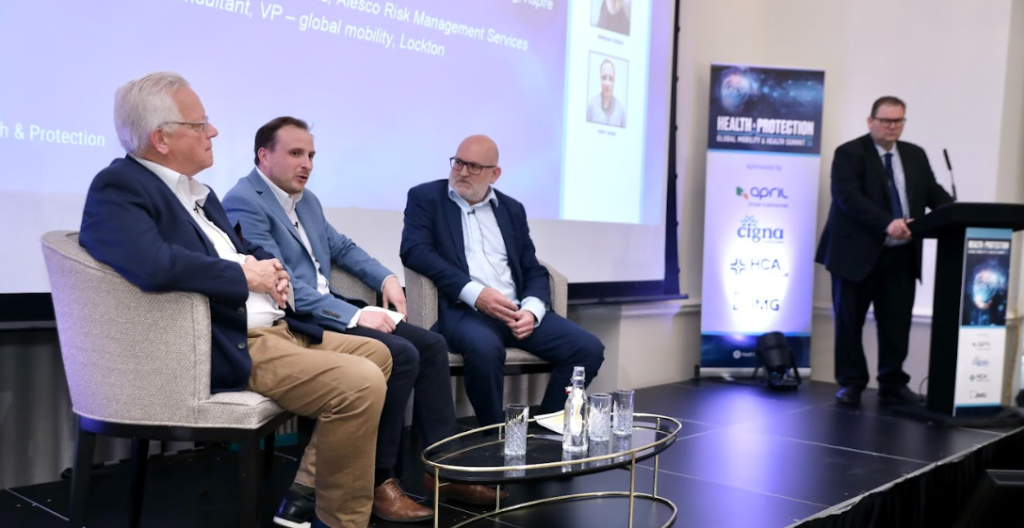
Rising costs connected to mental health treatment are a major concern for the international private medical insurance sector with online counselling sessions now hitting $200 per hour in some cases, Health & Protection’s Global Mobility and Health Summit heard.
Gareth Absalom, senior business development manager at Aspire, told delegates increased demand for mental health services from expats caught up in the current Middle East conflict was one reason for driving up costs as healthcare providers were increasing their fees.
Absalom added that insurers’ models mean that the more companies spend on these services, the higher premiums will be.
“It is a concern where people are now paying $200 for a one-hour session with an online counsellor, this soon rises up. So it will reflect on the price,” he said.
But fellow panellist John Jones, senior consultant, vice president – global mobility at Lockton, maintained employee assistance programmes (EAP) offer one route to cutting costs.
“I think clients with employee assistance programmes are more likely to push that rather than maybe utilising the health benefits which we know can have a direct impact on claims utilising the employee assistance programmes.
“In Dubai they have a special helpline for crisis support that the government has put in place. So there is additional support available, but I think it’s that mental health crisis with the EAP.
“We did see a few enquiries around that and think clients with those provisions really should be utilising that rather than pushing the benefits under a health insurance.”
Though Absalom added while an EAP programme comes in at about 2% of the premium mental health claims are far higher than this.
“There are a number of well-known companies that specialise in mental health and it really does build up quickly as we had teachers spending $25,000 each on that service each year.
“So to me, it’s one of the biggest concerns in international health insurance that we’ve seen.”