• Content Hubs
    • Bupa
    • UnitedHealthcare Global
  • Supplements
  • About
  • Alerts
  • Advertise
  • Events
  • Research
  • Contact
SUBSCRIBE
No Result
View All Result
Health & Protection
  • PMI & Healthcare
    • Individual
    • SME
    • Large Corporate
    • Cash Plans
    • Hospitals
  • Protection
    • Group Risk
    • Individual Protection
  • International
  • Wellbeing & Mental Health
    • Absence/Productivity
    • Mental Health
    • Services
  • Appointments / Industry
    • Appointments
    • Company News
    • Compliance & Regulation
    • Economy
Health & Protection
No Result
View All Result

High medical inflation biggest contributor to global benefits spend – Aon

by Graham Simons
08 August 2025
Share on FacebookShare on Twitter

High medical inflation is the biggest driver of benefits costs across the world and many employers are planning to renegotiate insurance contracts, according to Aon’s 2025 Global Benefits Trends Study.

The study found cost management was the top strategic priority in 2025 for all multinationals organisations, regardless of region, industry and company size.

Seven in 10 companies cited this as their first strategic priority.

The survey of 518 global benefits professionals across Europe, the Middle East and Africa (EMEA), Asia Pacific (APAC), the United Kingdom (UK) and North and South America (Americas), found high medical inflation was the primary driver of benefit costs.

Again seven in 10 (70%) respondents said it had a “high” impact, compared with 20% who expected an aging workforce and 17% anticipating the regulatory burden to have high impacts on benefit costs.
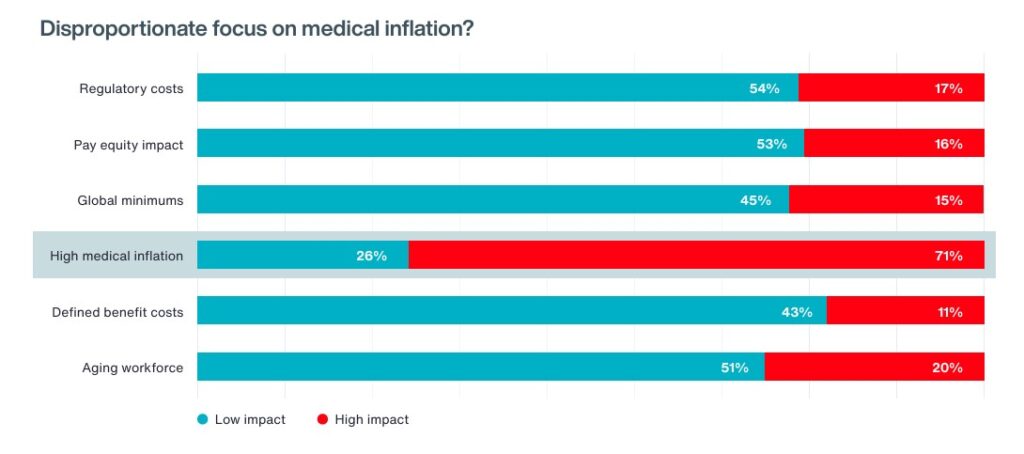
 

While APAC and EMEA headquartered companies also viewed medical inflation as the biggest cost driver to manage, participants from these regions appeared to take a more balanced view of the drivers of this medical trend, putting more weight on the impact of aging, pay equity legislation and regulatory changes.

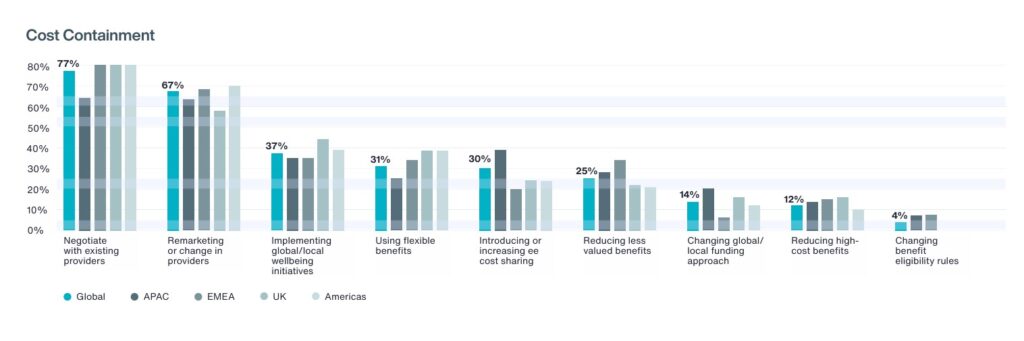
Strategies to mitigate costs remain basic and short-term in view, Aon noted, where respondents were found to be focusing primarily on hard negotiations with insurance carriers and other vendors.

More than three quarters (77%) planned to negotiate with existing vendors, and 67% planned to go to a request for proposal (RFP).
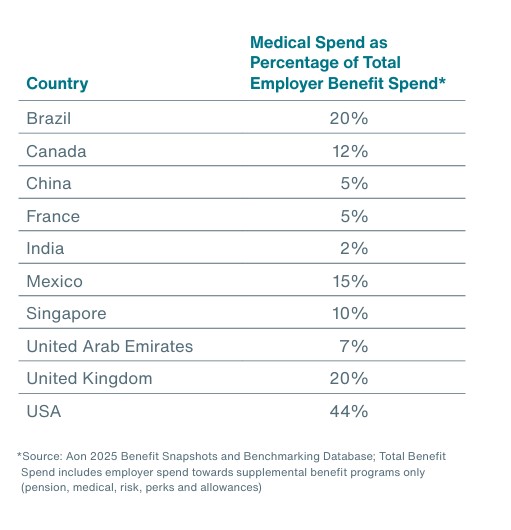
The report also found that depending on the country, medical costs could represent anywhere from 2% to 44% of total employer spend on benefits.
 

Next Post
Vitality picks Bupa’s Patel as clinical operations director

Vitality picks Bupa's Patel as clinical operations director

Ditch the emails and talk to your clients - Darby

Stonebridge appoints Miller to newly created COO role

Stonebridge appoints Miller to newly created COO role

HAVE YOU READ?

The UK Health & Protection Awards 2025 supplement – the winners

The UK Health & Protection Awards 2025 supplement – the winners

1 December 2025

Read more

Vote for the PMI and protection providers giving you the best service

28 November 2025

Read more
Health & Protection

© 2025 Definite Article Limited. Design by 71 Media Limited.

  • About
  • Advertise
  • Privacy policy
  • Terms & Conditions
  • Contact

Follow Healthcare & Protection

X
No Result
View All Result
  • PMI & Healthcare
    • Individual
    • SME
    • Large Corporate
    • Cash Plans
    • Hospitals
  • Protection
    • Group Risk
    • Individual Protection
  • International
  • Wellbeing & Mental Health
    • Absence/Productivity
    • Mental Health
    • Services
  • Appointments / Industry
    • Appointments
    • Company News
    • Compliance & Regulation
    • Economy

No Result
View All Result
  • PMI & Healthcare
    • Individual
    • SME
    • Large Corporate
    • Cash Plans
    • Hospitals
  • Protection
    • Group Risk
    • Individual Protection
  • International
  • Wellbeing & Mental Health
    • Absence/Productivity
    • Mental Health
    • Services
  • Appointments / Industry
    • Appointments
    • Company News
    • Compliance & Regulation
    • Economy