
Abigail Montrose hears how changes to Inheritance Tax rules are triggering steep demand for protection planning but greater collaboration is needed.
Changes to Inheritance Tax (IHT) rules bringing more people and estates into scope have resulted in increased demand for estate planning services.
The multi-faceted issues now being faced by those previously unaffected is driving demand for cover and other professions are looking to advisers to assist their clients.
This is causing some intermediaries to invest in specialist training to be sure they have the skills to excel in this market.
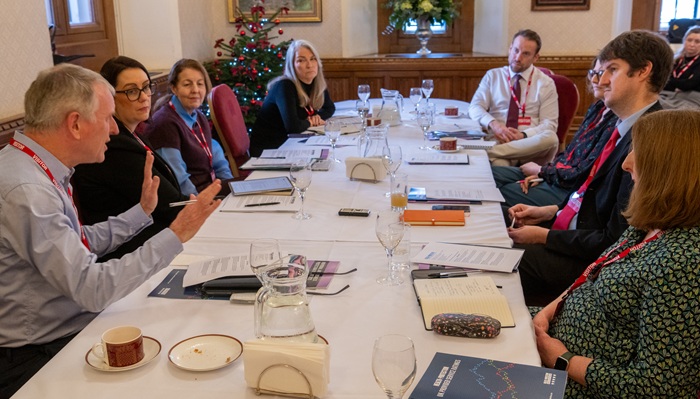
Health & Protection’s Individual Protection Report roundtable at the House of Lords Roundtable heard some of the changes are having a huge impact, particularly those related to property relief.
However, it has not all been smooth sailing and despite many changes being finalised well ahead of time, advisers were not able to get cases on risk with some insurers until new rules had been enacted.
Ken Maxwell, director at specialist protection advisers John Lamb Hill Oldridge, pointed out that from an IHT perspective, the biggest impact had been in Budget 2024.
“Budget 2024 included non-domiciles, which was a problem for us because we couldn’t get cover on risk until April this year because technically there was no insurable interest until April this year,” he said.
“We could do the underwriting up until that point, but we couldn’t have it on risk.
“We saw a ton of gifting for transferring wealth pre-Budget 2024 as people were concerned that Capital Gains Tax might go up and they wanted to crystallise those in gift. There was a lot more gifting again this year and this will continue as the seven-year rule and the lifetime allowance haven’t changed,” he added.
Huge impact of property relief changes
The Business Property Relief (BPR) and Agricultural Property Relief (APR) changes announced are expected to be huge, the panel thought.
They noted that supporting BPR was expected to be particularly tricky with issues around how to value these businesses and how to find a realistic number for financial underwriting.
“That’s going to be quite difficult work and a lot of advisers might not want to get too involved in that sort of work and planning,” said Maxwell.
But while this is a specialist area that many IFAs steer clear of, those that do get involved reap the benefits, pointed out Roy McLoughlin, board member of the Protection Distributors Group.
Advisers specialising in this area have traditionally received referrals from accountants, lawyers and private banks who have clients who need this advice – and this demand has been growing
“It’s a great area to be in and it’s very productive and it sticks; that business never leaves,” he said.
“We’re at the same table as the lawyers and accountants that we work with and they are coming to us as advisers for part of the solution.
“They have their own lines of demarcation, they have to stop once it gets anywhere near advice, so we need to fill those spaces and there’s more business to go,” he predicted.
Understanding liabilities
LifeSearch CEO Debbie Kennedy agreed, with the adviser partnering with an accountancy firm that felt it could not service this part of its customers’ needs.
“What’s really put them off is the medical and financial underwriting,” she said.
“I see this as a real growth area for us but recognise we need specialist training and capabilities.
“We’ll need to go back up the chain to the reinsurers because we have to work with them to find out what they will accept from an accountant,” she said.
Helen Croft, head of life and health underwriting UK and Ireland at Scor, pointed out it was not the underwriter’s job to work out the IHT liability.
“If the information is coming from a trusted source and the work has been done to say this is the liability, this does not need to be done by the underwriter,” she said.
“But it is the underwriter’s job to ask if there is an insurable interest here, if there is any anti-selection and if the work has been done by someone who knows what they are doing.
“If we’ve got a letter from an accountant that says this is the IHT liability and it’s been calculated, that should be all we really need from the financial adviser,” she said.
Croft believed there was an opportunity for more collaboration across the whole value chain.
“We all do our separate bits but if we’re all a bit more joined up, we could solve some of these challenges a bit more easily because everyone’s playing their part,” she added.
Maria McGarvey, senior underwriter at Gen Re saw two challenges – the financial challenge and the financial underwriting challenge.
“Things have got more complex – every other month there seem to be tax changes,” she said.
“You’re asking yourself, what am I including and what am I not including? Reinsurers got nervous during Covid and I don’t think that’s properly gone away in terms of capacity.
“There’s also a real challenge on the medical underwriting side for older lives. Are we equipped to underwrite those individuals and do we really understand what’s in their office premium?
“An 80-year-old is in a very different class to a 21-year-old, so there’s a real challenge around upskilling,” McGarvey concluded.