Protection sales have recovered but the sector must look to fresh approaches and opportunities such as the Keep Britain Working Review to really make an impact, hears Abigail Montrose.
The UK protection market has stabilised after a difficult couple of years, but the recovery has mainly been due to retention rather than new business being written.
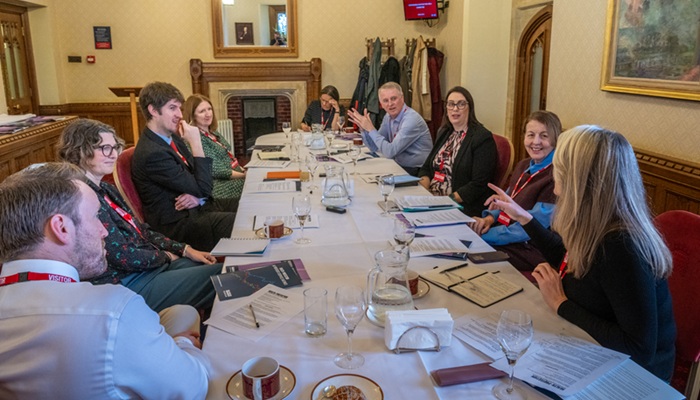
The strength of the income protection market has been the key factor in new business positivity and this was a key theme at Health & Protection’s annual Individual Protection Report Roundtable at the House of Lords.
The panel highlighted concerns of relying on just one or two key sources for new business and discussed some of the missed opportunities and high-profile initiatives the market should be embracing.
Download the full roundtable supplement by following this link.
Much of the growth was down to the mortgage market, said Debbie Kennedy, CEO of LifeSearch.
“We’ve got where we are tied to the fortunes of the mortgage market, but there are still many groups of customers that we’re just not getting to,” she said.
Stephanie Charman, CEO of the Association of Mortgage Intermediaries (AMI) agreed. She pointed to affordability issues in the last few years for people who came off cheap fixed-rate mortgages and had to move to more expensive deals.
While some of these people will now be able to move to cheaper deals, others will still be on low five-year fixes of say 1.5% and will have to move to more expensive deals soon.
“We have also seen a slower purchase market and slower purchases mean more focus on refinance and then potentially less budget and less conversations around protection.
“First-time buyer affordability is continuing to be squeezed as well. All of these things happening in the mortgage space will impact on what budget is available from a protection perspective,” she said.
Reaching younger renters
Reaching younger audiences who rent, was seen as a major challenge for the protection industry.
Not only were these people unlikely to seek out protection advice, but they are also less likely to come into contact with an intermediary.
They also may not think protection is for them, pointed out Ken Maxwell, director at specialist protection advisers at John Lamb Hill Oldridge.
“Younger working people often feel they are immortal and that they will enjoy good health indefinitely,” he said.
“Budgets are tight and the cost of living has gone up, so they don’t want to spend £50 a month or whatever to take out a protection policy.
“And when they do get round to thinking about protection insurance, they are older and often less healthy so it’s going to cost them a lot more to get cover or they may not be able to get cover,” he said.
Furthermore, products are not always appropriate for younger people, said Vicky Churcher, executive director of the Income Protection Task Force.
Where insurers have been innovative and created a product that provided the cover needed, they often have found they cannot market it effectively.
“The product is often unaffordable for young people and not suitable for old people by definition; we need a product or a proposition that suits both of those,” Churcher said.
“The challenge from an insurer’s point of view, is if they innovate and create a new type of product, it may not be possible to compare it like for like with other products on the portals.
“Compliance teams insist you can only make a direct comparison, so the insurer may not be keen to innovate if they cannot put their product on a portal,” she added.
Take advantage of services
There has been a huge increase in the number of early intervention services offered on protection policies. Products have become more complicated and advisers are now needed more than ever to explain to people what protection and services are covered by their policies, said Roy McLoughlin, board member of the Protection Distributors Group (PDG).
“The PDG has just done a piece of research on early intervention services and we discovered there were 85 of these services available from nine insurers,” said McLoughlin.
“Most IFAs won’t know that. We need to get these messages out there and ensure advisers know about them. I’ve talked to some insurers about this and they didn’t know about some of the services they offered.
“The Keep Britain Working Review has basically said that early intervention is the solution to getting people back to work. We’ve got the tools of the trade to do this and we’re not talking to people about them,” he added.
Helen Croft, head of life and health underwriting UK and Ireland at Scor, agreed. She felt people were not taking advantage of these early intervention services and other wellbeing benefits because they often were not aware they had them.
“These are services people will really see value in, so there is definitely an opportunity for advisers here,” she said.
Reminding people regularly about what their policies covered was seen as a positive way for advisers to demonstrate the value of protection insurance, thought the panel.
Sending out annual statements to customers and their advisers was seen as a more effective form of engagement by insurers than directing customers to a portal where they could search for information about their policy.
But not all insurers were comfortable with brokers engaging with customers in this way, said Maria McGarvey, senior underwriter at Gen Re.
“We’ve had conversations with large insurers over the years about annual statements and using these to engage with clients, but there is a real nervousness around going into that space,” she said.
Social media to improve engagement
Social media has an important role to play when it came to improving engagement with younger people, thought the panel.
Platforms such as TikTok are often used by young people for information and help on financial issues.
“For people under the age of 30 their first reference point is likely to be TikTok,” said Churcher.
“For them, if you’re not on TikTok, you don’t exist and therefore are not worth talking to, so we need to engage with them there and not expect them to come to where we are to speak to us.”
Despite this, recent research published by AMI showed that 50% of advisers do not use social media at all.
“They’re not even using Facebook, which, as my son tells me on a regular basis, is old,” said Charman.
“There are a number of reasons for this – it might be compliance reasons or concerns over what sort of content to put out.
“Some advisers, particularly sole traders, might just get up in the morning and think I want to do my job and don’t have the time for that, so there’s a huge amount as a sector that we can do to help support them,” she added.
The Mayfield Review
The Keep Britain Working Review led by Sir Charlie Mayfield has been seen as mainly directed at the group sector.
But McLoughlin felt the review offered even more of an opportunity for the individual market.
“I’m hearing the government talking about a solution that involves us because this is about early intervention services,” he said.
“The industry is effectively coming together with government and saying we need to get people back to work. If part of this is about identifying at a very early stage people who have got issues, then I think the solution is insurance based.
“This is our moment and we need to get on it very quickly,” he said.
The panel felt the government needed to do more to make people aware of the protection gap and the financial risks if they fall ill and are unable to work.
They added the insurance industry could help by providing data and real-life stories which the government could use in its messaging to consumers.
“There were income protection working groups at the ABI which showed how the protection industry can help get people back to work and support the economy,” said LifeSearch’s Kennedy.
“We need to take a collegiate approach and not wait to be invited into the conversation. We have to make this part of what we want to do. We have to ask how can we help and how do we take this forward.”
Download the full roundtable supplement by following this link