Advisers need to change their approach if they are to increase membership of income protection (IP) products among younger consumers, according to three industry leaders.
Sector representatives noted how the product was adapting to changing careers and lifestyles but this wasn’t always being conveyed to younger customers.
Speaking at the launch of the CIExpert Critical Thinking 2026 report, leaders from Omni Protect, Royal London and the Income Protection Task Force agreed there was more work to be done in this area.
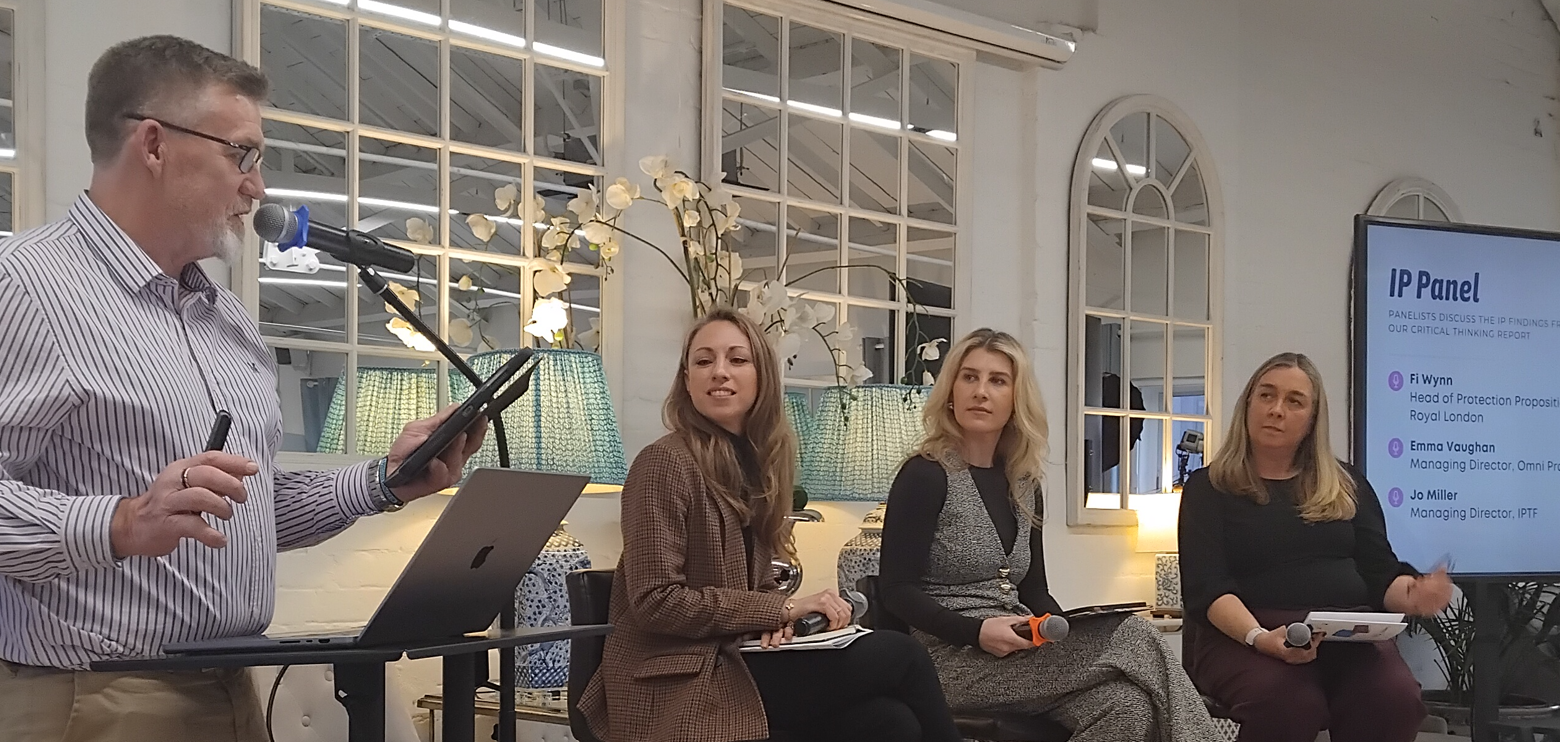
IP products were designed a long time ago and they don’t take the lives of today into consideration, said Emma Vaughan, managing director of Omni Protect (pictured third from left).
“If we are looking at people with different careers, like influencers, how are we servicing those customers. We probably aren’t to the extent that we should,” she added.
She noted the language used and the framing of the message was important here.
The industry needs to talk to younger people not from the perspective of protecting their salary, but about illnesses that are real today, such as mental health, Vaughan said.
“We have done quite a bit as an industry in terms of reframing language, but we have not gone far enough because customers are changing.”
Non-linear
One member of the panel reported seeing examples of how the sector is working to keep pace with the changing world.
Fi Wynn, head of protection propositions at Royal London (pictured second from left), pointed to there being features within IP products for the self-employed and contractors, while the range of occupations covered has been broadened to include “influencer”.
Indeed, thanks to technology, non-linear careers are now the norm.
According to the CIExpert research, 42% of people born between 1997 and 2012, known as Gen Z, expect to have a mixed or non-linear career.
When it comes to income protection, they see being self-employed as a barrier to taking up such coverage.
Almost half (45%) of such respondents believed that not knowing how much income to protect was a barrier to having IP.
“It is a shame that when you read the report, a non-linear career is a barrier to taking out a product that can meet that career need,” Wynn said.
“That is another thing we can educate advisers on; just how flexible these products can be,” she added.
Education, education, education
Income Protection Task Force (IPTF) managing director Jo Miller (pictured furthest right) agreed that education has a role to play here.
“Younger consumers are not worried about paying off their mortgage because they don’t have one,” she said.
”Talk to them about what would they do if they lost their job and had to cancel Netflix or their gym membership. That is real to them.
“Younger consumers are not dis-engaged, they just do not understand, and we need to explain it to them,” Miller added.
Despite IP products being built for traditional employment assumptions, there is no need to create new offerings, the panel added.
“It is all around reframing customers’ understanding, looking at customer demographics and meeting them where they are,” Vaughan said.
Calling for more education should not be about teaching experienced advisers how to do a job they have been doing for years, it is about helping them to do it differently, Vaughan explained.
“The reality is that for advisers who are not having these conversations, it is not that they can’t, it is that they just don’t know how to do that yet,” Vaughan said.