
The Income Protection Task Force (IPTF) is rebranding to the Individual Protection Task Force.
The body has also accepted an invitation from the Protection Distributors Group (PDG) and Association of Mortgage Intermediaries (AMI) to help meet the Financial Conduct Authority’s (FCA) challenge to the sector of closing the protection gap.
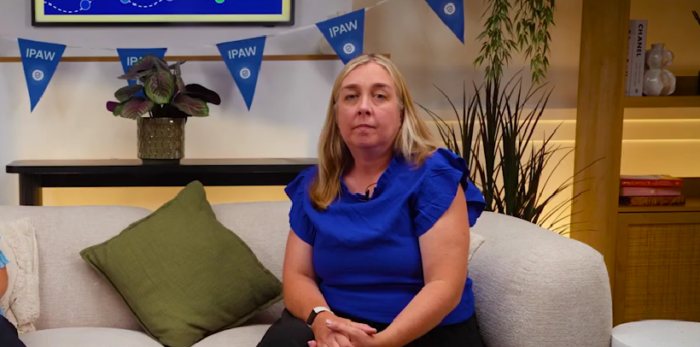
At an event during Income Protection Action Week in London last Thursday, IPTF managing director Jo Miller (pictured) explained that while the name change was a “significant evolution”, it was not a sudden change.
“Income protection has always sat at the heart of IPTF’s mission, and that will not change,“ she said.
“From 2027, we will describe our work through the lens of resilience insurance, reflecting a commitment to helping more people to become financially resilient and to reducing the protection gap. Income protection remains central to this and we will not be diluting our focus on it.
“Rather, we recognise that people face income shocks in many forms and the best outcomes come from ensuring people have access to whichever proposition best meets their needs.”
Consequently, Miller revealed that what the ‘I’ stands for in IPTF will change from 2027.
“We will make less use of the Income Protection Task Force name as the explanation behind our acronym with IP increasingly standing for individual protection,” she continued.
“This reflects our continued focus on the individual protection market rather than any new business.
“And to be clear for us, this is simply a clarification of the direction that we have been following for some time rather than a change of course.”
Miller added that the clues about the IPTF’s future direction of travel were already there.
“Eighteen months ago, we broadened our membership offering alongside core income protection with the introduction of ASU, accident sickness and unemployment and accident cover,” she continued.
“And last year we launched our AI assistance system which already reflects this wider view of financial resilience.
“More recently, we have sharpened our focus on value added services, including the launch of the new matrix, which maps the full landscape with individual protection products to give advisers and members a clearer, more complete view of the market.”
Consultation with members
Miller concluded by revealing the IPTF will speak further to members at the start of 2027.
“Building on this, we will enter consultation with members in the new year to explore further opportunities for collaboration and to shape how we continue to support advisers and consumers,” she continued.
“What we’re doing now is simply putting a clearer name to the work we’ve been doing for some time. Helping people build financial resilience has always been our goal.
“And as we look ahead to 2027, we want to make sure that advisers and consumers understand the full picture of how we support that.”
Accepting PDG and AMI invitations
Speaking with Health & Protection, Miller revealed part of those 2027 plans will be helping to close the protection gap.
The FCA is leading groups from across the financial services industry to increase consumer take-up of protection, particularly focusing on those disproportionately unprotected.
The regulator highlighted several approaches with public sector and industry partners as part of its pure protection market study final report and said it expects meaningful progress over the next 12 to 18 months.
This includes working with the Money and Pensions Service (MaPS), Digital Property Market Steering Group (DPMSG), Protection Distributors Group (PDG) and Association of Mortgage Intermediaries (AMI).
Miller told Health & Protection the IPTF had accepted an invitation from the PDG and AMI to help close that gap.
“It doesn’t change our intention so much as following Monday’s announcement, PDG and AMI have both asked us to be involved which we’ve already said yes to,” Miller said.
“For us the reasoning behind this is you can’t just talk about problems with the client, you’ve got to talk about what they need and it’s rarely one product.
“It’s rarely just this one product and I’m never going to buy anything else, so for us, given the wider context, it doesn’t make sense to just focus on one product.
“Yes, we fully intend to be involved with everything going forward wherever we can add value and we’ll have a broader remit ourselves, so hopefully we can be more helpful.”