
For IGO, NGO and governmental organisations securing treatment and paying for it is the ultimate goal, hears Owain Thomas.
For many commercial organisations or globally mobile populations the ability to access healthcare treatment is rarely a significant question when planning international assignments.
However for those in the governmental, intergovernmental (IGO) and non-governmental (NGO) sector the luxury of well-equipped and well-developed locations is not always possible.
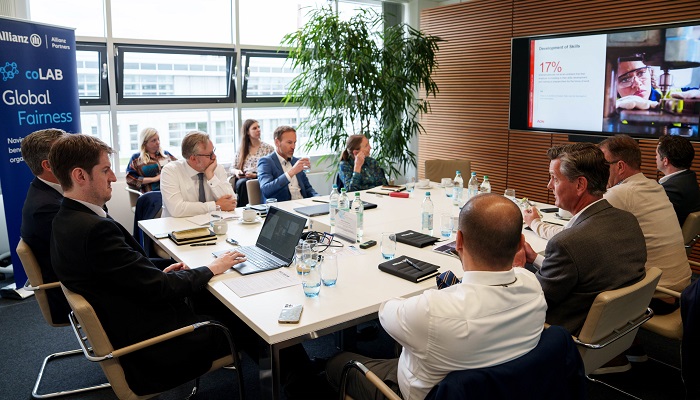
As the Health & Protection Roundtable in association with Allianz Partners heard, for many organisations in these sectors and their people, limited availability is more likely to be the norm.
Download the roundtable supplement for the discussion by following this link.
As a result their needs for international private medical insurance (IPMI) and healthcare support are sometimes more direct – simply being able to secure basic care and paying for it.
Accessing healthcare providers and paying for that care is “the most important thing”, according to Aziz Sinan, head of insurance department at the Ministry of Foreign Affairs Iraq.
While it is easy to imagine diplomats and ambassadors sitting at the United Nations in New York or the European Union parliament in Brussels, Sinan explained that foreign office staff are often in far smaller and less developed locations.
This can mean just accessing suitable care at all can be difficult and sometimes even requires travelling significant distances, even to other countries.
When tying that in to insurance plans there can be further complications around paying for it.
“It’s all about the financial process,” Sinan continued.
“There are some countries that still don’t have a bank system and insurers, like other companies, often don’t trust cash; I don’t trust cash either.
“But in areas like Syria, Sudan, Libya and Iraq even, they still don’t have a bank system.
“So when members go to a medical facility and pay thousands of dollars in cash and submit a handwritten invoice to the insurer, as an accountant for an insurer when they see this, of course they ask themselves ‘Who says that’s true?’
“But how do we solve this conflict?”
Currencies and phones
Sinan also highlighted another important issue around currency recognition which can further disrupt the payment or reimbursement for insured people, as the Iraqi government operates in US dollars.
“This is a big challenge as dollars are banned in some particular countries – that’s the daily challenge we face from our staff in Russia or Iran or Syria or even Libya,” he continued.
“How could they get their reimbursement in US dollars? They can’t do a wire transfer.
“So what I recommend to my people is just to open a US dollars account in other countries, but again, it’s not an ideal situation for them, they want to see the money in their bank in real life.”
Tied in with this restriction on access to bank accounts is that in many locations mobile phones are used as the main source of holding cash and making payments for all sorts of goods and services, including insurance and healthcare.
For these locations it was noted that insurers would need to find administrators to work with who could understand and process the use of mobile phone payments.
This can be tricky and lead to unexpected situations, but Jeremy Vedel, senior sales manager for IGO, NGO and governmental at Allianz Partners, Health highlighted that it was possible.
“The technology is there but then the difficulties are to implement that into processes and to grow it from one pilot to one country to a more global solution,” he said.
“I would say the cashless experience is not the same, or the means to access care in a cashless way is not the same from one country to another.
“So in some countries it would be through mobile payments, some countries it would be through a closed network.
“For other countries it could also be a concierge type of service with someone who’s going to actively make a payment directly on behalf of a member, but I don’t think we can look at it saying there’s one solution that will resolve everything.”
Pay up front
For some locations the situation is amplified because healthcare providers refuse to begin treatment or let patients enter their facilities before they have paid at least something up front.
Attendees highlighted this can even be extended to emergency treatment in life and death situations where doctors and hospitals demand guarantees of payment, which can add to stressful situations and lead to high pressure and urgent phone calls to insurers.
It is this immediate access to funds to pay for care which is another of the critical issues particularly for this sector.
“Considering the countries we’re in, the type of local workforce we have and the levels of income they have, the more the experience can be cashless for them, the better we can ensure they will get access to care,” explained Nicolas Hubé, head of compensation and benefits at the Aga Khan Development Network.
“Otherwise, we know that some will not get access because they can’t afford to even pay for a phone, even if the reimbursement is as efficient as possible and quick and accurate.
“So for us the fact is to pay first particularly for local staff.
“For local staff, the major deterrent of access to care is not having the facility and not being able to go there – that’s another reason in remote places.
“But for many they cannot pay the couple of thousand dollars upfront because it’s that or putting food on the table for the family, so you don’t get access to care and then you deal with a more serious issue later on.
“So in all contexts in the countries with the workforce we have, cashless is vital.”
However this experience is not restricted to developing countries as delegates pointed out that even in the Western world they had seen a huge increase of people going to emergency rather than their doctors to avoid paying upfront for basic treatment.
One example was given of France where patients were avoiding going to their family doctor for basic care as they have to pay €30 up front before getting it reimbursed from the social security system.
Local recognition
As a result, attendees emphasised it was critical to roll out the insurance coverage on a local level to be recognised in facilities that are available in those more isolated or less connected locations.
There was also an appeal for major insurers to elevate their capabilities, because local insurers in some countries were not up to the standard of effectively administering their plans.
These problems could prevent people from seeking access to care because members believed they would never get their money back.
Hendrik Boelens, head of IGO, NGO, governmental segments, international health at Allianz Partners recognised the importance in these issues and revealed the insurer was working on solutions to address them.
“When I listen to some of our NGO staff in very remote places, the problem is similar in that they cannot basically use the cover or they cannot afford the out of pocket cost of $5 for other extreme concerns and financial burdens,” he said.
“We have started looking around to see how we can move to the next level, which is instead of having the members pay first and get reimbursed, that the providers are pre-paid by Allianz, and then the burden lies with us and the medical provider.
“Which means technology, which means card access, which means prepayment, which needs fraud abuse checks and medical provider checks which are much more stringent.
“That is one topic that we see as a provider as a priority – digital payments,” he added.
Download the roundtable supplement for the discussion by following this link.