
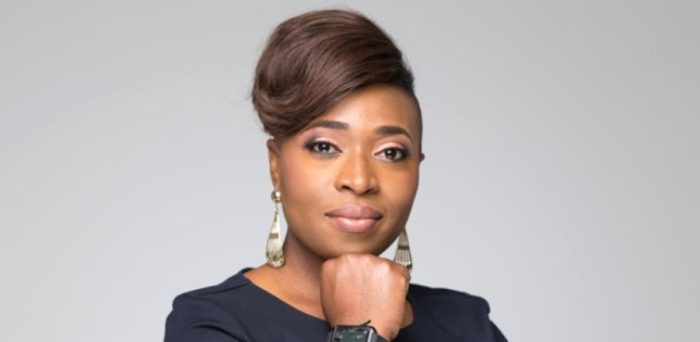
The protection insurance sector cannot claim to be providing diverse, inclusive products if it does not meet the needs of customers with sickle cell, according to Sheun Oke, managing partner and CEO of Emergenzz Financial Services.
Oke (pictured) told Health & Protection that no insurers she had contacted with an offer to support sickle cell product development had responded to her.
At the end of 2022 Health & Protection reported Oke’s concerns about the need for such products.
Earlier this month the cause was taken up by Claire Hazelgrove, Labour MP who asked HM Treasury what assessments it has made of the adequacy of the availability, affordability and terms of insurance for people diagnosed with sickle cell disease and carrying the sickle cell trait?
Responding to Hazelgrove, Economic Secretary to the Treasury Lucy Rigby acknowledged the government “has not made a specific assessment regarding insurance for individuals with sickle cell disease”.
Shortly after raising the issue in 2022, Zurich head of market engagement Peter Hamilton said the insurer had engaged with Oke’s campaign, but highlighted significant problems with developing cover.
‘Not taken seriously’
Three years on and speaking to Health & Protection, Oke, whose nephew Oluwaseun has the condition, maintained the issue was not being taken seriously enough.
“It’s beautiful that it was raised in Parliament,” Oke said.
“Obviously, I want to follow the progress with this.
“But I don’t think it’s being taken seriously because I have approached providers for conversations. I’m happy to provide support, but nobody has actually reached out – even though I’ve offered.”
Oke questioned whether the issue was not taken seriously because it did not affect the right people.
“I don’t think it’s being taken seriously because maybe they don’t see it as a viable business to provide protection,” she continued.
“If we’re saying we’re being inclusive, we’re being diverse, providing the right product for the UK populace, then I don’t think sickle cell should be singled out without anybody trying to touch it.”
Closure of services
Oke cites the example of the Royal London Hospital in Whitechapel whose emergency sickle cell day unit is under threat of closure. A petition has been started to stop this happening.
“That’s why I’ve raised this on my channels because it was one of my clients who sent it to me who also has sickle cell,” Oke continued.
“I wanted to lend my voice to that and let’s see where it goes and tag press and people can make it louder. Let’s save that centre because it’s one of the very few.
“We need to stop the closure because that would be dire for people that get support there because there is not a lot of support for that community.
“The little support that they have and they want to close it. It doesn’t make sense.
“We’ve raised a petition to make sure it doesn’t get closed.”
Oke added that her nephew in Nigeria has the condition, and there is not a lot of support for him there.
“When the crisis comes, there are not a lot of specialised places for them to go to,” she said.
“So if they are having challenges in Africa with not enough hands on board, but the UK is closing services available for people in the UK. I think, why?”