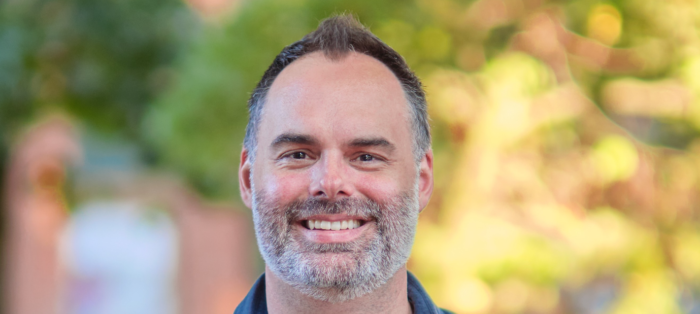
John Hilson, COO risk director, Axa UK and Ireland, speaks to Health & Protection about passive engagement with Pride, the importance of inclusive language and why the past two years has put several decades of progress at a tipping point.
What have been your own experiences with regard to attitudes towards LGBT communities in the sector?
My work environment has been multinational – I’ve worked in five countries for Axa alone – and my experience of attitudes towards LGBT communities has been largely consistent. I’ve felt supported and my Pride network volunteering has always been endorsed by my leadership team. As a volunteer you’re expected to perform as you would in your full-time role, and it’s a privilege to have the opportunity to apply time in your day job to contribute to a culture of inclusion in the workplace.
However, what I’ve noticed – and what I think is a work in progress – is that there is sometimes passive engagement. For example, it would be great to be engaged more often to talk in leadership or town hall forums. That shared sense of initiative is an area where there’s some room for improvement.
How have attitudes evolved in the sector?
I’m not sure evolved is the right word. The current geopolitical situation is challenging, and I’m reminded how young the existence of LGBT+ rights and inclusion really is on a human scale. It’s only recently in most parts of the world that we’ve seen the emergence of equal rights, and there’s still a long way to go.
What’s happened in the past 24 months has put several decades of progress on a tipping point, we’re teetering on the edge. The history of LGBT inclusion and equity is too short to feel overly confident in the security of these rights.
Having said that, in the insurance sector our own employee policies and product offerings have inclusion and equality for the LGBT community almost hard coded, and that for me brings a great sense of confidence that what happens in the outside world isn’t how leading financial services organisations view themselves – or more importantly their customers. I’m always reminded that we are a reflection of who our customers are, and that leaves me in a net positively motivated position overall.
What is the sector doing well and where does it need to up its game?
I’m new to the UK insurance industry, having only lived here for 10 months, but there appears to be quite a bit of industry engagement in inclusion.
But as well as celebrating what we’re doing well, it’s important to come together as an industry to explore how we can support the wider LGBT community and effect meaningful change. For example, does the community bear any unique customer vulnerabilities that we should address together rather than as individual businesses.
Last year’s Supreme Court Ruling on gender identity has had a significant impact on the community and created a great deal of fear and uncertainty, so there’s never been a more important time to pull together in support of our LGBT colleagues.
Do you feel encouraged and enabled to bring your whole self to work?
I feel enabled but perhaps not always encouraged. Insurance certainly feels like a sector that offers equal opportunities but promoting the use of inclusive language, for example, would help me feel more encouraged to completely be myself at work.
When meeting someone in my organisation or the industry for the first time, if the conversation moves into personal or social areas, the proactive and mutual use of inclusive language would make us both feel more comfortable to share our own realities. I’m talking about simple things such as saying partner rather than husband or wife when we see someone wearing a wedding ring. It’s often the little things that have the biggest impact.
Volunteering is a great way to get involved with Pride and I’d encourage other organisations to promote engagement with their ERGs (employee resource groups), especially with new starters. At Axa we have a strong ERG network and are exploring how we can collaborate more – after all, no-one sits in one ‘bucket’ in life, we all have shared challenges to manage and overcome.