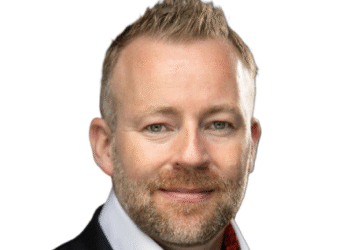
Rising medical inflation should be seen as an opportunity to make private medical insurance (PMI) products relevant for modern consumer needs, according to Jenny Nye.
The head of proposition for Aviva Health was speaking about the rising cost of healthcare at AMII’s latest Health and Wellbeing summit, but not from a pricing perspective.
“I would suggest that rising costs is not a problem,” she said. “It is a signal of a symptom of a problem. It is showing that there has been a fundamental shift in how healthcare works.”
She added that the question needs to change from, how do we control these costs, into one of, how do we respond to those changes.
Delays in receiving NHS care is just one of many pressures the private healthcare industry is facing.
“Private medical insurance used to be seen as a choice. A nice to have,” she said. “It is increasingly now being seen as necessary to avoid delays and to get access to the healthcare you need.”
More access
Then there is medical inflation, which is not just about rising costs. “This is about having access to more things than we have ever had before.”
This includes more complex treatments, more advanced diagnostics and more personal interventions.
“All of those are great things because they lead to better patient outcomes, but they come at a cost,” Nye said. “They also lead to an increase in expectation of what PMI should cover.”
Look at the numbers
“The data reinforces the idea that these changes are not temporary. This is a structural change in how healthcare works.”
The NHS waiting list jumped from around 4.5 million to an almost eight million peak during pandemic. “The interesting thing is not the peak, but what’s happened since.
“Despite all the interventions to bring that waiting list down, it is still sitting stubbornly above seven million,” Nye said. “That is important because that means that not only has there been an increase, but this is not going back to where it was before.”
Rising waiting lists have changed what people want from the private medical insurance policy, which includes primary care and treatment for chronic conditions.
“There are not just more people coming into private medical insurance or private healthcare, they are also looking for things to be treated that they were previously happy to have treated on the NHS.
“This is where the tension comes to bear, because we are still using the model that is effectively built to be short-term, episodic, contained.
“When something breaks, we fix it. That is the end of the journey. Increasingly, those demands are becoming much more complex.
“There is a need to cover those holistic pieces, so keeping people well, not letting them get sick in the first place. That means we are still using a model that is effectively outdated and that creates pressure.”
The right response
All these pressures building up on the industry at the same time should be seen as an opportunity. “If we see rising costs as a signal, then re-designing PMI is the response,” Nye said.
This means moving away from treatment to much more of a holistic approach to health as well as prevention and early intervention.
“The best way to avoid a claims cost is not to have the claim in the first place,” she added.
Moving away from services and into integrated pathways is another way PMI could be improved.
“People do not experience healthcare in silos, but that is largely how we are designing our products,” Nye said.
More sustainable model
Moving to more digital health and more personalised care will be fundamental in making this model sustainable going forwards.
“We have a choice,” Nye said. “We can continue to see rising costs as something to control. We then respond by restricting access and effectively devalue the future proposition of PMI.
“Or if we consider that rising costs are a signal that the healthcare market has fundamentally shifted and we respond with more prevention and more pathways then we have the opportunity to make PMI more relevant than it has ever been,” she added.