
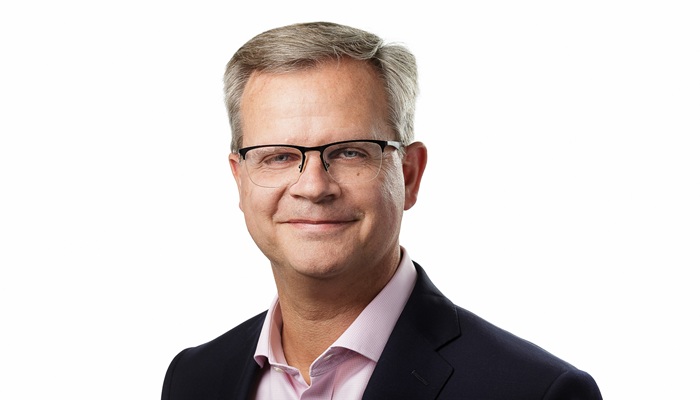
Unum UK CEO Mark Till sits down with Health & Protection to explain the key issues the insurer has been working on, including the move to takeover Generali in the UK and targeting the captives market, and why group risk can provide a solution to soaring PMI premiums.
It has been a busy year for Unum along with the wider group risk market – acquisitions activity, product launches and several government interventions have kept the pulse beating.
Then there is all the typical but no less important day-to-day business activity, renewals, pricing changes and claims management to handle.
Till explains why the move to buy competitor Generali’s book of UK group risk business and renewal rights to those customers was so important for the insurer.
“That’s to give multinational captive capability that we didn’t have,” Till says.
“We have pooling capability and individual scheme capability, but we didn’t have captive capability, so the purchase brought that skill set into our business.
“Therefore, if there was an evolution in the market more broadly on captives, we would now have capability we may not have had before.”
Till notes the firms had been in discussion for the best part of a year when Generali made the strategic decision that running a branch office in the UK was not the right scale for it.
“It was making it harder for them to convert their UK opportunities, so we started talking to them quite a while ago,” he continues.”
“It’s taken a while for them to run a due diligence process and look at alternative providers – so we were pleased to be selected in a competitive process.
“The deal completed on 1 August and the first clients have now moved across onto the Unum product from the Generali product and we’ve been really pleased with the support brokers are showing towards the capability we can now bring to that part of the market,” he adds.
Ten-year deal signed
As part of the transaction Unum also joined the Generali Employee Benefits Network which means it will provide UK subsidiaries of multinational companies their cover and benefits in the country.
“They were previously going to the Generali branch office and now they will come to Unum,” Till says.
“We’ve signed a ten-year deal to be Generali’s go to partner for new business, as well as taking on their existing book of business.
“We’re really excited, we’ve had 55 new members of staff come in who know this market very well, but perhaps being the size they were may not have been able to get the investment that a business of our size is now able to bring.
“So I think they’re excited about the additional product features that we’ll be able to add.”
One potentially positive move for the captive market has been the inclusion of the group life and employee benefits sector in HM Treasury’s (HMT) plans for a new UK captive insurance regime.
Having been excluded from the original proposals this is a welcome step for the sector.
However, as trade body Group Risk Development (Grid) told Health & Protection, given the difficulty in attracting such schemes from tax havens the benefits may be somewhat limited.
This was something Till recognised when suggesting only time will tell whether the government motion becomes a big trigger for the market or not.
‘Doing the vast majority of PMI for less’
Till was speaking to Health & Protection alongside the insurer’s launch into the cash plan market – its second significant move of the year.
Taking experiences from the group risk and dental plan markets Unum is confident it has the capability and proposition to serve a growing and high touch product base.
But with the wider health environment these markets are sometimes overshadowed by the higher-profile, and more expensive, private medical insurance (PMI) sector.
Perhaps surprisingly, Till emphasises that dental has been rising at an especially rapid rate.
“Of all the products in the market, dental is by a long way the fastest in growing income,” he notes.
However, Till believes cash plans and group risk products can support the core of health and wellbeing in the workplace and “do the real heavy lifting for most employers” rather than PMI.
“I don’t see them as cheap, I don’t see them as inferior to PMI, I see them as doing the vast majority of what PMI does for a lot less money than a PMI does,” he argues.
Till notes that only about 8% of GP consultations result in an onward referral to another practitioner for further treatment, and so employing a PMI scheme largely for this could prove inefficient.
“If you can use a cash plan or a group risk product like group income protection (GIP) to get access to a remote GP, 92% of the things someone would take to a GP could be dealt with using that product,” he continues.
“When you need an onward referral to a nutritionist, for a scan, or to a physiotherapist, for example, those can be handled in a cash plan and income protection.
“Where it is likely to be surgical those plans don’t provide the answer, but they might provide a cash contribution to the answer.
“That’s the bit that PMI could play a role in, but cash plans and group risk would provide such a wealth of solutions.”
GIP as first referral
With vast NHS backlogs and concerns around access to healthcare, PMI uptake has been soaring, and so too have PMI premiums.
But Till rejects reports suggesting employers are dropping group risk plans to maintain their PMI benefits and says organisations are instead embracing the strategy of leaning on their risk benefits.
“Interestingly we’ve seen the opposite trend,” he says.
“I was with two of our three largest clients and they are using their GIP with Help@hand to be the first referral point to try and take the referral out of their PMI and get it dealt with by their income protection product.
“They are using rehabilitation, GP services, mental health service and physiotherapy because they felt that was an easier interface for their employees and a cheaper way to get those perhaps less serious medical conditions dealt with than going through the PMI scheme.
“So I’ve seen GIP becoming more important rather than less. The answer for an employer is about using the range of services, not an exclusive use of one.”
And as larger firms start to use this approach more regularly, Till believes this trend will “move through the pyramid” and come further down to smaller firms, potentially easing use and costs on PMI.
“Where the broker has become experienced in creating that solution for big firms, they can start bringing it to medium sized firms, smaller firms, and then ultimately maybe to the SME market,” he continues.
“The fact that’s going on and is an active conversation in response to the exceptional rises in PMI costs bodes well for the group risk market more broadly.”
Premium variances
Another key factor in the group risk market over the last year has been pricing changes – as always a key discussion point and driving factor for uptake and renewals from employers.
Till notes that one of the reasons the GIP market has been “wobbling around a little bit” in terms of premium revenue is because interest rates have been rising.
“This means the reserving has been reducing, which means prices, if anything, have been coming down a little bit in income protection,” he says.
“So the premium growth hasn’t been as big.
“In contrast, with group life we’ve still got elevated mortality in the UK working age population.
“And with benefits typically linked to earnings, wage inflation has also been causing life premiums to continue to show an upward trend, while the falling interest rates make less of a difference to that.”
Addressing unintended consequences
Also for the group life market the ‘common sense’ decision of HM Revenue & Customs (HMRC) to not put group life schemes under inheritance tax bracket was a big relief.
“It’s something Grid, the Association of British Insurers (ABI) and ourselves have been quite active in talking to HMRC and HM Treasury about to try and help them understand the unintended consequences of the way the change had been originally documented,” Till says.
“It was going to be a big industry upheaval, but it wasn’t what the chancellor was intending to achieve – it was an unintended negative consequence.
“So it was good that was recognised and fair play to the government; typically when they see these unintended consequences they are very open to a different way of treating something,” he concludes.