
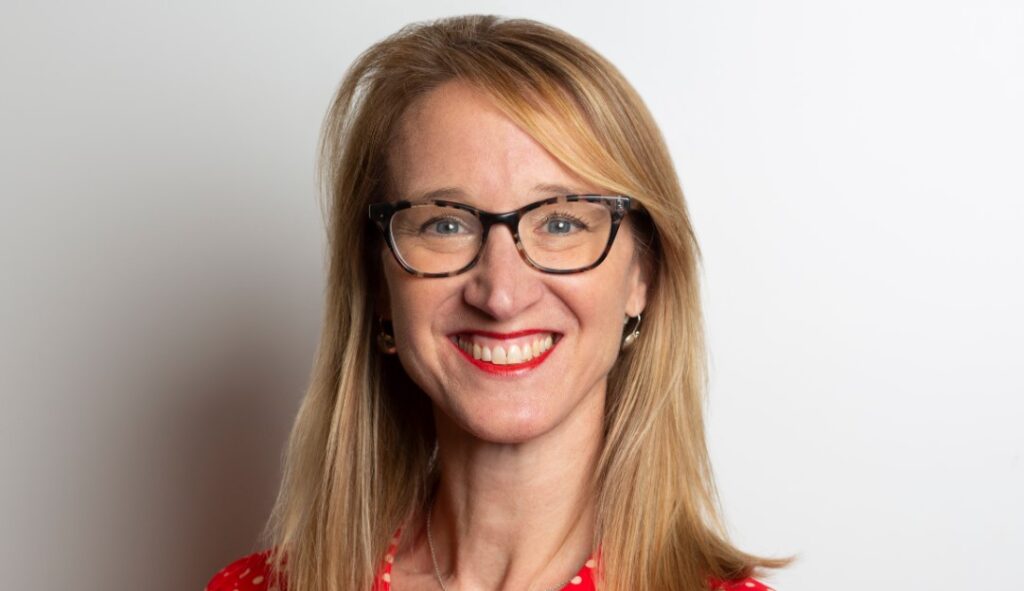
All income protection (IP) insurers should help the growing number of people who survive cancer back into work to reduce future claims, Dr Julie Denning has told Health & Protection.
“I would like insurers to provide vocational rehabilitation pathways, so everyone has access to this sort of support,” the managing director of Working to Wellbeing said.
This is where, with clinical support, people are helped back into work following a long absence caused by illness or injury.
Insurers who adopt such practices could cut the number of claims they receive from people suffering from long-term health issues.
Yet a challenge in the group IP market is helping employers understand the importance of referring employees to the insurer for vocational rehabilitation earlier in their absence, which could help achieve better outcomes.
This is a particular issue in the individual IP market where there is no employer to act as a middleman. So if an insurer offering individual IP cover provides access to vocational rehabilitation, do their members understand how it helps and how to access it?
The challenge within the group IP market is growing with the number of employees covered by such schemes jumping during 2025, according to Swiss Re’s Group Watch report for 2026. Indeed, there were 961 new group long-term disability income schemes last year covering more than 36,000 employees.
A model for insurers to do this exists. Working to Wellbeing has been supporting Swiss Re’s members back into work for more than a decade, during which time it has helped more than 1,800 cancer sufferers back into work.
The relationship started after the reinsurer experienced a rise in claims from members surviving cancer or living long beyond diagnosis. The rise in incidence and survival was examined in greater detail in Health & Protection’s latest cancer analysis.
Get in, stay in
Returning to work is an important factor in the rehabilitation of people who have suffered from a long period of ill health.
And it appears that employees are onboard with this given that 82% want return-to-work support from their boss following an illness, Legal & General has discovered.
“Work should be part of health conversations and vice versa,” Denning (pictured) said. “Work should therefore be a health outcome.”
This is a big part of the rehabilitation journey, so people need support to not only get back into work but to keep them there.
At the heart of this is helping people manage their symptoms when, for example, they have intense conversations with clients or are working on a production line with damaged nerves in their hands, feet and arms.
“You are thinking about the person as they are experiencing it in their context. That is what vocational rehabilitation is,” said Denning, who is also chair of the Vocational Rehabilitation Association (VRA).
Hungry for it
This is set to be a growing problem with the level of cancer diagnosis predicted to rise.
Indeed, the number of cases in the UK are expected to double in the 40 years to 2038, Dr Seema Dadhania, a consultant clinical oncologist, told the Women in Protection conference in May.
Another trend is a rise in diagnosis among the working-age population.
Indeed, cancer rates for the under 50s increased by almost a quarter (24%) between 1995 and 2019, according to Cancer Research UK.
This shows why working with those who survive cancer is becoming more important. And it should no longer be seen as just an old person’s illness.
“We are going to see a double whammy of increased prevalence in the young and in the older working populations,” Denning said. “We are going to catch it at both ends of the spectrum.”
This is a growing problem, but people have been supported back into work for some time. As the number of cases rise and more people survive, insurers need to give their members the support they need to get back into work.
“It is doable,” she added. “It is having the hunger for wanting to do it.”
In the spotlight
There is a growing evidence base for including vocational rehabilitation within insurance products, Denning said.
This is not just for the progress Working to Wellbeing has made, but there has been a shift in the insurance industry, Denning said, with several reports and reviews pointing to the need to help people into employment after long-term illness or injury.
There was a piece from the Association of British Insurers called: The impact of insurer provided vocational rehabilitation on workplace health, while the Health Foundation discussed this topic early last year.
Now there is the Keep Britain Working review, which has talked about the importance of good occupational health.
This theme is gaining more attention with 2.8 million people in the UK not working due to a long-term health condition. This is equivalent to 7% of the working-age population, according to the Office for National Statistics.
Absence due to sickness cost the economy £141bn in 2025, the Royal Society for Public Health said.
The Keep Britain Working review focuses on reducing such economic inactivity but the growing prevalence of cancer could make the issue worse.
“It has implications for the insurance industry,” Denning said.
“The insurance industry is trying to work out how they can support [Keep Britain Working] through incentivising employers.
“It is a complicated space. I’m pleased it is getting more airtime,” she added.
Balancing act
With rising incidence of cancer and more discussion of the importance of insurers supporting members post-diagnosis can only have a positive impact on insurers and the wider economy.
“Having other people in the market place can only be a good thing because it means people can access support,” Denning said.
“Then it is working out what is the right support at the right time. That is the key.”
She describes this as a balancing act. “Half of the challenge is getting people to understand what it could be and what it could look like. That seems to be an obstacle.”