
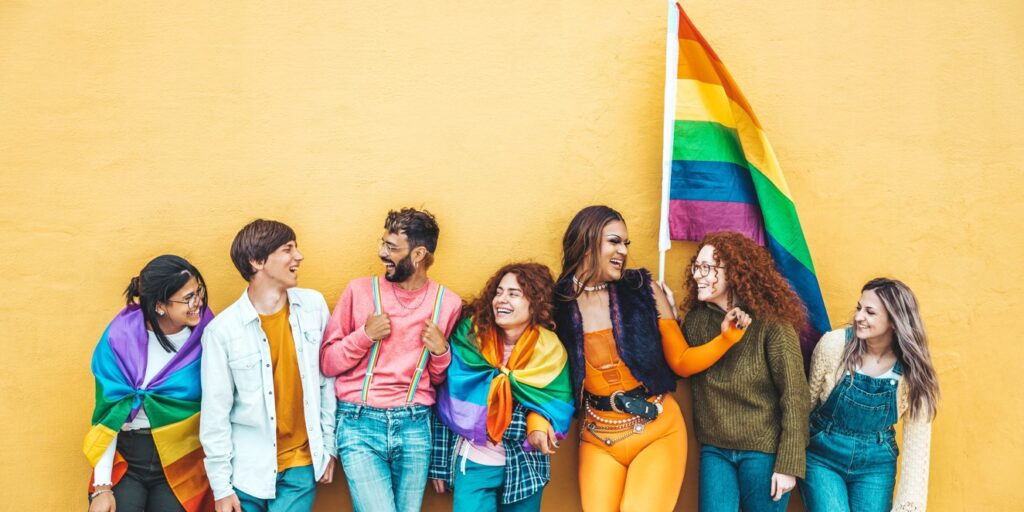
While Pride celebrations may be in full swing, LGBTQ+ communities – including individuals working across the sector – are more fearful than in previous years as far-right views become more commonplace and take root across society.
At the start of the year, Health & Protection‘s sister title Benefits Expert reported that almost four in 10 senior HR, finance and c-suite professionals in the UK agreed that the UK should roll back some diversity, equality and inclusion (DEI) measures.
The findings coincided with President Donald Trump’s move to cut DEI policies, budgets and staff out of the US federal government upon returning to office.
At March’s Health & Protection Protection Forum, a panellist told delegates that Trump’s election was a worry for LGBTQ+ communities.
In April, the UK Supreme Court ruled that the legal definition of a woman is based on biological sex.
While the court also pointed out that transgender people still have legal protection from discrimination, Benefits Expert spoke to an employment lawyer who maintained firms may need to “de-trans” their employment policy documentation.
Against this backdrop for our second June analysis, Health & Protection spoke to LGBTQ+ professionals from across the sector and found that while the community generally feels safe to be themselves at work, they are not immune to the outside noise from hostile quarters of society.
There is also a very real fear that this outside noise may cause LGBTQ+ communities to withdraw from Pride celebrations and from being their true selves at work.
And this could ultimately damage design and innovation across the sector in the form of non-inclusive products that fail to meet the needs of customers.
Proud to be celebrating Pride
When asked about the feeling across the company in celebrating Pride this year, an Aviva spokesperson told Health & Protection it was proud to be celebrating Pride with a number of activities taking place as usual across the organisation.
“We believe that building a diverse and inclusive organisation is not only the right thing to do—it also helps us better serve our customers and support our people,” Aviva said.
“We want Aviva to reflect the rich diversity of the customers and communities we serve because by doing so, we can be more effective with our support, empathetic and connected.”
Standing with trans colleagues
Lisa Schmitz, data scientist and chairwoman of Zurich Pride UK, tells Health & Protection that it is more important than ever to celebrate Pride and the company stands firm with its trans colleagues and friends.
Schmitz notes: “However, the Supreme Court ruling was disappointing, and I am not very optimistic about how the general societal conversations around LGBTQ+ topics are developing.
“While recent events are concerning, the current situation just goes to highlight how important active allyships really are.”
And that allyship is most certainly evident across the company.
“We’ve had so many allies speaking to the Pride network and the People Team, being concerned about how our trans colleagues might be affected by recent legal changes,” Schmitz continues.
“It has been overwhelming to see such a high level of support through these more challenging times.”
Support for colleagues
While Schmitz says she has not experienced a change in mood across society herself, the company is very aware of how the current political situation might affect some colleagues and have been sharing support resources.
“Our People Team has been really supportive throughout and our Pride network has been having regular conversations with the People Team too,” she adds.
“Additionally, Zurich’s zero-tolerance policy around discrimination, bullying and harassment hasn’t changed.”
Concern over possible reversal of LGBTQ+ rights
For Richard Basham-Jones, customer service director at Royal London, there is growing concern about LGBTQ+ rights being reversed around the world.
“Many people worry that hard-fought rights in all aspects of equality are under threat,” Basham-Jones tells Health & Protection.
“While we have seen positive movements in equal rights, there are always individuals who want to criticise and reverse these gains,” Basham-Jones adds.
“With more polarised far-right views becoming commonplace, it feels scarier out there.
“Therefore, Pride becomes even more important and needs each of us to personally support.”
More toned down celebrations
Vicky Keene, senior client executive and team leader and vice president at Lockton, maintains that while there is support and mention of Pride celebrations, it feels a lot more toned down in comparison to other years – especially for public celebrations such as local Prides.
“For me personally, I have noticed an increase in hostility on social media anytime anyone mentions anything to do with LGBTQ+ matters and so it can create a reluctance to share things that are important and will educate people,” Keene says.
However, Keene points out any reluctance to celebrate Pride is not shared by Lockton.
“At the company I work for, I certainly haven’t felt like this and actually we have had our budget increased by 25% in order to be able to deliver on LGBTQ+ initiatives,” Keene says.
“Our colleagues in the USA are also moving ahead with Pride celebrations without any interference or amendment to attitudes from the top.”
‘Straight Pride’
Though Keene fears a divide is opening up in terms of support for Pride.
“I feel that we are very much on the cusp of there being a 50/50 divide between people who support Pride and those who do not want to understand why it is important like asking when straight Pride month is,” Keene continues.
“There is an increase in the media making villains out of the community to scaremonger and it does make people feel fearful.
“The danger here is that LGBTQ+ people will feel dismissed or unheard and so this could create some real health implications as it’s likely to create a feeling of not mattering,” Keene adds.
“This will affect both physical and mental health.”
Non-inclusive products
And this feeling of being dismissed could have implications for product design as Basham-Jones notes.
“Excluding LGBT communities from the design of health and protection products leads to application forms and coverage that are non-inclusive, inaccurate, and potentially discriminatory,” Basham-Jones says.
“This can result in poor customer experiences, data gaps, reputational and regulatory risks, and missed market opportunities.
“Inclusive design, through representative voices, inclusive language, and cultural awareness, is essential for fairness, accuracy, and long-term business success.”
Mistaken for just best friends
Amy Potter, protection team manager at London & Country, tells Health & Protection that her and her fiancée Meg get mistaken for just best friends all the time.
Consequently Potter calls on the industry to ask the question, what’s your relationship to the other applicant?
“As an industry, small changes can ensure more inclusiveness,” Potter continues. “The majority of application forms still only give the option of Miss/Mrs/Mr & Male/female. Where does that leave our non-binary and transgender clients?
“We need to make it clear and inclusive, firstly ensure we’re creating an environment where our customers can be honest and authentic with us, reducing the risk of non-disclosure. If people can’t see themselves represented, we run the risk of people not opting for protection.”
Potter adds this will improve trust among the LGBTQIA+ community.
“Small changes can reduce the protection gap. As experts in the industry, we all know how important protection is for all of us,” she adds.
“In summary, if customers don’t see themselves reflected in the process, they may disengage or feel they have to hide aspects of who they really are,” she continues.
“That not only increases the risk of non-disclosure but also erodes trust. It would mean that this part of the community would be vastly under-protected in comparison to the wider population, which brings further inequality to the situation.”
Structural inequalities
Andrew Parker, people and culture leader at LifeSearch, warns that when LGBTQ+ voices are absent from the product design process, there’s a real risk of unintentionally embedding structural inequalities into insurance offerings.
“This leads to cover that does not meet the real-world needs of all communities,” Parker continues.
“It can also be a missed opportunity to innovate on features like family cover definitions, transition-related health needs, or inclusive mental health support — areas with unmet demand.
“In underwriting, a lack of LGBTQ+-inclusive data and consultation, can also lead to assumptions that don’t reflect diverse lived experiences — resulting in either over- or under-pricing risk, or worse, exclusion.”
Pride is for everyone
And inclusivity is reflected in the fact that Pride is for everyone.
John Pawley, talent acquisition manager at Reassured, tells Health & Protection it is during these times of uncertainty that Pride is needed and that communities need to come together.
“Pride initially started as a protest, one that was calling out the inequalities and treatment of the LGBTQ+ community and has since developed to also become a celebration of being able to live your life openly as your true authentic self,” Pawley continues.
“Pride is not just for the LGBTQ+ community, it welcomes anyone that wishes to join in with celebration and fight for equal rights.
“Celebrating Pride is a personal choice and I would want everyone to feel safe in their decision to celebrate pride in their own way.”
Doubling down on celebrations
And Richard Thomas, business-to-business events manager at Legal & General Retail, maintains communities will double-down on celebrating Pride.
“The community has worked too hard to fight for acceptance for us to be pushed back into the fringes of society,” Thomas tells Health & Protection.
“That said, it’s difficult to predict where the future will take us – will gay marriage be revoked? Will LGBTQ+ people no longer be able to adopt? Will funding into HIV research be withdrawn? Will homophobia become more openly visible across society?
“These are all lingering concerns for the LGBTQ+ community.”