Maintaining the affordability of premiums for international private medical insurance (IPMI) in Latin America is one of the biggest challenges for the sector, according to World of America CEO Lourdes Peters.
Peters highlighted the importance of the sector working together to ensuring rapidly escalating premiums did not mean the international carriers were pricing themself out of the market.
She also emphasised that artificial intelligence (AI) and advanced technology could play a vital role in controlling costs, but it would not mean the loss of personal interactions.
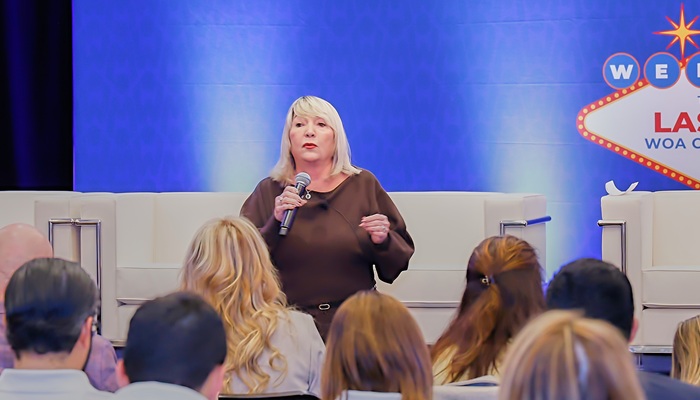
Peters was speaking to Health & Protection following the World of America 2026 Convention which brought together leading agents and brokers with insurers and providers from across the Latin America region.
“One of the most generalised responses we received from the majority of the participants at the convention was that we have to do a lot more to be able to keep the cost down in the IPMI market,” she says.
“That was very important because the medical costs impacting premiums have gotten out of control everywhere, not just Latam but also the United States and internationally – although these products cater to a more financially capable clientele in Latam, they’re never going to be on par with the United States, where medical care is so expensive.
“We have to stay very aware that the cost of acquiring insurance products that can be used anywhere in the world, but mostly in the United States, has to be kept at a very reasonable and affordable level so this market can continue growing.”
Cyclical migration of clients
Peters noted this stems from not just insurance companies, but also hospitals, medications, servicing and underwriting with everything tying back to how premiums are allocated.
And she warned this could have a significant effect on the market, as many companies are seeing a cyclical migration of clients to cheaper alternatives where clients are looking for long term price stability.
“You just can’t keep increasing premiums because you have to cover your growing expenses or must deal with a portfolio that is ageing and claiming more,” she continues.
“Everything cannot be solved by transferring the costs to the final consumer; there has to be a responsible way of managing costs and looking for a sustainable business model based on organic growth and profitability.
“New insurance companies come in, trying to have an accelerated growth, with no proven trajectory, market experience or strong financial backup, just attracting clients with a mortal combination of much less expensive products, and very flexible underwriting, betting on sudden growth and not having a proper analysis on long term sustainability.
“This results in three to five years later, having to massively increase premiums or get out of the market, leaving clients stranded with medical conditions and unpaid claims.”
Peters noted it was this continuous movement to find who is less expensive, not necessarily the best product in the market or not necessarily best insurer in the market that was proving so damaging.
“So we’ve got to be very careful how we continue with pricing, so we don’t price ourselves out of the market; but also what do we advise to our clients in order to be responsible over the long term protection and coverage,” she says.
Unifying people
One particular element Peters recommended was for the industry to come together to help find common ground on controlling costs, a common theme all over the world.
“It’s not just collecting premiums, it’s also paying claims and making sure that everybody can afford to be able to pay those premiums,” she adds.
The theme of unification was a key element of the convention and an aim for Peters to bring every insurance company the firm works with under one roof to show that they can all work together in one market.
IPMI may be a small market in the realms of the rest of the world, but it is a huge market for Latin America, she highlighted.
“When all these leaders get together and sit in forums like we had and talk about the market itself, what a great opportunity there is and how it can all work together, that brings out a completely different picture of how everybody views our market,” she says.
‘A very emotional business’
That view of the market includes a sizable intervention of AI and new technology.
Organisations across the sector and region are investing in these developments and that includes World of America.
“The biggest investment we’ve made in the last six years is seeing how AI plays a big role on insurance and will it shape our business and company; and that was another theme of our convention,” Peters continues.
“We’ve been very technology oriented in a market where that was not something that was very important and we invested a lot in that – our digital framework is very important for our growth and AI is going to be playing a very important role.”
However, she emphasises this will not mean the takeover of automation and the end of people.
“Ours is a very hands-on, very personal business, we cannot lose the sight of that personal touch,” Peters says.
“Our clientele wants a human being, a person and the relationship, and that’s not going to disappear, but we have to get in the forefront of the information that we provide, how we provide it with the expediency that we provide to be on the cutting edge of this particular business.
“Our business is a very emotional business and it’s not because we’re Hispanics.
Peters adds: “As long as you are able to modernise the business but still keep a focus on that human quality it’s a combination that is a recipe for success.”
AI will create efficiencies
Part of the hope is that new technologies will play a significant role in keeping a lid on the previously mentioned cost and premium rises, whether that is through underwriting, administration medical services or any other efficiencies.
The expectation is that, at a minimum, AI systems are going to encourage people to work better, more efficiently and this will work into savings for insurers and the sector.
“I see AI as something to work with not against and at this point in time you have to adopt it,” Peters says.
“It’s here, it’s here to stay, create efficiencies and maximise the best use of time to the tasks that matter the most, like being there to advise our clients with the best solutions and with a human touch.”
And finally, looking at the next three years for World of America, Peters is ambitious and expects the firm still to be a leader in the sector.
However, there are plans for it to be a greater presence than it already is.
“We are definitely looking to diversify the business much more than now – there are other lines of business that we’re interested in acquiring,” she says.
“We’re also interested in seeing markets that would require our consultancy services which is something I started about three years ago – we’re consulting with not just insurance companies, but with companies as to how the Latin America market operates and how to approach it.
“When somebody comes from the outside, it all looks very nice, but when you’re in it, then you start seeing everything that’s going on and that takes a lot of experience and time and effort and investment.
“That’s something that we’ve done throughout all the years that we’ve been in business – we certainly invest our time, we invest money and we invest in our talent and the growth of the company,” she concludes.