
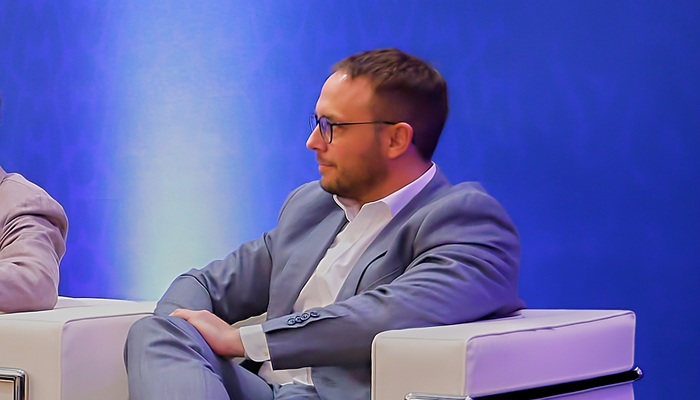
The advancement of artificial intelligence (AI) and other technologies will encourage more people to invest internationally and make it more accessible, the World of America Convention has heard.
It should also mean more diverse and flexible products which can accommodate the needs of a wider population.
However, there was also a warning that while people may become more educated in their options, where AI gets it wrong this could create problems with mis-information.
Speaking at the event, Vumi Group executive vice president and managing director Ulisses Soares, highlighted the growth of the market and the potential of younger generations.
“There are younger generations that are learning how to invest – the other day, my 15-year-old son asked me, how does he go about investing?” he said.
“He is in high school and is focused on the business track, so he’s starting to hear about this at school and seeing it on Instagram, and he wants to know how to invest.
“So there is already a very big shift; the mindset of the younger public is to invest more and to look for long-term solutions.
“I believe this is going to have an impact not only in the short term – that people have the option to invest outside their country, in dollars – but also people are going to start investing.
“That includes young people too, as well as older folks like me, who are starting to look at, how are they going to have investment and life solutions that will accompany their lifestyle, that will guarantee that throughout their life they have solutions to reach old age or guarantee their family’s wellbeing,” he added.
More informed, sophisticated and demanding clients
With this more engaged and active investment culture comes the potential for clients to be more informed about their options.
This could be a positive for the sector but as Investors Trust senior business development manager Carlos Pombo noted, may mean more demands on advisers and product providers.
“The client of the next five, ten or 15 years is going to be a much more informed client, a much more sophisticated client, due to the amount of information they consume, and therefore, a much more demanding client,” he said.
“The companies that will be able to capture that type of client will be those that manage, through the implementation of technology, but mainly AI, to engage that client by offering tailored solutions with more flexible products.
“Historically, products have been much more rigid, with terms and structural fees that date back dozens of years – the client of the future is demanding a much more flexible product that adapts to their current needs, but without losing sight of their future needs.”
He agreed that there was a recovering appetite for the culture of saving, for long-term planning among newer generations.
“I believe this more sophisticated client of the future is looking for long-term solutions, but without losing sight of the fact that the product will have to evolve with them,” he added.
Pombo argued that this new client in five or ten years is going to request products that have two main solutions of protection and investment.
“They aren’t going to stop viewing life insurance and investment separately, but rather they will see it as an ecosystem, and again, the company that manages to understand that and successfully apply artificial intelligence and technology will be the one to win that client.”
‘Experts in nothing’
On the theme of improving and tailoring products for new customers, the panel noted there had been some key developments in the life insurance sector.
They highlighted the resurgence of support services and so-called living benefits that come with international life insurance policies to give extra support to the policyholder while alive.
Symetra national vice president Fabian Gonzalez also believed the future was likely to be highly positive for the market in the medium term with “impressive growth” in life insurance.
However, he wanted to raise awareness of the potential for misinformation from AI services and its effects on clients and their financial decisions.
“I believe artificial intelligence is going to create a bunch of experts who are experts in nothing,” Gonzalez said.
“Many times, for example, one receives questions and you give the person the answer and they reply back saying, you are wrong, because I checked with AI.”
He cited a recent experience with someone who wanted to complete an international transaction.
Having told the client this was not possible due to jurisdiction regulations, the client was adamant that it could be done as he had checked it with AI. This continued as the client escalated the issue further.
“This is the only negative thing with AI, it’s going to create a lot of experts of the moment,” Gonzalez continued.
“Everyone is going to know more than a person who has spent years doing underwriting, a person who has spent years advising a client on a certain type of portfolio.”
‘Part of the risks’
World of America Global Partners president Maikel Garcia recognised the situation and acknowledged that it was occurring with the firm.
“Yes, negative issues always happen, and that is happening to us,” he said.
“Now artificial intelligence is making a lot of experts in everything, but we are going to see many positive and negative things in this segment, so that is part of the risks of dealing with and implementing new things,” he added.