Personalisation of service, underwriting and treatment, including drugs and medication, is critical to the future of international private medical insurance (IPMI) in Latin America, the World of America Convention has heard.
Leaders from the sector noted how insurers, advisers and healthcare providers could offer much more personalised and specialised care for individuals, particularly with the introduction of new technologies.
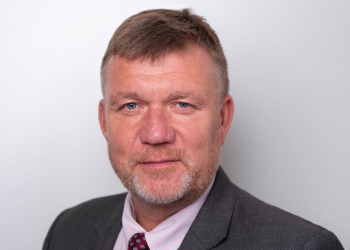
Vumi Group president and CEO David Rendall told attendees at the World of America Convention that there was the chance to provide more individualised support for members.
“We can get more proactive so the actual interactions that we have with clients are more predictive and personalised,” he said.
“For example, how can we collaborate on their healthcare journey in terms of being a partner, not just being somewhere to reimburse?
“Historically the market has always looked in the rearview and, in fact, actuaries just do models in the rearview, so everything has been historical.
“But we can get more predictive and personalised in the future regarding what individuals are going to need in terms of when they do get sick, because it’s not a matter of if, it’s a matter of when.”
In one example, Rendall noted how an intervention from the insurer and moving a patient to another city for treatment had probably saved his life.
“Our medical director got involved immediately, got him to San Jose, he was in emergency surgery hours later, he was septic, he was going to die,” Rendall continued.
“If this was just a claim and reimbursement scenario he wouldn’t have been there, so getting involved at the right time to intervene and give advice changes outcomes and changes lives.”
Switch to dynamic underwriting
With technology developments at the forefront, particularly with artificial intelligence (AI) becoming more prevalent, there are many ways the sector can become better targeted for individuals’ needs.
Vumi Group vice president and chief medical officer Dr Juan Carlos Velazquez noted that there would need to be a swift and dramatic change in underwriting practices.
“We are going to have to move from doing totally static underwriting to totally dynamic underwriting with a progression factor involved,” he said.
For example, if a medical evaluator determines, based on a specific condition, a certain level of risk is expected for the next five or 10 years for a customer.
“But we might be unfair because perhaps this same disease, this same condition, in this 25-year-old individual with certain comorbidities, is going to behave totally differently than in someone who is 50 or 60, but with different conditions,” he continued.
“It’s static because we are evaluating conditions and often we aren’t directly entering into the evaluation of the individual, so that is where it’s definitely going to change – we’re going to have the possibility of making more dynamic adjustments to premiums and to limitations.”
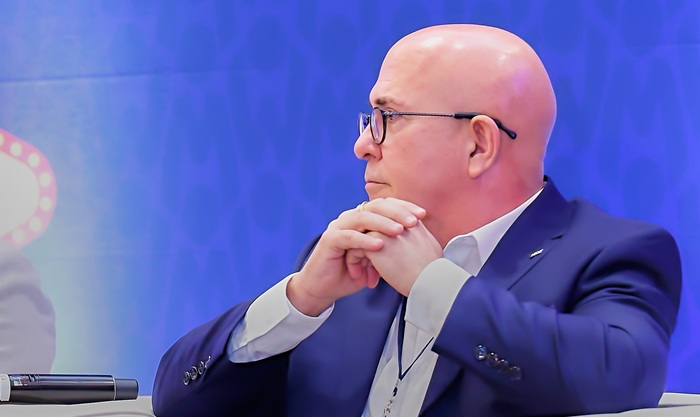
Dr Velazquez (pictured) highlighted that case management, severity prognosis, cost control and price control are going to change.
“Many of our companies have the ability to do case management and be a bit proactive, but we are proactive based solely on our own experience,” he said.
“But simply when you have a model that can, from day one of a cancer diagnosis in an individual, make the prognosis and set the appropriate reserves for this case for the next five years.”
‘Passive payers into active protagonists’
Dr Velazquez also raised the issue that healthcare owes much more to its clients than what it gives, with clients paying more every day for services.
He argued the sector has to “transform ourselves from passive payers into active protagonists in modifying our clients’ health”, and that while it is a nice idea, it is complicated.
“It relies on creating much more trust with our clients so that we can, using AI, establish unique models to preserve our clients’ health,” he said.
“And we’re talking about, if we have a 25-year-old young man who has arterial hypertension or has a specific condition, being able to create a wellness plan, a lifestyle plan, and being proactive so that this 25-year-old reaches 60 in the best possible way.
“But we’re also going to have that person who joins at 60 or older, and suddenly we’ll be able to extend their quality of life and their life itself until 90, but in an intelligent way. So I think that’s where it has to move.
“Today’s world does much more for our clients, creating much more trust and becoming much more predictive in terms of our clients’ health risks and modifying them, because there’s no point in identifying the risk if you don’t modify it, right?”
He acknowledged that investment in prevention takes a long time to show a return, perhaps five to 10 years or more, but he believed it was the return that everyone should try to achieve in the future.
Target medications
The spectre of improving the targeting and use of medications to patients was also highlighted as a critical development for AI systems.
This could provide a variety of advantages to patient care, noted Pharmcare senior medical affairs leader Dr Juan Lopez Madrid.
“Listening more to the patient in the back end of the pharmaceutical side will allow us to know the technology the patient needs more quickly,” he said.
“All of this requires that we train the models. We have been working on training models that allow knowing adverse reactions, which sometimes do not get reported.
“We don’t have the patient’s entire disease management profile so right off the bat, you encounter interactions within the insurance plan that we were unaware of, for example.
“With prediction, we can know if that patient requires the medication or won’t require it, or has a drug interaction, and inform the insurer in time to avoid cost overruns.”
The ‘wow’ moment
Ultimately, Dr Madrid believed AI would be a tool allowing doctors to spend more time with the patient and to move from practical conversations based on medical knowledge of conditions to emotional conversations that are more empathetic towards the patient.
“I believe the future isn’t just today’s technology development,” he said.
“I believe the future lies in that ‘wow’ experience left by patient management, how we’re going to be able to further personalise patient care, and it starts with all of us, not just the doctor, not just the institutions.
“It starts from the moment we advise them, at the moment of choosing their best policy. What is their best place to go for treatment? What will be the way to obtain the treatments that follow?”