
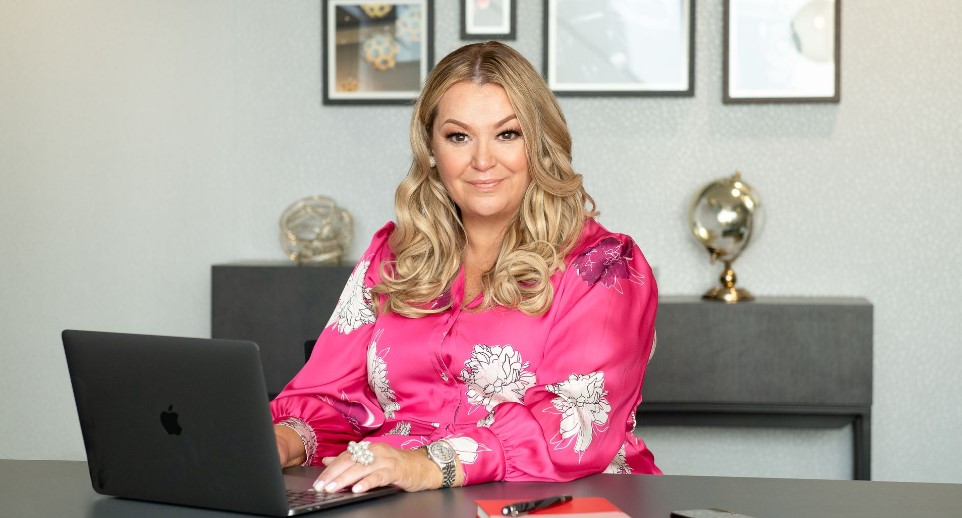
Ahead of World Mental Health Day (10 October), Joanna Streames, owner of Velvet Mortgage and Insure Services (pictured), tells Health & Protection about her biggest mental health challenge of supporting her daughter Florence through Obsessive Compulsive Disorder (OCD).
First-hand impact
“My biggest mental health challenge has been supporting my daughter through OCD and seeing first-hand the impact it has had on her life, our family and me personally,” Streames says.
“It is one thing to understand mental health in theory. It is very different when it is your child, when you are trying to support them, protect them, advocate for them, and at the same time manage the emotional pressure it puts on you as a parent and the devastation it can cause.”
Misunderstanding boundaries
Streames reveals that while Florence had been working within the business at one point, even that became too difficult and too fractious.
“That was hard, because as a parent you want to help, and as a business owner you still have to keep things running,” Streames continues. “It taught me a huge amount about mental health, boundaries, diversity, inclusion and how easily people can misunderstand conditions they have not experienced closely. Inclusion needs to be really thought through and how you can help someone.
“In our case, it just became impossible in the end and we are awaiting new support and continuing on working on the illness.”
Better understanding
Streames maintains that OCD is one of those terms people often throw around lightly.
“People will say “I’m so OCD” because they like things tidy or they are particular about something,” she continues.
“I understand why people do it, and if it had not been for my daughter, I might not have fully understood either. But being neat, organised or particular does not mean someone has OCD. For people actually living with it, and for the families supporting them, it can be incredibly distressing and life-limiting.”
Getting help
Though Streames adds the biggest challenge she has encountered has been trying to get the right help.
“There is definitely more awareness now, and that is positive, but awareness does not always translate into access,” she continues. “It can still be incredibly hard to get the right support at the right time, and that can leave families feeling very alone. I’m sure there are other mental health issues in a similar boat.
“My coping mechanisms have been learning to talk about it more openly, accepting that I cannot fix everything, and recognising that supporting someone else also means looking after yourself. That is not always easy when you are a parent, because your instinct is to put your child first every time.
“It has taught me patience, compassion, and that you never really know what is going on behind closed doors. It has also taught me that resilience is not about pretending everything is fine. Sometimes resilience is getting through a difficult day, asking for help, or simply accepting that something is hard.”