Advisers may be required to justify why a beneficiary nomination or trust has not been used when taking out a life insurance policy, according to Ron Wheatcroft, technical manager at Swiss Re.
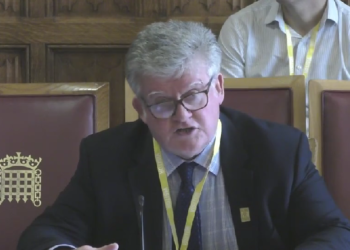
Wheatcroft (pictured) told Health & Protection the move may be required to help the industry meet the regulator’s directions to improve claims processes and ensure claims are paid to the right people.
He added that cutting the beneficiary gap will need effective collaboration from the likes of the Protection Distributors Group (PDG) and the Association of Mortgage Intermediaries (AMI) and better education of advisers.
It follows the release of Swiss Re and Insuring Change’s latest report, Life claims: beneficial interest.
The report revealed the aggregated uptake of beneficiary nomination of 52.3% where it is available (offered now by five insurers), has brought down the total market beneficiary gap by 7.7%.
Beneficiary nomination achieved this despite being offered to intermediaries in 2025 by just Guardian, Royal London, and The Exeter.
These insurers and the distributors of their policies increased the proportion of policies with direction of death benefits in the whole market by over a quarter, the report said.
It also found the beneficiary nomination model achieves a much-reduced beneficiary gap, which is less than half that of the sector offering only trusts.
No direction of death benefits
The report’s authors estimate that 63.6% of new single own life policies taken out in 2025 across the whole market had no direction of death benefits, when taking account of both trust and beneficiary nomination uptake.
For the four in five new term policies which are single life, around three quarters do not have a trust attached.
However, if the whole market also offered beneficiary nomination, at 2025 run rates the gap would reduce to one-third, the report added.
Beneficiary nomination enables policyholders to name who should receive the pay-out when they take out their policy, so the money can be paid directly to that person rather than into their estate or by using a trust.
Unmarried couples, who are expected to account for about one in three couples buying life cover, are particularly at risk if life cover meant for them has not been set up with any legal direction of benefits.
Where there is no will, intestacy rules currently give unmarried partners absolutely nothing.
But where life policy proceeds fall into the probate process this can create risk for claimants, including the potential stress from delays in receiving the money, not receiving all of it due to tax, or, worst of all for bereaved unmarried partners, not receiving the money at all.
Appealing proposition
Speaking to Health & Protection this morning, Wheatcroft explained that where it is made available, people are taking up the option of beneficiary nomination.
“This in part reflects the comments we’ve had from a few people which is that some people find trusts complicated and complex,” Wheatcroft said.
“However the simplicity of being able to sort out the nomination there and then with someone rather than having to think about trustees and if you need a second trustee, is the sort of thing that appeals.”
But Wheatcroft maintained that more progress is needed to close this gap, particularly as the Financial Conduct Authority’s (FCA) final pure protection market study report, released last week, specifically referenced this issue.
“If we look at the market study, there are plenty of points and references which are saying they would expect to see a greater emphasis of establishing who the proceeds are intended for and making sure that happens,” Wheatcroft continued.
“Where we’ve now reached, and it’s been coming for about a year since the interim report, is there is much more of an expectation this will happen and far more people are talking about it.
”We don’t see people saying, this is a bad thing. It’s a good thing, people recognise it now and hopefully it’s really starting to take off.”
Additional action
In order for uptake to increase further, Wheatcroft suggested additional action may be required from advisers.
“In an ideal world, we would expect people to establish why a trust or nomination hadn’t been used,” Wheatcroft added.
“There may be cases where that’s a reasonable thing to do, but I think we’re really starting to move to it.“
With the market study also charging the PDG and AMI among others to work on closing the protection gap, Wheatcroft said greater collaboration between these bodies will be needed in tackling the beneficiary nomination gap.
“The PDG has been positive about trusts and nominations, so they are supportive,” Wheatcroft continued.
“For me, the big word is collaboration. And that comes through the market study as well.
“PDG and AMI in particular need to ensure they’re working in parallel in terms of how they are going to communicate messages and what messages they are going to communicate.”
Adviser education
Although Wheatcroft added greater education of advisers about why this issue matters might also be required.
“There may well be a case for looking at to what extent the industry needs more training,” he continued.
“Lots of firms do training together, but it seems to me that if we really want to make that jump, there’s a great opportunity for putting in place training to explain it and why it happens.“
Wheatcroft clarified that from a Swiss Re perspective, the reinsurer is neutral about whether trusts or nominations are used.
“Our position is that it is important that the intended beneficiary is established and that is particularly the case with unmarried couples where the money can go to someone it was never intended to go to in the first place,” he said.