
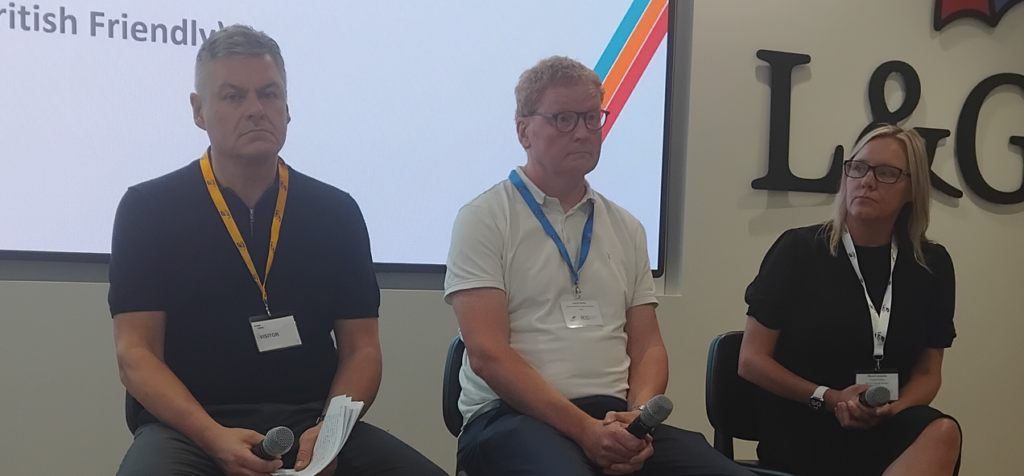
British Friendly, Legal & General and The Exeter have spoken candidly about how they overhauled their claims service in the aftermath of the pandemic.
The trio of protection providers made significant changes to claims handling processes including major recruitment campaigns, utilising existing staff and getting handlers to pick up the phone.
They noted losing Protection Distributors Group (PDG) claims charter status in 2024 was a key catalyst for much of the overhaul but the insurers were aware things needed to be improved.
The claims charter, introduced in 2018, sets minimum best-practice standards for insurers to ensure efficient, supportive, and timely claims handling for policyholders.
Following changes made to the charter to address concerns about claims service levels following the pandemic, just seven of the 14 providers who made the cut in 2023 achieved PDG claims charter status in 2024.
Those that failed to make the cut but subsequently regained this status included British Friendly, Legal & General and The Exeter.
During 2024 Health & Protection reported on some of the main issues affecting claims handling within the protection industry.
The Exeter CEO Isobel Langton noted that income protection assessors were “thin on the ground” and said L&G had targeted its assessors as part of a recruitment campaign. L&G denied this saying it did not target specific businesses.
Shortly after, speaking to Health & Protection, Cirencester Friendly called for an industry-wide claims assessor training scheme.
‘We had to change the claims approach’
In a panel discussion at the PDG’s 10th anniversary event, L&G underwriting and claims director David Banks (pictured centre), discussed the impact on claims handling and of losing claims charter status.
“The pandemic impacted claims departments,” Banks explained.
“It certainly impacted L&G. The wait for claims, the stress we put on our assessors and that probably led to our claims not being in the position we would want them to be.”
Banks revealed this meant by mid to late 2023, the insurer knew it had to do something different.
“We had to change the approach to claims,” Banks continued.
“It was really two things – to try and get back where the service should be, and also make sure that was sustainable going forward.”
Taking action
This meant putting together a taskforce breaking down the claims process to work out what assessors did day-to-day, highlighting how much of their role was admin and how much of it was actually assessing.
Consequently, the provider recruited people who could take pressure off its assessors and added data scientists to work out where claims processes could be made more efficient.
It also made sure that anyone who had ever worked in claims at the company could help the claims teams out where possible.
“The proof was we managed to get back to where we should be in mid to late 2024 and we’ve sustained it ever since,” he continued.
“We’ve kept that focus on it to make sure people get the money how quickly they possibly can.“
But losing claims charter status was a real body blow for the firm, Banks said.
“It wasn’t the best of times,” he continued. “The charter was such a good independent badge of honour. To lose it impacted badly on L&G as the market leader.
“It also impacted the assessors. They were proud that they had it and they were working really hard. It’s a really hard job and really stressful and emotional for them.“
He added: “It made us think we have to sustain this to drive this forward and we have. We’re really pulling out all the stops to give as good a service as we possibly can.”
Not doing enough
Fellow panellist Maxine Jannetta, head of claims at British Friendly (pictured right), admitted the mutual was “not doing enough” when it lost its charter status.
“We were transactional, so we had to completely change how we approach claims to support members returning back to work,” Jannetta said.
“This meant we had to do a lot of training and development in the team because they were not used to this claims management approach supporting members, some people had never picked up the phone for example.
“So we really had to change the way we were assessing claims and bring in a lot of good people who knew how to manage claims.
“It was because we were growing and we did grow. That meant to make those changes and get those good consumer outcomes, we did follow behind, but we knew that had to happen.
“And we weren’t able to give the service levels, but equally, we knew we had to make this change to get better consumer outcomes.”
Jannetta also admitted losing claims charter status took its toll.
“It did hurt when we didn’t get the charter status,” she said.
Maintaining standards
Steve Bryan, director of distribution and marketing at The Exeter (pictured left), noted the PDG board knew how upset he was when the mutual lost its claims charter status.
But he added: “It’s about standards in the industry and the reason we didn’t meet the standards was because the PDG quite rightly review them each year and add different requirements.
“The point in time that change happened meant we lost our status.
“We were in a state of transition because of the claims system we were running and we knew we would meet the new criteria within a matter of months and we did.
“We’re not in it just to get PDG claims charter status, but if that’s the benchmark, that’s the minimum we should meet, so it was reassuring when we got it back genuinely.”