
International private medical insurers and healthcare providers have been warned the sector is ‘very much under attack’ by cyber criminals.
As a result, insurers have been urged to ensure direct threat intelligence is part of their cyber security defence toolkit.
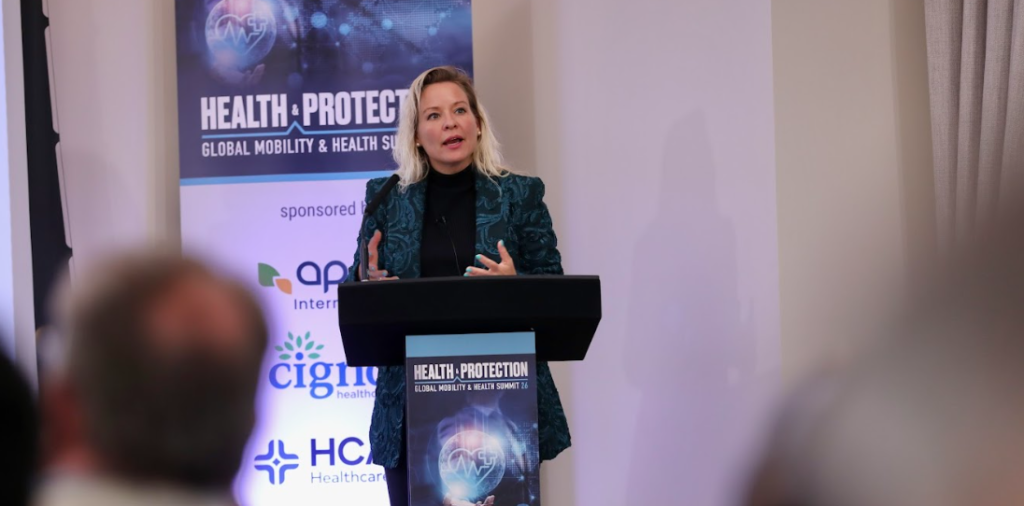
This is according to Ruth Wandhofer, director of European markets at Blackwired, who was presenting on the first afternoon of Health & Protection’s Global Mobility and Health Summit at Easthampstead Park Hotel.
Wandhofer explained that security specialists can identify threat groups attacking an organisation to avoid a cyber attack before it can take place.
“They identify the threat groups targeting you and therefore really work on avoiding the attack in the first place,” Wandhofer said.
She explained the value of a 3-D database, ”a very big AI machine that works all the time and visualises in 3-D your organisation.”
Wandhofer explained it can also show all of a provider’s third parties to understand how much threat is around them.
All of this data is put together to show attacks being prepared or if they are already in motion, as well as proximity risk of attack, she added.
“Just ensure that cyber resilience is part of your vocabulary, but also part of maintaining your trust,” Wandhofer said, who added the same principle applies to financial services.
“You need to be more proactive and having those stronger controls, auditing your systems, making sure which systems are out of date totally and can’t even be patched anymore and using direct threat intelligence as a new way of hardening your defences is really the way to allow you to be more competitive and be trusted going forward,” Wandhofer added.
“This sector is very much under attack so just get protection.”