
Global shocks are creating headaches for multinational employers but there are opportunities in the Americas, hears Owain Thomas.
Employers and organisations have been slow to keep intermediaries and insurers informed where their Middle East employees are since the war began this year.
They are also taking longer to make decisions about if they will be sending people to the region and being more considered about who they send, Health & Protection’s House of Lords roundtable heard.
Meanwhile, global geopolitical events have driven many more enquiries from Venezuela while US citizens have increasingly been looking towards Europe.
Howden senior consultant for international Sharon Sunners explained that keeping track of where members are located has been “notoriously difficult” from the Middle East war for international private medical insurance providers and intermediaries.
“Initially a lot of the questions coming in from HR administrators and global mobility managers were about what their coverage was, wanting peace of mind and wanting reassurance,” she said.
“At the time, everyone was leaving with a view to returning eventually; what’s happened is everyone thinks last about updating their insurer that they’ve moved.
“We found that people have moved around quite a bit, for example the employees may have returned, but the dependents have stayed in their home country, or because of the schooling situation people are going to wait until the new term for their kids to enrol back in their home country.”
Sunners warned that all this movement could have significant consequences and implications for regulatory and compliance issues.
“For example, if their visas are not renewed and the insurer still thinks they’re in the UAE, or conversely, if they go to their home country, which might be a bit of a tricky location for insurers hosting local nationals,” she added.
Uncertainty bringing stability
Insurers agreed there were some notable movement patterns where people were deciding to either return to key hubs in the region such as Dubai, or that those areas were not for them for the foreseeable future.
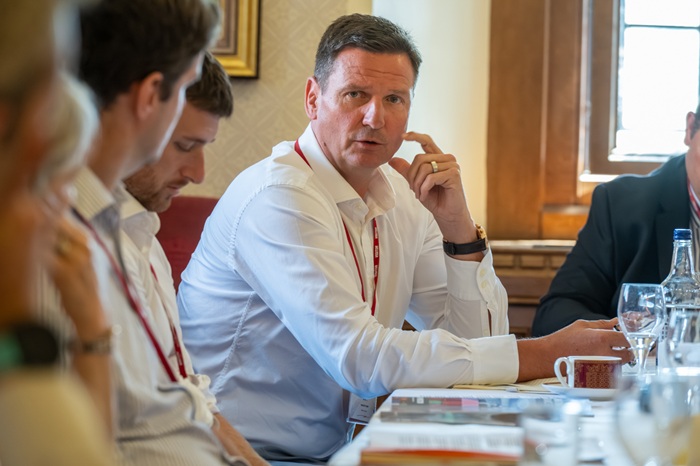
Steve Martin (pictured), head of global individual broker sales UK and Europe at Cigna Healthcare International Health added that access to care was now the critical element.
“Are they getting the same level of care in the location they moved to as they were going to be getting in Dubai,” he said.
“But also mental health support, even for our teams that are based in Dubai.
“We’ve had to focus on that to make sure they are supported enough to live and work in that location as our customers do as well.”
UnitedHealthcare Global director of client management and broker support Claudine Audin suggested the market had slowed but not significantly regressed.
“From a group perspective, we haven’t seen a huge amount of virgin new business and from the business already out there we haven’t seen a huge shrinkage in
membership,” she said.
However, Audin acknowledged that while customer numbers were unchanged, the slow employer data reporting could be concealing if people had remained or moved location.
“Historically there’s always a certain percentage of churn in any given policy year, but this year we’ve seen a lot less than that,” she continued.
“So just because of the uncertainty people are just sticking with the provider they’re with, but we are starting to see some green shoots in terms of some interest.
“Because the uncertainty in the Middle East has gone on for so long people are now a bit more seasoned and adapting, but probably not to the same degree.
“It’s safe to say they are taking a bit more care and time around who they place out there, because you’re talking about mental health and resilience.”
Download the full roundtable supplement here
Thorough assignment assessments
Marsh global mobility solutions UK leader Dave Hilton agreed with this assessment of employer practices.
“We are seeing people taking more time to make the decision to go out there, particularly at the moment, and that is only going to get worse,” he said.
“Those who haven’t been as thorough in the past are taking longer and being more detailed in making sure of everything.
“Not just the benefits, but security, tracking, schooling, whether it’s a compound or their office, mitigation plans, so if something goes wrong, what do they do?
“They’re spending a lot more time planning and getting that right, because some of them have unfortunately learnt a harsh lesson.”
The panel also reported there had been greater uptake in support services, particularly around mental health and EAPs, to assist those employees in the region and help employers to provide a safe structure for their people.
Overall, Hilton added the business still saw growth and was optimistic for people going to the region but did not know what this latest conflict meant longer term.
If business in the Middle East is affected, that will have a knock-on effect on demand for assignments and the IPMI industry, but it may take time to filter through.
Opportunities in Americas
And while the Middle East has taken most of the headlines with the war continuing, other parts of the world have been affected by the geopolitical environment.
As Howden’s Sunners noted, this can often be in quick movements.
“We’ve seen a trend from Venezuela where inquiries from clients are appearing quite quickly, literally overnight, it wasn’t a slow build,” she said.
“There’ve been quite a few inquiries particularly from mining companies, no guesses for why, but Venezuela’s a growth area at the moment in those industries.
“Our industry is quite susceptible to the geopolitical climate just by the international nature of it and particularly for groups, where growth might slow or steady in some locations, it will then spring up somewhere else,” she added.
Furthermore, Cigna Healthcare’s Martin highlighted a growing trend of Americans heading for Europe.
“It’s not new but there have been much more transient Americans relocating to different parts of Europe in particular to Portugal, Italy, Spain, France, the UK,” he said.
“This has always been one of our key nationals that we work with but we’ve certainly seen more in the last couple of years.”
Download the full roundtable supplement here