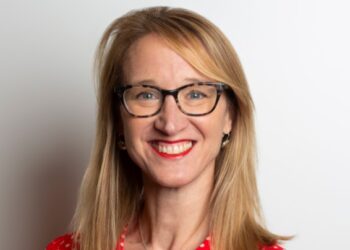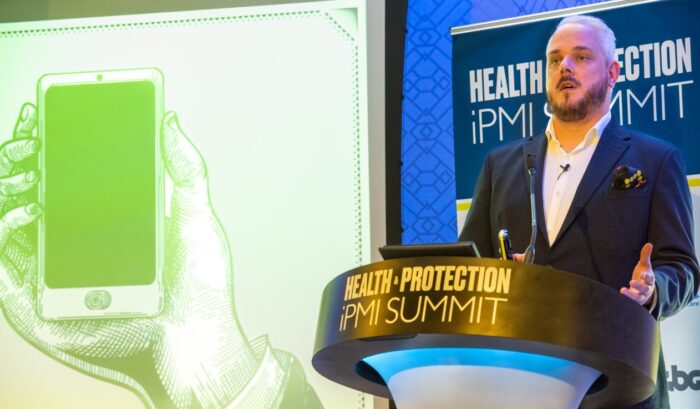
Gethin Nadin, chief advisory officer at Benifex, speaks to Health & Protection about dealing with outdated workplace attitudes, the benefits of having a supportive employer, the importance of lived allyship and not allowing homophobic comments to pass by unchallenged.
What have been your own experiences with regard to attitudes towards LGBT communities in the sector?
I’ve been fortunate in that I haven’t directly experienced overt negativity in this sector. But the reality is that so much of bias is hidden. I can’t say with certainty whether my sexuality has ever held me back – whether a critical review of a talk, a book or an opportunity was influenced by something unspoken. That ambiguity is part of the challenge many LGBTQIA people live with.
I work in workplace wellbeing, which is closely connected to diversity and inclusion. Marginalised groups are more likely to experience poorer health outcomes, including mental health challenges, so there is a clear link between inclusion and wellbeing. You can’t meaningfully improve one without addressing the other, which has meant I work among a lot of people who are either diverse, or an ally.
Also, HR is fundamentally about people. If you work in HR and hold discriminatory views, you’ve really chosen the wrong career. There is an unwritten contract in this profession that you are there to support, develop and care for others. There is no place here for any kind of hate or intolerance.
At the same time, there are still subtle stereotypes. HR is a female-dominated profession, and historically there has been an assumption that men in HR must be gay – the same with marketing. That’s an outdated idea and reflects both homophobia and misogyny, rooted in old perceptions about what male and female careers should look like. So while there isn’t overt homophobia, we are still dealing with the shadows of the past.
Overall, though, this industry has been incredibly generous to me. I’ve been accepted, supported and elevated without my sexuality ever being positioned as a limitation. In my experience, the people function is far more intolerant of racism or homophobia than many other sectors, which is one of the reasons I value it so highly.
How have attitudes evolved in the sector?
They have evolved significantly, although not always perfectly.
Early in my career, a manager once referred to me as ‘the only Gethin in the village’, playing on a stereotype from the tv show Little Britain of a Welsh gay man. At the time, I didn’t challenge it. I dismissed it as harmless. Looking back now, allowing comments like that to pass unchallenged contributes to them being normalised. I wouldn’t let that go today. Similarly, I have had to have a deep conversation with a colleague once about why Pride events were needed. The old ‘I don’t mind it, but I don’t want it in my face’ type of response. I reminded him of how many countries you will still be put in prison or killed just for being gay or trans. So, it’s sometimes there, quietly below the surface.
Over the past two decades though, the overall progress has been substantial. For most of that time, the trajectory has been positive and progressive. But in recent years we’ve also seen a worrying global shift, with increased scrutiny of LGBTQIA rights, particularly around trans communities. When the rights of one group are questioned, it creates risk for everyone – not just marginalised groups.
So, while this sector has evolved, the priority now is not just further progress, but protecting what has already been achieved. The risk is not only stagnation, but regression. The responsibility on this industry is to hold the line.
What is the sector doing well and where does it need to up its game?
In the UK, the sector has remained consistently committed to equality at work. It continues to elevate marginalised voices, create space for underrepresented groups, and celebrate cultural and identity-based events – from Pride to Eid and beyond. That visible commitment matters.
What stands out most to me is the lived allyship within the profession. I have strong friendships with HR leaders from different backgrounds and faiths, including Muslim leaders who have publicly supported me, celebrated my work, and shown genuine warmth and respect. Those moments, standing together at events, speaking openly, hugging one another on stage, challenge simplistic narratives about division.
There is a perception in wider society that certain communities are inherently opposed to others. My experience has often been the opposite. I’ve never met a homophobic Muslim. This industry has the ability to visibly demonstrate that inclusion is not theoretical, it is practical, human and already happening. I am a walking example of what is achievable when someone is celebrated and included. I’ve made a significant difference to the growth of my employer Benifex over 15 years. I’m making a difference to higher education with my fellowship and a difference to policy-making via my work with parliament. I’m here making all of this progressive and these improvements because at some point CEOs, vice deans and parliamentarians have actively decided they didn’t care that I was gay, or even better – they didn’t know and still didn’t care.
Where it needs to improve is in continuing to challenge assumptions, making allyship more visible, and ensuring inclusion is not performative. The opportunity is to show, not just say, what an inclusive society looks like in action. We can’t let diversity and inclusion slip from our policies, conference agendas or workplaces.
Do you feel encouraged and enabled to bring your whole self to work?
Absolutely. This industry has given me a platform to be myself and to build a career on that authenticity. It has helped me achieve things I never imagined – from awards to bestselling books – without my sexuality ever being a barrier. If anything, I have felt supported and celebrated more than I could have ever hoped to be.
My employer has never treated my sexuality as an issue, and that has been consistent throughout my career. When I first came out, my parents feared that I would be overlooked or limited. My dad would ask early on in my career whether people at work knew I was gay. In reality, it has never knowingly been a problem.
I recognise how fortunate that makes me. More recently, I shared a post on LinkedIn about being gay, and the response from HR and people leaders was overwhelmingly positive. It reminded me that visibility matters. By being open, I’m now in a position where others may see a pathway that they didn’t think existed for them.
That’s not something I set out to do, but it’s a responsibility I’ve come to value. Progress has always relied on people being visible and standing their ground. The more I see challenges to equality emerging globally, the more I recognise the importance of continuing that work. It’s why even having interviews like these in leading publications matters – it’s a brief reminder of the work that has been done, but also the work to be done.
The UK HR community is something to be proud of. Behind the headlines about the function itself are real people who care deeply, support one another and actively create better lives for others. That allyship has been one of the most important forces in my career, and it gives me genuine optimism for the future.