Protection insurers should resist raising the red flag when it comes to individuals who disclose they are proactively taking care of their mental health.
This is according to panellists who were participating in a debate at Protect Z last week.
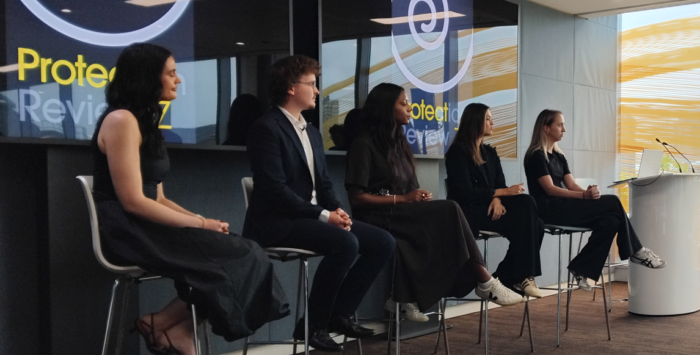
Elliott Parker, business development account manager at Scottish Widows (pictured second from left), told delegates there was a lot more added value services can do around mental health, adding the provider was trying to “change the dial”.
“A mental health disclosure isn’t a bad thing and time off work isn’t a bad thing. It’s something the client is doing to better their mental health,” Parker explained.
“As an industry we need to treat mental health disclosures not so much as a red flag, but in some situations as a green flag.”
Parker further maintained that individuals who have done the right thing such as taking medication, being open with their friends and generally taking care of their mental health should not be punished for doing so.
Penalised for accessing support
Bella Streames, managing director at Velvet Mortgage and Insure Services (pictured second from right), agreed, citing the example of one of her clients whose father passed away.
“She did the right thing and had some private counselling sessions for that,” Streames revealed.
“She wasn’t ever diagnosed with any mental health condition, had just lost her dad and needed to process that.
“Talking it through is what you should do to avoid having a mental health problem at the end of it.”
But Streames added in this case the provider added a mental health exclusion.
“So sometimes there is a bit of a disconnect between the two in that we’re really good in one way, but not so much in another way when it comes to excluding mental health issues,” Streames concluded.