Understanding the signals of deteriorating mental health and interrupting poor patterns could boost productivity and prove the difference between whether an SME thrives or is faced with being wound up.
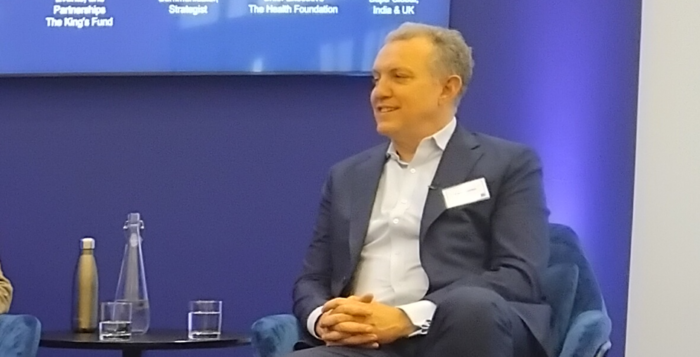
This is according to Chris Carroll (pictured), CEO of Bupa Global, India and the UK, who was speaking at an event launching the insurer’s latest Wellbeing Index which revealed more than one in five (22%) UK adults have required urgent medical attention after ignoring early symptoms, against the backdrop of continued cost-of-living crisis forcing many to put their health on hold.
Understanding the signals
Providing his reflections on the data, Carroll contended that a key emerging trend has been around the signals highlighting employees who may be struggling with their mental health.
“One of the tragedies of hospitalisation for mental health is once you get to hospitalisation, it’s really bad,” Carroll said.
“The gestation period for folks that end up being hospitalised is that they start to feel something’s not quite right 15-plus years earlier. That is how long this hospitalisation has grown and been fed and reinforced.
“And so a lot of the work we’re talking about here, be it funders, governments or employers, we’ve got to help them understand the signals and how to interrupt these patterns of this high levels of resilience, and this attitude that I work all the time, I don’t take leave.”
Interrupting patterns
Carrol added that it is important these patterns are interrupted.
“Employers need help in understanding the proximity of investment in health or mental health and the return on investment,” Carroll continued.
“That business case in a lot of people’s minds is very long and very opaque and by the time I get to hurdle three I’ve lost interest and ultimately I will have that drag on capital prioritised to something else which is easier to substantiate which shareholders are happier about and I can see that in the PLs [profit and loss].”
Acting early
Ultimately, it is better for firms to act early on mental health, Carroll said.
“We’re seeing data now about presenteeism, absenteeism, just general lack of productivity by folks in the office, that is a drag,” he continued. “It means that certain employees who have access to healthcare have around 22 days extra productivity, which for an SME can make the difference between being able to trade the following year and having to wind down.
“We need these patterns interrupted. We need leaders to be able to confidently talk about experiences, informal networks, you don’t need to be the boss to be able to solve everything.
“In fact, when it comes to mental health, you’re probably the worst person to talk to because there is still a lot of risk, and so how do we create informal networks where people can actually talk about it?
“On the one hand, people talk about the over-diagnosis of things. We’re seeing an over-diagnosis of anxiety and depression. Well, the other side of that coin is a lot more people are talking about how they feel. That is still a net positive, that societal norm that we’re getting towards will help conflate with the all of the other things that we say.”