
Workplace health is increasingly moving ahead of claims by embracing preventative healthcare, hears Owain Thomas.
Rising premiums are the main driver to employer interest in preventative health services but there are also increasing expectations from staff.
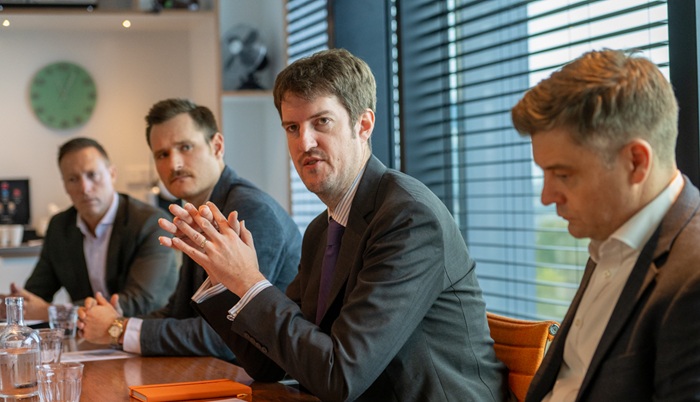
As the Health & Protection workplace wellbeing roundtable in association with Vitality heard, there are some remarkable possibilities for improving health outcomes when these interventions are fully enabled.
Download the roundtable supplement by following this link.
“There are lots of solutions and options out there ranging from health checks through to early cancer detection and helping employers understand those two is important,” said Incorporate Benefits head of wellbeing Andrew Magill
“I’m finding employers are tentatively going that way and prevention is a really interesting conversation they want to have.”
As Broadstone head of health and protection Brett Hill highlighted, those employers are trying to wrestle with the same challenge governments have faced with the NHS.
“The challenge of trying to invest in prevention, while at the same time funding the treatment needs of today,” Hill said.
“They are realising if you’re going to start investing in prevention you need to make that investment over a sustained period of time, and it may be five or ten years before you really start to move the needle.”
High impact scenarios
Personalisation of activity is seen as a vital component and while this may maybe in its early stages for most employers, when activated correctly the potential is clear.
VitalityHealth director – specialist health sales and dedicated distribution Athos Rushovich highlighted one such opportunity for making major health impacts in people’s lives when targeting the right situations.
“For example, we know if you stop smoking 72 hours before an operation, your wound recovery is significantly improved,” he said.
“If we’re able to say to a person, because they’ve reported to us that they’re a smoker, ‘we’ve just authorised an appendectomy, if you stop smoking before you go in, your wound recovery will improve’, that is really powerful.
“And then when they’ve been in hospital for that time, we can go back to them and say, ‘you’ve probably stopped smoking while you were in hospital – this might be a great time to quit for good and here’s a smoking cessation tool’.
“That’s the level of personalisation we’re trying to drive at to aid member journeys.”
Of course, in that situation the member is already undergoing a serious health intervention, creating a higher impact opportunity to raise awareness of poor health behaviours.
For employers, personalisation of health benefits is trickier and with organisation limits it is yet to be fully mastered, but there are some approaches gaining traction.
NFP head of consulting David O’Reilly noted some clients such as private equity firms and hedge funds, which have potentially larger budgets, were taking more open approaches.
“I’ve worked with a client where they’ll give a wellness fund which someone can buy a football season ticket with,” he said.
“If your wellness is to go and shout on a Saturday they’re more than happy to pay for that, or they can use it for more traditional wellbeing like massages and therapies, making it more individualised.”
But O’Reilly noted many teams engaging on prevention will also be faced with a host of wider organisation priorities to manage.
“So they’re leaning on someone like an insurer to be that prevention strategy,” he added.
Understanding user experience
The need and ability to segregate and even personalise communications to staff is a long-term and ongoing consideration, which it is hoped new technologies will enliven.
“Talking to different cohorts in different ways about what’s important to them is going to occur in the coming years,” said Engage Health Group founding director Nick Hale.
“As opposed to saying, ‘hey everyone, we’ve got this particular benefit which is completely irrelevant to 70% of the population’.
“It’s easy to see what will happen with AI getting very smart around demographics and understanding what the requirements and needs are of that person at that stage of their life,” he added.
Gallagher head of wellbeing Andreas Hunter concurred and highlighted that some large organisations may have several types of workers within their workforces, all with different characteristics.
“They probably don’t consider themselves one company and we shouldn’t be treating them as such, so how are you able to engage with those people?” he said.
Hunter had worked with one client that focused on user experience, rather than the benefits being offered.
“How do people access these things? What is the employee experience? For this employer, what they needed much more of was an improved experience,” he concluded.
Download the roundtable supplement by following this link.